
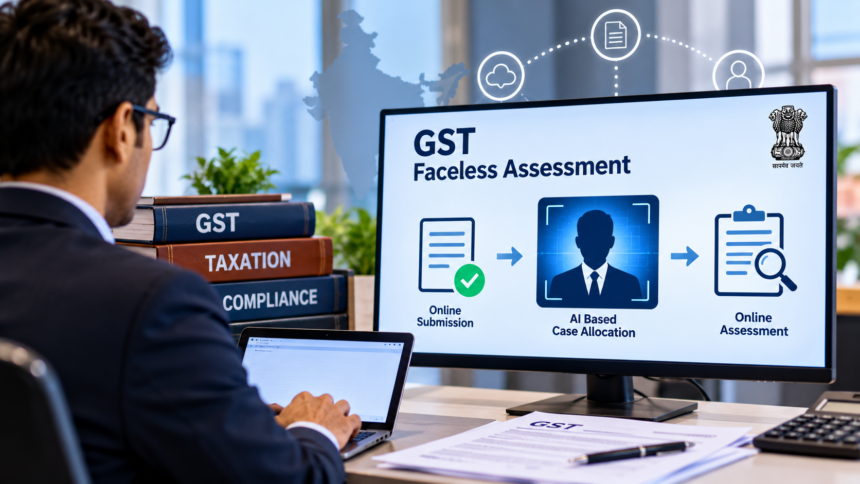
GST Faceless Assessment: The Centre is preparing to introduce a faceless assessment mechanism for taxpayers covered under the Central Goods and Services Tax (CGST) framework. The proposed system is expected to be introduced on a trial basis within the next three to four months, according to sources.
The proposed model is based on the faceless assessment approach already used in the direct tax system. The objective is to reduce direct interaction between taxpayers and tax officials while making the assessment process more technology-driven.
How the Proposed Faceless Assessment System Will Work
Under the proposed arrangement, scrutiny assessments would be carried out online. Cases would be selected and assigned to tax officers through technology-based systems, including artificial intelligence and random allocation.
The move is expected to reduce physical interaction between taxpayers and the tax department and could make the compliance process more convenient for businesses.
The proposed system will initially apply only to CGST assessments, meaning approval from the GST Council would not be required for its introduction. Depending on the outcome of the trial, states could consider adopting a similar mechanism by placing the proposal before the GST Council at a later stage.
GST Council to Discuss Adjudication Reforms
The proposed faceless assessment system comes as the GST administration works towards simplifying compliance and increasing the use of technology in tax processes.
However, the issue of multiple audits of businesses by both state and central authorities is not expected to be discussed at the upcoming GST Council meeting on October 8.
According to sources, the matter is being considered separately at the central level and could be taken up by the GST Council at a later stage.
The Council is, however, expected to discuss proposals aimed at bringing greater consistency to the GST adjudication process.
Multiple State Registrations Add to Compliance Burden
Under the current GST framework, businesses operating across multiple states generally need separate GST registrations in each state, even when they operate under a single Permanent Account Number (PAN).
As a result, businesses with operations in several states can face audits by different state authorities as well as the Centre. This can increase the compliance workload and may also lead to differences in how tax provisions are interpreted by officials in different states.
The proposed reforms are part of the broader effort to create a more technology-led GST administration while reducing unnecessary interaction and compliance difficulties for taxpayers.
Disclaimer: This article is intended for general informational purposes and is based on the details provided in the source material. Proposed GST reforms, assessment procedures and implementation timelines may change following government decisions and further consultations. Taxpayers and businesses should refer to official GST notifications and government communications for the latest applicable rules.