
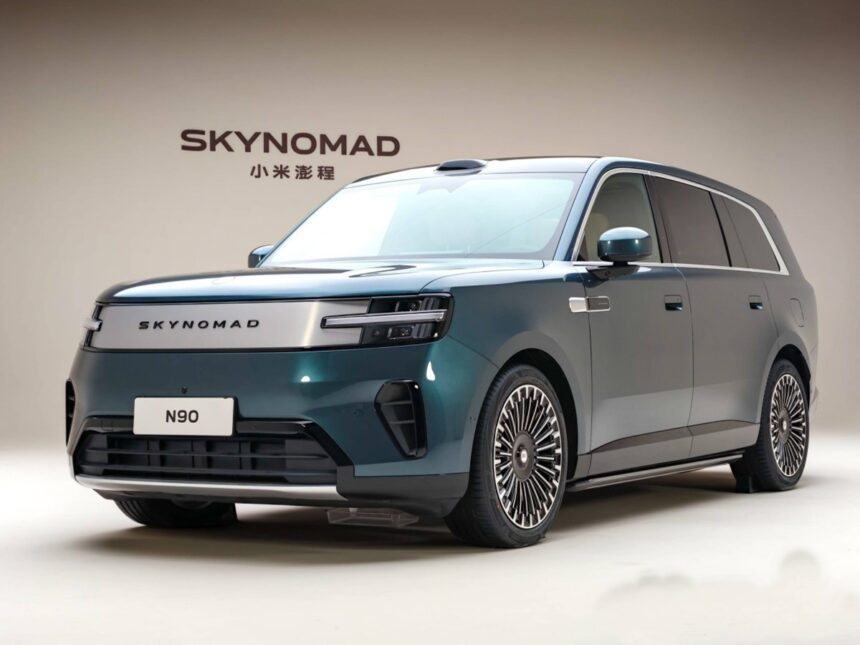
Xiaomi has expanded its presence in the electric vehicle market with the launch of its new SkyNomad N70 and N90 SUVs in China. Designed as extended-range electric vehicles (EREVs), the SUVs combine electric propulsion with a petrol-powered generator to deliver longer driving distances than conventional battery-electric vehicles.
The headline figure is the claimed 1,705km combined range of the SkyNomad N90 Max, making it one of the most notable long-range SUVs in its segment.
Xiaomi SkyNomad SUVs: Extended-Range Electric Technology
Unlike a conventional EV that relies entirely on its battery, an EREV uses electric motors for propulsion while an additional petrol engine acts as a generator to provide electricity when required.
The SkyNomad range is based on Xiaomi’s Kunlun Platform and has been developed to combine electric driving with the practicality of a petrol generator for longer journeys.
The lineup includes the N70 and N90, with different configurations designed to accommodate varying passenger and lifestyle requirements.
Four Variants and Up to Seven Seats
Xiaomi is offering the SkyNomad range in four variants. The entry configuration is the five-seat N70 Pro, while the range-topping N90 Max Studio can accommodate up to seven occupants.
Prices for the SUVs range from RMB 209,900 to RMB 299,900, depending on the variant and equipment level.
The different seating configurations allow Xiaomi to target both conventional family SUV buyers and customers looking for a more versatile vehicle for travel and leisure.
N90 Max Studio Turns Into a Mobile Living Space
One of the most unusual versions in the lineup is the N90 Max Studio, which is designed to provide more than just passenger transportation.
The SUV comes with a factory-fitted electric lifting roof that can create an additional level inside the vehicle. The pop-up section provides extra standing room and can also accommodate a bed, effectively turning the SUV into a compact mobile living space.
The second-row seats can reportedly be converted into a bed in just 30 seconds. The seats also support split configurations, allowing occupants to maintain part of the seating area while using another section for sleeping.
The N90 Max Studio also features floor heating, adding another comfort-focused feature to its travel-oriented design.
NVIDIA Thor-U Chips Power the Technology
All Xiaomi SkyNomad models are equipped with NVIDIA Thor-U chips, providing the computing power required for the SUVs’ advanced onboard systems.
The vehicles also combine LiDAR and radar sensors to monitor their surroundings. These technologies support the SUVs’ driver-assistance and safety systems by improving environmental detection.
Xiaomi says its vehicles can offer up to 25 safety functions, while the extensive safety package includes as many as 12 airbags, depending on the variant.
Hyper XiaoAi Can Control Most Vehicle Functions
Xiaomi is also bringing its software ecosystem into the SkyNomad lineup through the Hyper XiaoAi AI assistant.
The voice-based assistant is claimed to control as much as 95% of the vehicle’s functions, allowing drivers and passengers to operate various features through voice commands.
This approach reflects Xiaomi’s broader strategy of connecting its automotive products with its existing ecosystem of smart devices and consumer electronics.
High-Strength Steel and Aluminium Construction
Safety and structural strength are another focus area for the SkyNomad SUVs. Xiaomi has used a combination of high-strength steel and aluminium in the vehicle structures.
The construction is intended to improve durability and provide additional protection in the event of a collision, while also supporting the vehicles’ overall engineering requirements.
1,705km Range Is the Biggest Highlight
The 1,705km claimed combined range of the N90 Max is arguably the biggest talking point surrounding the SkyNomad launch.
The extended-range configuration allows the SUV to offer electric driving while retaining a petrol generator for longer journeys. This setup is aimed at addressing one of the biggest concerns associated with conventional EVs — the need to frequently recharge during long-distance travel.
For customers who regularly undertake road trips, the combination of electric propulsion and an onboard range-extending system could offer greater flexibility.
Xiaomi Connects the SUV With Its Wider Ecosystem
The SkyNomad N90 Max is also positioned as an extension of Xiaomi’s broader consumer technology ecosystem.
The company’s existing expertise in connected devices and software could allow the SUV to interact more closely with users’ digital lives. This could make the vehicle part of a wider network of Xiaomi smart products rather than functioning as a standalone automobile.
With advanced computing, AI-based controls, LiDAR, radar and connected features, Xiaomi is clearly positioning the SkyNomad as a technology-focused SUV.
Xiaomi’s Ambition in the Long-Range SUV Market
With the SkyNomad N70 and N90, Xiaomi is entering the increasingly competitive extended-range SUV category with a combination of long-distance capability, advanced technology and flexible interiors.
The 1,705km claimed range, seven-seat configuration and innovative pop-up roof of the N90 Max Studio give the lineup several distinctive selling points. Meanwhile, the integration of AI, NVIDIA computing hardware, LiDAR and Xiaomi’s connected ecosystem highlights the company’s technology-first approach to electric mobility.
For now, the SkyNomad range has been launched in China, with prices starting at RMB 209,900 and going up to RMB 299,900 for the higher-end variants.