
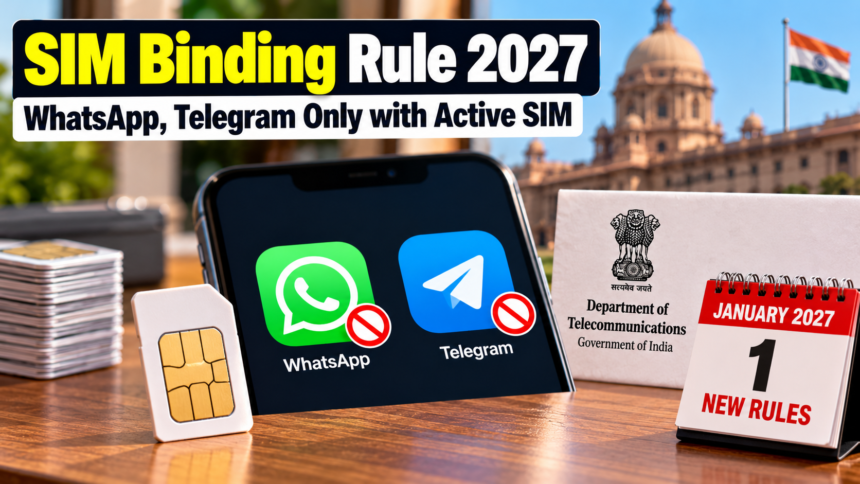
A proposed SIM-binding requirement for messaging applications is drawing attention to how people use services such as WhatsApp and Telegram in India. The article claims that new rules will take effect on January 1, 2027, requiring users to keep the SIM associated with their registered mobile number active in the device running the messaging app.
According to the supplied information, the Department of Telecommunications (DoT) has set December 31, 2026, as the deadline for messaging platforms to implement measures aimed at tackling cyber fraud and online scams. However, users should verify these claims through official government announcements before treating the stated dates and requirements as confirmed.
What Is SIM Binding?
SIM binding is a system that links a messaging account to the SIM card associated with its registered mobile number. Under the proposed arrangement described in the article, the SIM would need to remain active in the same device where the messaging application is being used.
Currently, some users register an account using a SIM card and later remove it, move it to another phone or continue using the messaging app over Wi-Fi. If the described requirement is implemented as stated, these usage patterns could be affected.
The precise technical requirements and the circumstances in which an app might stop working would depend on the final rules and how individual platforms implement them.
Why Is the Government Considering SIM Binding?
The stated objective is to reduce the misuse of Indian mobile numbers in cybercrime. Fraudsters may obtain Indian SIM cards, register messaging accounts and then operate those accounts from other locations after removing the SIM cards from their original devices.
Such methods can be used in scams involving phishing, impersonation and digital arrest fraud, potentially causing substantial financial losses to victims.
SIM binding is intended to strengthen the connection between a messaging account and its registered mobile number. However, the effectiveness of the measure would depend on its implementation and the safeguards used by messaging platforms.
Which Users Could Be Affected?
If the proposed requirements take effect as described, the following users may need to pay particular attention:
- Wi-Fi-only secondary phones: People who use WhatsApp on a second smartphone without keeping the registered SIM in that device may need to change their setup.
- Users who remove their SIM after registration: Those who rely on a Wi-Fi connection after setting up an account could be affected.
- Dual-SIM users: Users with two mobile numbers should check the final requirements for each account and its associated SIM.
- People who move SIM cards between devices: Anyone who regularly transfers a registered SIM between phones may need to review how they use messaging applications.
The exact impact will depend on the final rules and the technical arrangements adopted by each platform.
What Should WhatsApp and Telegram Users Do?
Users should avoid making changes based solely on unverified reports. Before changing devices, SIM arrangements or messaging settings, check announcements from the Department of Telecommunications and official guidance from the relevant app.
The key issue is whether the government formally confirms the proposed implementation date, the scope of the requirement and the conditions under which messaging services must verify an active SIM.
Disclaimer: This article is intended for general informational purposes only and is based on the supplied material. The stated SIM-binding deadline and implementation details should not be treated as confirmed without an official government notification. Readers should consult the Department of Telecommunications and the relevant messaging platforms for verified updates.