
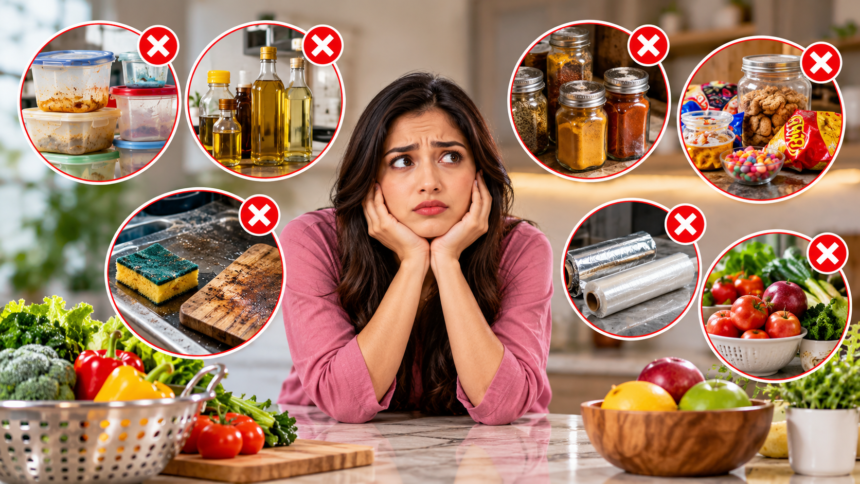
The kitchen plays an important role in everyday health, but certain items around your cooking area may create hygiene concerns if they are not stored, cleaned or replaced properly. From damaged plastic containers to old sponges and expired condiments, everyday kitchen essentials can become sources of clutter and potential contamination.
Keeping your kitchen organised involves more than wiping down countertops. Regularly checking food storage, cleaning tools and pantry supplies can help maintain a cleaner cooking environment. Here are seven things you should consider removing or replacing to improve kitchen hygiene.
1. Old Plastic Containers and Chipped Bottles
Stained plastic containers, cracked bottles and food boxes with damaged lids can be difficult to clean properly. Some plastic products may also release unwanted chemicals under unsuitable conditions, particularly when heated or used beyond their intended purpose.
Inspect your containers regularly and discard those that are cracked, chipped or badly damaged. Glass and stainless-steel containers can be practical alternatives for storing food, depending on your needs.
2. Open Cooking Oil Bottles Near the Stove
Leaving cooking oil bottles uncovered or placing them close to the stove can expose the oil to heat, light and air. These conditions can accelerate oxidation, affecting the oil’s quality and causing it to become rancid more quickly.
To preserve its quality, keep cooking oil in a tightly sealed container in a cool, dark place away from direct heat. Avoid leaving bottles open on the countertop for extended periods.
3. Expired Spices and Condiments
Old spice packets, forgotten turmeric powder and condiment bottles that have been sitting open for months deserve a closer look. Spices can gradually lose their flavour and aroma, while improperly stored condiments may spoil or become contaminated.
Check expiry dates and follow the storage instructions on product labels. Discard items that are expired, show signs of mould or have unusual changes in smell or appearance. Store spices in airtight containers to help maintain their freshness.
4. Sugary Snacks and Processed Foods Left in Plain Sight
Keeping biscuits, namkeen, sweets and packaged snacks on the kitchen counter can make them easy to reach throughout the day. Having these foods constantly visible may encourage frequent, unplanned snacking.
A simple alternative is to keep fruit, nuts or roasted makhana readily available if they suit your dietary needs. Store packaged snacks in cupboards or designated containers to keep the counter organised and make food choices more deliberate.
5. Dirty Sponges and Damaged Chopping Boards
Kitchen sponges often remain damp after use, creating conditions in which bacteria can multiply. Chopping boards with deep cuts, cracks or damaged surfaces can also become difficult to clean thoroughly.
These items may contribute to cross-contamination if they are used to prepare different foods without proper cleaning. Clean and dry sponges between uses, replace them regularly and follow appropriate sanitation practices. Replace badly damaged chopping boards with surfaces that are easy to clean and maintain.
6. Aluminium Foil and Cling Wrap Stored Near Heat
Aluminium foil and cling wrap are common kitchen essentials, but storing them close to the stove can expose them to unnecessary heat. Their suitability also depends on how they are used, particularly when they come into contact with hot food.
Keep foil and cling wrap in a clean, dry drawer away from cooking heat. Follow the manufacturer’s instructions for food contact and heating, and avoid using plastic wrap in situations for which it is not designed.
7. Unwashed Fruits and Vegetables on the Counter
Fresh produce can carry dirt, microorganisms and pesticide residues on its surface. Placing unwashed fruits and vegetables directly on a food preparation area may transfer contaminants to countertops and other kitchen items.
Wash produce thoroughly under running water before cutting or eating it, and clean the surfaces used to handle it. Store fruits and vegetables in clean containers or in the refrigerator when appropriate, following the storage requirements of each item.
A Cleaner Kitchen Starts With Small Changes
Maintaining a hygienic kitchen does not require a complete makeover. Removing damaged storage containers, checking old pantry supplies, cleaning food preparation tools and storing ingredients correctly can make everyday cooking safer and more organised.
A regular kitchen check can also help you identify items that need replacing before they become a hygiene concern. By paying attention to the condition of your kitchen essentials and keeping countertops clean, you can create a more practical and hygienic space for preparing meals.