
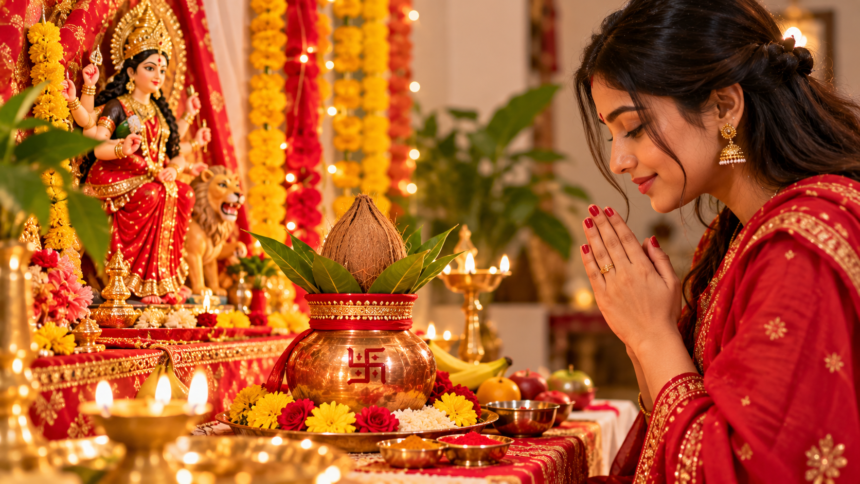
Navratri is a time of devotion, prayers and rituals dedicated to Goddess Durga. However, for people with busy work schedules, observing the festival can raise practical questions. Can working couples perform Kalash Sthapana if their home remains locked throughout the day? Is it safe to leave an Akhand Jyoti burning while away at work? And what should people with rotating shifts do if they cannot pray at the same time every day?
These concerns are common among working professionals and people living alone. With a little preparation and attention to safety, devotees can organise their Navratri worship around their daily routines.
Can Working Professionals Perform Kalash Sthapana?
Having a full-time job or spending most of the day outside the home does not automatically prevent someone from performing Kalash Sthapana. The ritual can be planned around work commitments, although devotees should follow the traditions and guidance relevant to their family or religious practice.
Sharadiya Navratri’s Ghatasthapana falls on October 11, 2026. The auspicious time for the ritual is determined for the first day of Navratri. Morning and evening prayers on the following days can generally be arranged according to one’s routine and customary practices, rather than requiring a new Ghatasthapana muhurat every day.
Morning and Evening Puja Tips for Busy Schedules
People who need to leave home early can prepare for the morning puja the previous night. Keep essential items such as roli, rice, incense sticks, a lamp and flowers ready in one place to avoid rushing.
After bathing in the morning, set aside around 10 to 15 minutes for prayer, worship the Kalash and make the customary offerings before leaving for work. In the evening, wash your hands and face before performing Aarti.
For couples who both work, sharing responsibilities can make the routine easier. One person may handle the morning prayers while the other performs the evening Aarti.
The important consideration is to follow the rituals according to one’s beliefs and circumstances without creating unnecessary stress over the time spent in prayer.
Is Akhand Jyoti Compulsory During Kalash Sthapana?
One common concern during Navratri is whether lighting an Akhand Jyoti is compulsory whenever the Kalash is installed. The two practices are distinct, and lighting an uninterrupted flame is not necessarily a requirement of every Kalash Sthapana ritual.
Safety should be the priority, particularly for people who live alone or leave their homes empty for long periods. An unattended oil lamp or diya can create a serious fire hazard in a closed apartment.
Do not leave a flame burning while nobody is at home. If you cannot safely supervise an Akhand Jyoti, consider performing the regular lamp-lighting ritual during your puja instead. Religious observance should never come at the cost of household safety.
How to Perform Navratri Puja During Rotational Shifts
People working rotating shifts may not be able to pray at a fixed time every day. Those starting work in the morning can perform their puja before leaving, while those beginning an evening or night shift can adjust their prayer routine to suit their schedule.
When time is limited, devotees may choose a short prayer or recitation from the Durga Chalisa or Durga Saptashati, according to their customary practice. If even that is difficult, silently remembering Goddess Durga while preparing for the day can be a personal expression of devotion.
The aim is to maintain a manageable routine rather than feel pressured to complete lengthy prayers when work commitments make it difficult.
Can You Perform Kalash Sthapana Without Fasting?
Fasting and Kalash Sthapana are separate religious practices. Those who cannot fast because of health concerns, medication or demanding work schedules may still choose to perform the installation ritual, according to their beliefs and family traditions.
Devotees who do not fast can follow their customary dietary practices during Navratri. Some choose to eat satvik food and avoid onion and garlic during the nine days, while maintaining regular prayers and personal discipline.
Ultimately, the rituals should be planned according to individual circumstances, capabilities and safety. A practical routine can help working professionals observe Navratri without placing unnecessary pressure on themselves.
Disclaimer: This article is intended for general informational purposes and describes religious beliefs and customary practices. Rituals and interpretations may differ across families, communities and traditions. Readers should consult a knowledgeable religious authority for guidance specific to their practices. Safety and medical considerations should always be taken into account.