
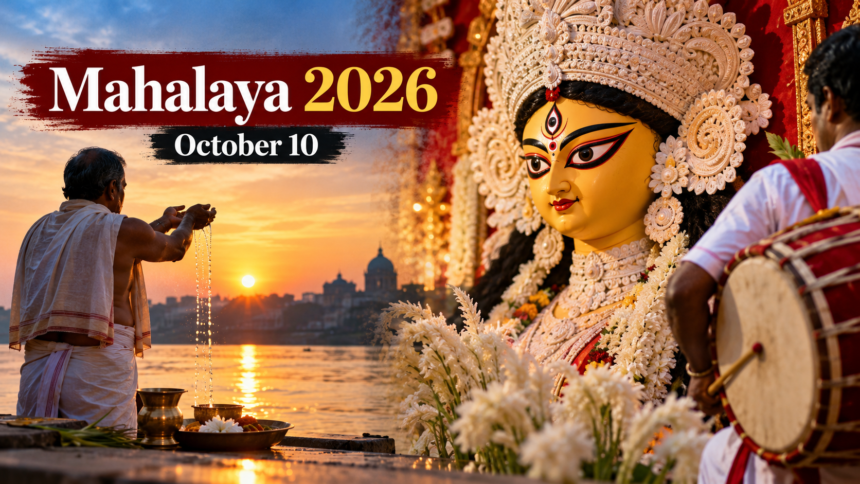
New Delhi: Mahalaya 2026 will be observed on Saturday, October 10, coinciding with Sarva Pitru Amavasya, the final new moon day of Pitru Paksha. Although the two names are often used interchangeably, they highlight different aspects of the same lunar day.
Sarva Pitru Amavasya is associated with prayers and rituals dedicated to departed ancestors. Mahalaya, meanwhile, holds special cultural significance in Bengal, marking the transition towards Devi Paksha and building anticipation for the upcoming Durga Puja celebrations.
Are Mahalaya and Sarva Pitru Amavasya the Same Day?
Yes. In 2026, both observances fall on October 10, the Amavasya of the Ashwin lunar month that concludes Pitru Paksha.
Sarva Pitru Amavasya is the name commonly associated with ancestral rituals performed on this day. Families remember their departed relatives through traditional practices such as Shraddha and Tarpan.
Mahalaya is particularly recognised in Bengal and other parts of eastern India. While it falls on the same lunar day, its significance extends beyond ancestral remembrance to the approaching period of worship dedicated to Goddess Durga.
Why Do the Two Names Have Different Meanings?
The distinction between Mahalaya and Sarva Pitru Amavasya lies mainly in their religious and cultural significance rather than their dates.
Sarva Pitru Amavasya is devoted to honouring ancestors. It is considered especially significant for families who do not know the exact lunar date of an ancestor’s death or were unable to perform the prescribed Shraddha rituals earlier during Pitru Paksha.
Mahalaya, on the other hand, marks the close of Pitru Paksha and the transition towards Devi Paksha in the Bengali festive calendar. It signals the approaching Durga Puja season, bringing together religious observance and cultural traditions.
As a result, October 10 carries both a solemn significance associated with remembering ancestors and the anticipation of the festive period ahead.
Sarva Pitru Amavasya: Rituals and Significance
Families traditionally observe Sarva Pitru Amavasya by offering prayers and performing rituals for departed ancestors. These may include Shraddha, Tarpan and Pinda Daan.
The day provides an opportunity to remember ancestors collectively, particularly when their exact death Tithi is unknown or an earlier prescribed observance could not be completed.
For many families, these practices form an important part of the concluding day of Pitru Paksha.
Why Mahalaya Is Important for Durga Puja in Bengal
In Bengal, Mahalaya is closely connected with the arrival of Maa Durga and the beginning of the festive atmosphere surrounding Durga Puja.
One of the best-known traditions is listening to Mahishasura Mardini at dawn. The familiar recitation has become an important part of Mahalaya celebrations, signalling to many Bengali households that Durga Puja is approaching.
However, Mahalaya does not mark the beginning of the five principal days of Durga Puja. The main celebrations begin later with Shashthi, which falls on October 16 in 2026.
The days following Mahalaya are traditionally associated with preparations, anticipation and the gradual arrival of the festive season.
Final Thoughts
Mahalaya and Sarva Pitru Amavasya fall on the same date in 2026, but each name highlights a different aspect of the occasion. Sarva Pitru Amavasya focuses on remembering and honouring departed ancestors, while Mahalaya carries particular cultural importance in Bengal as a marker of the approaching Durga Puja season.
Observed on October 10, the day brings together ancestral traditions and the anticipation of Devi Paksha. For Bengali families, the sound of Mahishasura Mardini and the preparations for Maa Durga’s arrival make Mahalaya a significant moment in the annual festive calendar.
Disclaimer
This article is intended for general informational and educational purposes only. Religious observances, rituals and cultural traditions may vary by region, family and community. Readers should consult their family traditions or knowledgeable religious authorities for guidance on specific rituals and observance timings.