
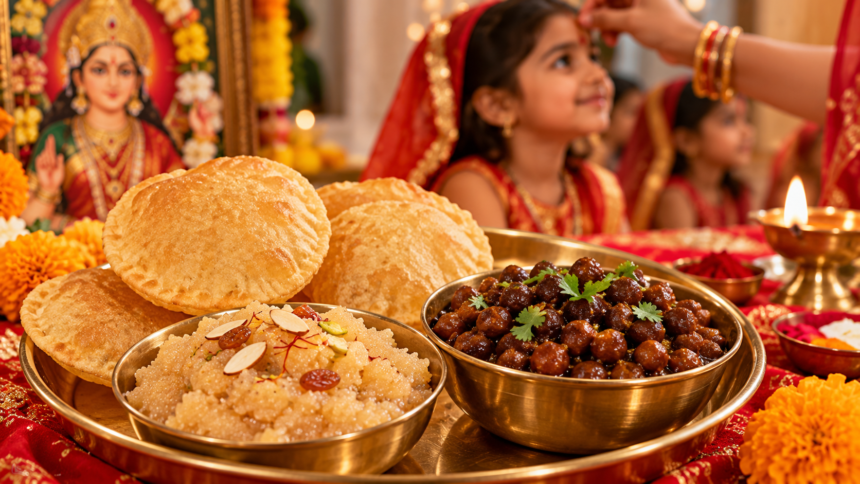
During Navratri, many families celebrate Kanya Pujan on Ashtami or Navami by worshipping young girls as manifestations of Maa Durga. A traditional meal of suji halwa, puri and kala chana is often prepared for the occasion and served as prasad after the prayers.
This familiar combination holds a special place in North Indian households. Beyond its taste, the meal reflects the values of devotion, generosity and hospitality associated with the ritual. Each dish also carries cultural symbolism connected with sweetness, abundance and nourishment.
Why Are Halwa, Puri and Kala Chana Served During Kanya Pujan?
Kanya Pujan is a Hindu religious tradition in which young girls are honoured as representations of the divine feminine energy of Maa Durga. Following the customary prayers, devotees welcome the girls and offer them food as a gesture of reverence.
Halwa, puri and kala chana have become a popular choice for this occasion because they form a satisfying meal that can be prepared at home for several guests. The practice is also connected with anna daan, the traditional act of offering food.
Although families may attach different symbolic meanings to the dishes, their shared significance lies in the spirit of devotion and the respectful treatment of the young guests.
What Do Halwa, Puri and Kala Chana Symbolise?
Suji halwa: Sweetness and prosperity
Made with semolina, ghee and sugar, suji halwa brings a sweet element to the traditional offering. In popular cultural interpretations, its sweetness represents happiness, prosperity and the hope for positive beginnings.
Preparing halwa fresh for the occasion is also part of the festive experience. For many families, its familiar taste evokes memories of Navratri celebrations, Kanjak Puja and receiving prasad after worship.
Puri: Abundance and a festive welcome
Puri is prepared by deep-frying wheat-flour dough until it puffs up. It is commonly served during religious celebrations and special family occasions.
In popular interpretations, puri represents abundance and completeness. Served alongside halwa and kala chana, it makes the offering a more substantial meal. Its place in Kanya Pujan also reflects the care and hospitality extended to the girls invited for the ritual.
Kala chana: Strength and nourishment
Kala chana, or black chickpeas, adds a savoury flavour to the traditional plate. It is also a source of plant-based protein, making it a nourishing part of the meal.
The dish is commonly associated with strength and sustenance in cultural interpretations of the ritual. Many households prepare it without onion or garlic while following their Navratri food customs.
Together, these three dishes provide a balance of sweet and savoury flavours and reflect the tradition of serving a freshly prepared meal as prasad.
Is Halwa, Puri and Kala Chana Compulsory for Kanya Pujan?
No. Although the combination is widely followed, particularly in North India, it is not the only way to perform Kanya Pujan. The specific food offerings and customs can differ according to regional traditions and family beliefs. Some households may also offer fruits, sweets or other dishes.
The importance of the ritual does not depend on preparing an elaborate meal. Devotion, hospitality and the respectful treatment of the girls are central to the observance.
What Is the Deeper Significance of Kanya Pujan Bhog?
The traditional combination of halwa, puri and kala chana brings together sweetness, a festive meal and nourishment. Through this offering, families express their devotion to Maa Durga and welcome young girls with affection and respect.
Ultimately, Kanya Pujan is about more than the food served during the ritual. Its deeper message lies in practising generosity, kindness and dignity towards children, values that remain meaningful beyond the Navratri celebrations.
Disclaimer: This article is intended for general informational and cultural purposes only. Religious practices, interpretations and food traditions may vary across regions and households. Readers should follow the customs and beliefs observed within their own families and communities.