
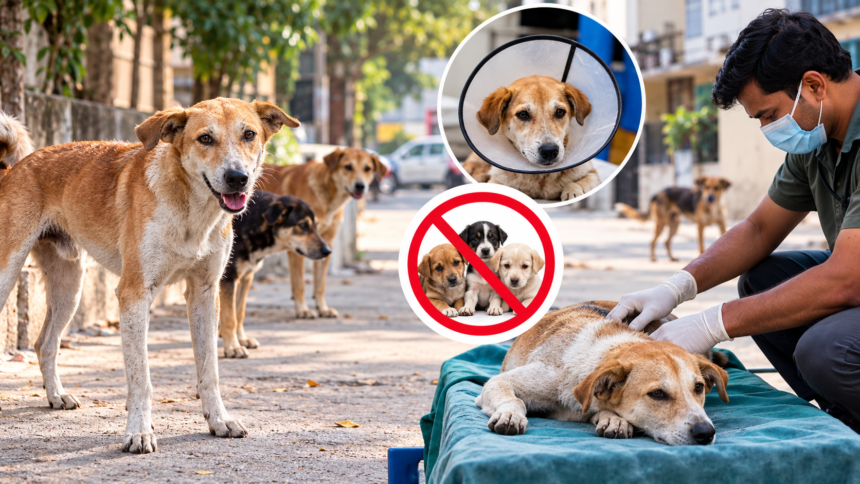
New Delhi: Rising concerns over stray dogs and dog bite incidents have put public safety and animal welfare in focus. While residents want safer neighbourhoods, animal welfare advocates argue that repeatedly catching dogs after complaints is not a long-term solution. They stress the need for sustained population control, vaccination and responsible pet ownership to address the issue.
One approach is trap-neuter-release (TNR), a programme in which dogs are captured, sterilised and returned to their original locations. When implemented consistently alongside vaccination and monitoring, this method can help limit breeding. However, experts say its effectiveness may be reduced if pet abandonment and uncontrolled breeding continue.
Can Dog Sterilisation Help Prevent Bites?
Stray dogs living in crowded areas may compete for food and territory, sometimes resulting in aggressive encounters with other animals. A higher number of dogs in residential areas can also increase contact between dogs and people.
Animal welfare advocates believe regular sterilisation can help manage dog populations and potentially reduce some of the risks associated with these encounters. However, the benefits may not last if unsterilised dogs continue to breed or pets are abandoned.
Private properties, including farms and construction sites, can also contribute to the problem when dogs breed on the premises and their puppies eventually move onto the streets. Addressing these sources is therefore an important part of any long-term strategy.
Why Authorities and Animal Welfare Groups Must Work Together
Managing stray dog populations requires cooperation between local authorities, animal welfare organisations and residents. NGOs can contribute their experience in handling dogs and understanding their behaviour, while local bodies can arrange vaccination programmes, provide resources and enforce rules against animal abandonment.
Public awareness is equally important. Residents need guidance on interacting safely with unfamiliar dogs and responding appropriately to potentially dangerous situations.
Rabies vaccination and disease monitoring should remain central to these efforts. Dogs involved in bite incidents also need to be assessed so that authorities can determine an appropriate response based on the circumstances and level of risk.
Balancing Public Safety With Animal Welfare
Choong Koon Yean, president of Independent Aid for the Protection and Welfare of Animals (IAPWA) Penang, has argued that earlier intervention could have helped prevent some of the challenges communities face today.
His article highlights the importance of regular sterilisation and vaccination, responsible pet ownership and stronger enforcement against abandonment. It also emphasises that dogs presenting a genuine safety threat must be handled appropriately.
A lasting solution requires coordinated action rather than relying on a single measure. Consistent population management, disease prevention, responsible ownership and appropriate responses to safety concerns can help communities address stray dog problems while taking animal welfare into account.
Disclaimer: This article is intended for general informational purposes only. It summarises perspectives on stray dog population management, public safety and animal welfare. Local rules and the appropriate response to individual incidents may vary.