
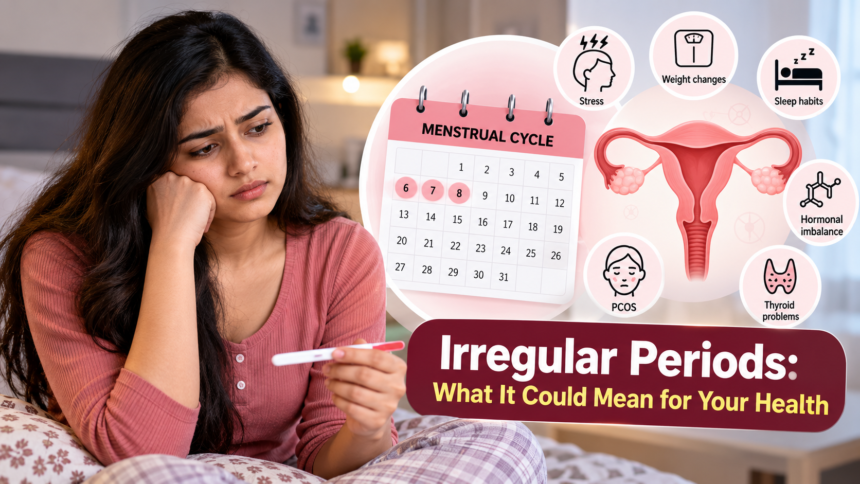
New Delhi: A period arriving later than usual from time to time is not necessarily a reason for concern. Stress, travel, illness, changes in sleep patterns and fluctuations in body weight can all affect the menstrual cycle. However, when periods become consistently irregular or occur several months apart, they may provide important information about ovulation and hormonal health.
Menstruation is one part of a broader hormonal system involving the brain, ovaries and uterus. When ovulation becomes irregular or does not occur, periods can also become unpredictable. According to the Centers for Disease Control and Prevention (CDC), menstrual cycles that occur predictably every 21 to 35 days may indicate regular ovulation.
What Can Cause Irregular Periods?
Polycystic ovary syndrome (PCOS) is one possible reason for irregular periods, particularly when they occur alongside symptoms such as acne, excess facial or body hair, or other signs associated with higher androgen levels.
However, PCOS is not the only potential cause. Conditions affecting ovulation can include thyroid disorders, elevated prolactin levels, significant weight changes, intense physical activity, inadequate nutrition, stress and other hormonal imbalances.
The pattern of irregularity is also important. Having an occasional 35-day cycle is different from going without a period for two or three months at a time.
Can Irregular Periods Affect Fertility?
Irregular periods can make it more difficult to become pregnant because ovulation may happen less frequently or at unpredictable times. However, having an irregular menstrual cycle does not automatically mean infertility.
If pregnancy is being planned, identifying the underlying reason for irregular periods can help determine whether ovulation is occurring normally and whether any hormonal or reproductive issue needs attention.
Age is another factor associated with fertility. Fertility depends not only on ovulation but also on factors such as egg quality, ovarian reserve, the uterus, fallopian tubes and sperm health. The World Health Organization (WHO) notes that disorders involving the ovaries, fallopian tubes, uterus and reproductive hormones can contribute to infertility in women.
When Should Irregular Periods Be Evaluated?
Women experiencing persistent irregular or absent periods should consider discussing the changes with a healthcare professional. Very heavy bleeding, significant changes in the usual cycle or difficulty conceiving may also warrant an evaluation.
Depending on the individual situation, an assessment may include menstrual history, a physical examination, hormone testing and an ultrasound. Tests such as AMH (anti-Müllerian hormone) or an antral follicle count may sometimes provide additional information, but no single test can determine a woman’s overall fertility.
An irregular period should therefore be viewed as useful information about the body rather than something to simply ignore. An unpredictable cycle does not by itself determine a woman’s fertility. Understanding why the pattern has changed can help identify possible problems related to hormones or ovulation and guide appropriate care.
Disclaimer
This article is intended for general informational purposes and should not be considered medical advice or a diagnosis. Menstrual patterns and their causes can vary from person to person. Women experiencing persistent or significant changes in their menstrual cycle, or those having difficulty conceiving, should consult a qualified healthcare professional for an appropriate evaluation.