
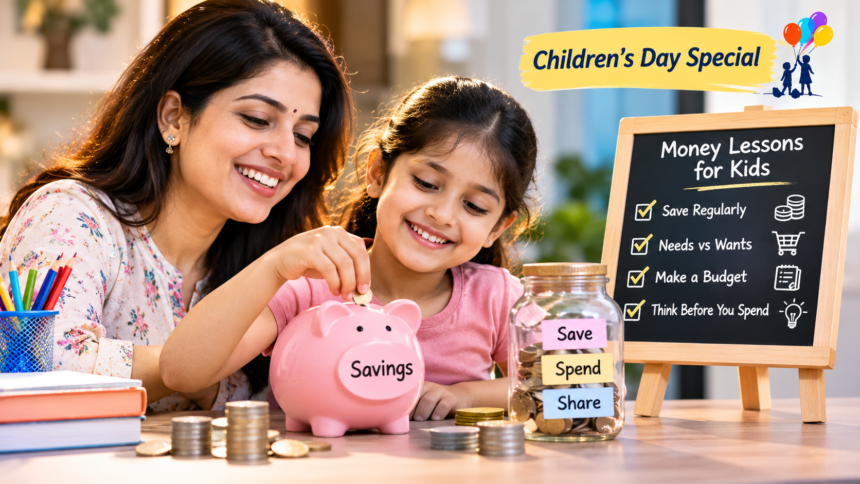
Children’s Day is a wonderful opportunity to focus on an important part of a child’s development: learning how to manage money. While parents often concentrate on education, health and overall growth, financial awareness is another valuable life skill that can help children become responsible and independent adults.
Teaching children about money does not require complicated financial lessons. Simple everyday activities, such as saving pocket money, comparing prices and understanding the difference between needs and wants, can help them develop healthy financial habits from an early age.
On the occasion of Children’s Day, here are some practical money lessons parents can introduce to their children to help them understand the value of money and make better financial decisions in the future.
1. Teach Children the Importance of Saving Money
Saving is one of the first financial habits children should learn. Parents can encourage children to keep a small portion of their pocket money aside instead of spending everything immediately.
A simple piggy bank or savings box can make the process interesting. Children can set a small savings target, such as collecting enough money to buy a favourite toy or book.
This activity helps them understand that achieving a financial goal requires patience and regular effort. It also introduces the idea that money does not always need to be spent as soon as it is received.
2. Explain the Difference Between Needs and Wants
Children often find it difficult to distinguish between things they need and things they simply want. Teaching this difference can help them develop better spending habits.
Parents can explain that needs include essential items such as food, clothes, school supplies and other everyday requirements. Wants may include expensive toys, video games, fashionable accessories and additional entertainment.
For example, if a child wants a new toy while already having several toys at home, parents can discuss whether the purchase is necessary or whether the money could be saved for another purpose.
Understanding this difference can help children become more thoughtful about their spending decisions.
3. Give Children Small Financial Responsibilities
Practical experience is one of the easiest ways to introduce money management. Parents can give children a small amount of pocket money and allow them to decide how to use it.
They can also involve children in simple household shopping activities. For example, ask them to compare the prices of similar products or help prepare a shopping list within a fixed budget.
These small responsibilities teach children that money is limited and that spending decisions require planning.
4. Introduce the Habit of Budgeting
Budgeting is an important financial skill that children can start learning through simple examples.
Parents can divide a child’s pocket money into different categories, such as savings, spending and sharing. This helps children understand that money can have different purposes.
For instance, if a child receives ₹100, parents can encourage them to save ₹30, spend ₹50 and keep ₹20 for helping someone or buying something for another person.
The amounts can be adjusted according to the child’s age and understanding. The main objective is to help children learn how to plan their money instead of spending it without thinking.
5. Teach Children to Avoid Impulsive Purchases
Children may sometimes want to buy something immediately after seeing it in a shop, advertisement or online video. Parents can use these situations to explain why it is important to think before spending.
One useful approach is to encourage children to wait for a day or two before making a non-essential purchase. During this time, they can consider whether they really need the item and whether it fits their savings goal.
This simple habit can help children develop patience and avoid unnecessary spending as they grow older.
6. Explain How Banks and Savings Accounts Work
As children grow older, parents can introduce basic banking concepts in an easy-to-understand way.
Explain what a bank account is, why people deposit money and how savings are maintained. Parents can also show older children how to read a bank statement or understand a simple transaction record.
Opening a savings account for a child, where suitable, can provide an opportunity to learn about deposits, withdrawals and responsible banking.
The aim should be to make children familiar with basic financial services before they start managing money independently.
7. Help Children Understand Digital Payments and Online Safety
Children are increasingly exposed to smartphones, online shopping and digital payment systems. Therefore, understanding digital money and online safety is also important.
Parents should explain that digital payments involve real money, even though no physical cash changes hands. Children should also learn not to share passwords, PINs, OTPs or banking information with anyone.
They should understand that unknown payment links, suspicious messages and unfamiliar online offers can be risky.
These basic lessons can help children develop safer habits when using digital platforms.
8. Encourage Giving and Sharing
Financial education should not be limited to saving and spending. Children should also understand the importance of helping others.
Parents can encourage them to use a small portion of their savings for charity, supporting someone in need or purchasing something for another person.
This teaches children that money can also be used to make a positive difference in other people’s lives.
9. Set a Good Financial Example at Home
Children often learn more from observing their parents than from listening to instructions. If parents regularly save money, plan household expenses and avoid unnecessary purchases, children can gradually develop similar habits.
Discussing simple financial decisions at home can also help children understand how families manage their budgets and prioritise expenses.
Parents do not need to share every financial detail. Even small examples from everyday life can make money lessons easier to understand.
Why Financial Education Matters for Children
Teaching children about money from an early age can help them become more confident when making financial decisions. Saving regularly, spending carefully, planning a budget and understanding digital payments are habits that can remain useful throughout their lives.
This Children’s Day, parents can take a small step towards their children’s financial education by introducing one simple money lesson at home. Consistent guidance and practical experience can help children build a healthier relationship with money as they grow.
Disclaimer: This article is intended for general educational and informational purposes only. The suggestions are general financial learning activities for children and should be adapted according to their age, understanding and family circumstances. Parents and guardians should supervise children’s financial activities and online transactions.