
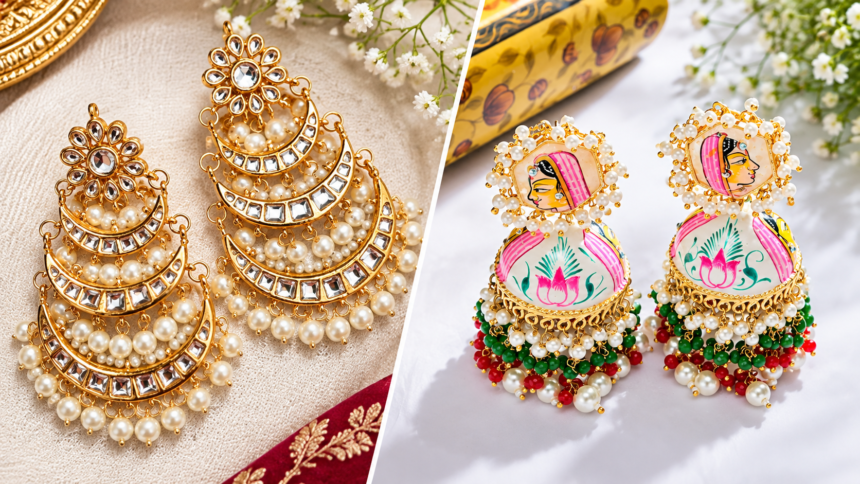
Wedding season is the perfect time to bring traditional jewellery back into the spotlight. While choosing an outfit may seem easy, finding the right pair of earrings can often be the most confusing part. For those who love Rajasthani jewellery, Kundan and Meenakari jhumkas are two timeless options worth considering.
Both styles have a rich heritage and beautiful craftsmanship, but they differ in appearance, weight, colours and styling. While Kundan jhumkas are known for their royal finish and sparkling stones, Meenakari designs stand out for their colourful enamel work and intricate detailing.
Whether you are dressing up for a wedding, sangeet, mehendi or daytime celebration, understanding the difference between these two traditional styles can help you make the right choice.
Kundan vs Meenakari Jhumkas: Key Differences
| Features | Kundan Jhumkas | Meenakari Jhumkas |
|---|---|---|
| Craftsmanship | Uncut stones or glass set in gold foil | Coloured enamel applied and fired on metal |
| Appearance | Rich, glittery and bridal | Colourful, playful and detailed |
| Weight | Generally heavier | Generally lightweight |
| Best occasions | Bridal wear, sangeet and reception | Haldi, mehendi and daytime weddings |
| Best outfit combinations | Plain silk sarees, heavy lehengas and velvet suits | White, pastel and mustard outfits, cotton-silk sarees |
| Popular colours | Gold, ivory, deep red and green | Pink, green, blue, red and multicolour |
| Long-hour comfort | May feel heavy after 4–5 hours | Generally easier to wear throughout the day |
| Popular centres | Jaipur and Bikaner | Jaipur |
| Price range | Usually more expensive | Usually more affordable |
A Look at the History of Rajasthani Jhumkas
Jhumkas have been an important part of Indian jewellery traditions for centuries. These bell-shaped earrings can be seen in historical temple sculptures and jewellery associated with royal courts. Over time, different regions developed their own designs and techniques, making jhumkas a significant part of India’s traditional jewellery heritage.
Rajasthan is particularly known for its Kundan and Meenakari craftsmanship. Kundan jewellery has strong associations with Mughal and Rajput royal traditions, with Jaipur and Bikaner becoming recognised centres for this art.
Meenakari, on the other hand, is an enamel-decoration technique that originated in Persia. It is believed that Raja Man Singh of Amer brought skilled enamel artisans from Lahore to Jaipur, helping establish the city as an important centre for Meenakari jewellery.
Kundan Jhumkas: The Perfect Choice for a Royal Look
Kundan jewellery is known for its luxurious appearance and detailed stonework. In this technique, uncut stones or glass pieces are carefully set using gold foil, creating a distinctive shine and a rich finish.
Kundan jhumkas are ideal when you want your earrings to become the main highlight of your outfit. They look particularly beautiful with plain silk sarees, heavy bridal lehengas in shades of red and maroon, and deep green velvet suits.
They also complement ivory and pastel outfits, especially during evening celebrations such as sangeet ceremonies and wedding receptions.
However, weight is an important factor to consider before purchasing Kundan earrings. Some designs can feel heavy after several hours of wear. If you plan to wear them for a long wedding function, check their weight and comfort before making a decision.
Meenakari Jhumkas: Colourful, Traditional and Comfortable
Meenakari jewellery is recognised for its vibrant enamel detailing. In this technique, colours such as pink, green, blue and red are applied to metal and fired to create beautiful decorative patterns.
Jaipur is particularly famous for its Meenakari work. Another interesting feature of well-crafted pieces is their detailed back design, which can be just as attractive as the front.
Compared with traditional Kundan designs, Meenakari jhumkas generally offer a lighter and more playful appearance. They are especially suitable for daytime occasions such as haldi, mehendi and wedding lunches.
These earrings look beautiful with white, mustard and pastel-coloured outfits. For an elegant traditional combination, you can pair pink and green Meenakari jhumkas with a simple cotton-silk saree.
How Are Kundan and Meenakari Jhumkas Made?
Both jewellery styles involve detailed handmade processes and require considerable patience and craftsmanship.
Kundan jewellery: The process begins with creating a metal frame for the jewellery. Artisans then carefully place stones and secure them using gold foil and lac. The gold foil creates the characteristic soft shine associated with Kundan work. Some designs also feature Meenakari detailing on the reverse side, combining two traditional crafts in a single piece.
Meenakari jewellery: The artisan first engraves the desired design onto a metal surface. Coloured enamel powders are then filled into the engraved sections before the piece is heated in a furnace. Different colours are fired separately, beginning with those that require higher temperatures. Detailed designs can therefore take several days to complete.
How Are They Different From Other Traditional Jhumkas?
Although several traditional Indian jewellery styles share similarities, their craftsmanship and appearance make them distinct.
- Polki and Jadau: These styles are closely associated with Kundan jewellery. However, Polki uses uncut diamonds, which makes it considerably more expensive.
- Temple jewellery: Originating from South Indian traditions, this jewellery is generally made in gold and features motifs of gods and goddesses.
- Oxidised silver: Known for its dark, rustic appearance, this style generally offers a stone-free design with a more bohemian feel.
- Kundan and Meenakari: These Rajasthani styles combine traditional stone-setting techniques and colourful enamel craftsmanship.
How to Style Kundan and Meenakari Jhumkas with Modern Outfits
Traditional jhumkas are no longer limited to sarees and lehengas. They can also be styled with contemporary and Indo-western outfits.
Kundan jhumkas work particularly well with plain satin sarees, Indo-western gowns and velvet blazers paired with palazzo pants. Since these earrings already have a rich appearance, keeping the neckline simple and avoiding a heavy necklace can help maintain a balanced look.
Meenakari jhumkas are a great option for casual and contemporary styling. You can pair them with a crisp white shirt and high-waisted trousers, a cotton co-ord set or even a denim jacket worn over a kurta. Their colourful detailing can add character to simple outfits.
For both styles, a neat bun or ponytail is a simple way to keep the earrings visible and make them stand out.
Which Jhumkas Should You Choose for the Wedding Season?
Your choice ultimately depends on the occasion, outfit and personal comfort.
- For bridal ceremonies and main wedding functions: Kundan jhumkas are an excellent option, particularly with rich fabrics and heavily embellished outfits.
- For mehendi and daytime celebrations: Meenakari jhumkas are a beautiful choice, especially when paired with light-coloured or pastel outfits.
Both styles have their own appeal, so consider your outfit and the kind of look you want to create before choosing.
Why Every Jewellery Collection Needs a Pair of Jhumkas
A well-designed pair of jhumkas can instantly elevate even a simple outfit. The same earrings can be worn for a family puja, a friend’s wedding or a festive celebration, making them a versatile addition to your jewellery collection.
Since both Kundan and Meenakari jewellery involve traditional handmade craftsmanship, a carefully selected pair can remain part of your wardrobe for years and may even become a family keepsake.
They are also easy to pack, make thoughtful gifts and can be styled in several different ways. If you are planning to invest in traditional jewellery this wedding season, choosing a pair that works with multiple outfits can be a practical decision.
Buying Tips and Jewellery Care
Before purchasing Kundan or Meenakari jhumkas, pay attention to the quality of their finishing. In Kundan designs, the stones should be placed neatly without visible gaps. For Meenakari jewellery, check that the enamel colours are evenly applied and that there are no chipped edges.
To maintain their appearance, keep your earrings away from water and perfume. Store them separately in a soft cloth pouch to protect their detailing and finish.
Whether you prefer the royal sparkle of Kundan or the colourful charm of Meenakari, both styles celebrate Rajasthan’s traditional jewellery craftsmanship. The right pair can add a timeless touch to your wedding-season wardrobe.