
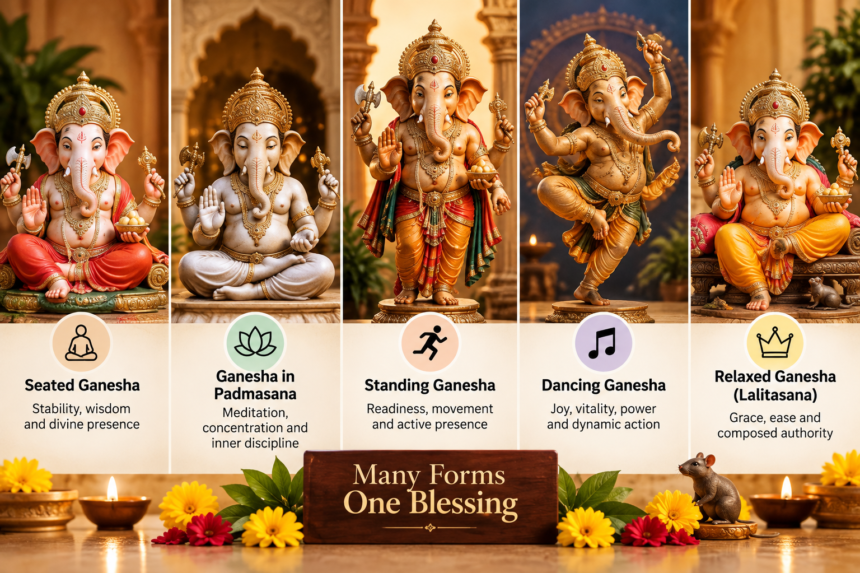
Ganesh Chaturthi 2026: Lord Ganesha is worshipped in many different forms, and devotees may notice that Ganesha idols are not always depicted in the same posture. Some show Bappa seated peacefully, others portray Him in a meditative pose, while some feature a standing or dancing Ganesha.
These differences are not simply matters of artistic style. In Hindu iconography, the posture of a deity can communicate particular qualities, moods and spiritual ideas. Ganesha’s different forms can therefore be viewed as expressions of wisdom, stability, concentration, readiness, joy and divine action.
Here’s a look at the spiritual significance traditionally associated with some of the most recognisable Ganesha postures.
Seated Ganesha: Symbol of Stability and Wisdom
The seated Ganesha idol is among the most commonly seen forms, especially in homes and places of daily worship.
One important variation is Lalitasana, in which one leg is relaxed while the other remains positioned on the seat or supporting surface. The resulting posture appears comfortable, graceful and composed.
In traditional artistic representations, this relaxed position can convey qualities such as authority, ease and divine grace.
From a spiritual perspective, seated Ganesha represents a calm and established presence. Bappa appears peaceful and attentive, yet remains powerful enough to overcome obstacles. This combination of serenity and strength makes the seated form especially familiar in devotional settings.
Ganesha in Padmasana: Meditation and Mental Discipline
Another distinctive form shows Ganesha Ji sitting in a yogic or lotus-like posture.
Unlike the relaxed appearance of Lalitasana, this form places greater visual emphasis on symmetry, stillness and inward concentration. The posture is often understood in connection with meditation, contemplation and control of the mind.
Its spiritual message can be interpreted as a reminder that overcoming obstacles is not always about changing the circumstances around us. At times, the first challenge is to overcome distraction, confusion and restlessness within ourselves.
The meditative Ganesha therefore represents the quieter and more contemplative side of devotion.
Standing Ganesha: Readiness and Active Energy
A standing Ganesha idol presents a noticeably different visual impression. Rather than appearing settled in one place, Ganesha Ji is shown upright, creating a sense of alertness and movement.
Classical Indian iconography recognises standing representations of Ganesha, including postures such as abhanga and samabhanga.
Spiritually, a standing Ganesha can be viewed as a symbol of readiness, active participation and purposeful movement.
It is also worth noting that a standing Ganesha should not automatically be considered inauspicious or unsuitable for worship. Historical temple traditions include Ganesha images in standing, seated and dancing forms, demonstrating the long-standing diversity of Ganesha iconography.
Dancing Ganesha: Joy, Energy and Divine Action
Among the various representations, Dancing Ganesha, or Nritya Ganesha, is one of the most energetic.
The image often depicts Ganesha Ji with one foot raised and the body arranged in a dynamic movement. Unlike the stillness of a meditative or seated form, the dancing posture conveys joy, vitality, energy and power.
Historical sculptures of dancing Ganesha can be highly elaborate, sometimes showing multiple arms and musicians accompanying the deity.
The symbolism extends beyond the simple idea of a deity who enjoys dancing. Dancing Ganesha has also appeared as an important temple representation and is connected with Ganesha’s role as the Remover of Obstacles.
The moving posture can therefore be understood as a powerful spiritual metaphor: some obstacles require patience and stillness, while others demand courage, movement and action.
Relaxed Ganesha: Grace and Divine Confidence
Some Ganesha idols portray Bappa in an especially relaxed and regal seated position, often associated with Lalitasana, or the posture of royal ease.
The relaxed leg and composed body create an impression of confidence without aggression. Ganesha Ji appears completely at ease, rather than struggling against the obstacles before Him.
Spiritually, this form can be interpreted as representing assurance, grace, confidence and mastery without unnecessary force.
It conveys the idea that true strength does not always have to appear aggressive or dramatic.
Why Are Ganesha Idols Shown in Different Postures?
The different postures of Ganesha should not be viewed as conflicting representations. Instead, they allow devotees and artists to highlight different aspects of the deity’s personality and spiritual symbolism.
| Ganesha Posture | Traditional Spiritual Association |
|---|---|
| Seated Ganesha | Stability, wisdom and divine presence |
| Lalitasana | Grace, ease and composed authority |
| Yogic/meditative | Concentration, contemplation and inner discipline |
| Standing Ganesha | Readiness, movement and active presence |
| Dancing Ganesha | Joy, vitality, power and dynamic action |
Historical representations show that Ganesha’s visual tradition has included a wide range of poses. Temple sculptures and artistic traditions have depicted Him seated, standing and dancing, reflecting the many dimensions associated with the deity.
Spiritual Meaning of Different Ganesha Forms
The most meaningful way to understand these postures is to see each one as expressing a different state of divine presence.
A seated Ganesha can remind devotees of the importance of stability and wisdom. The meditative form turns the focus towards concentration and inner discipline. The standing Ganesha suggests preparedness and active engagement, while the dancing form represents joy, energy and purposeful action.
During Ganesh Chaturthi 2026, when devotees welcome Ganesha Ji into their homes and communities, the posture of the murti can offer an additional layer of symbolism to the celebration.
So, the next time you see a Ganesha idol, look beyond whether Bappa is sitting, standing or dancing. The posture itself can tell a story.
Ganesha’s many forms offer a simple spiritual reminder: sometimes strength lies in remaining calm and steady, while at other times, it lies in moving forward with confidence and purpose.