
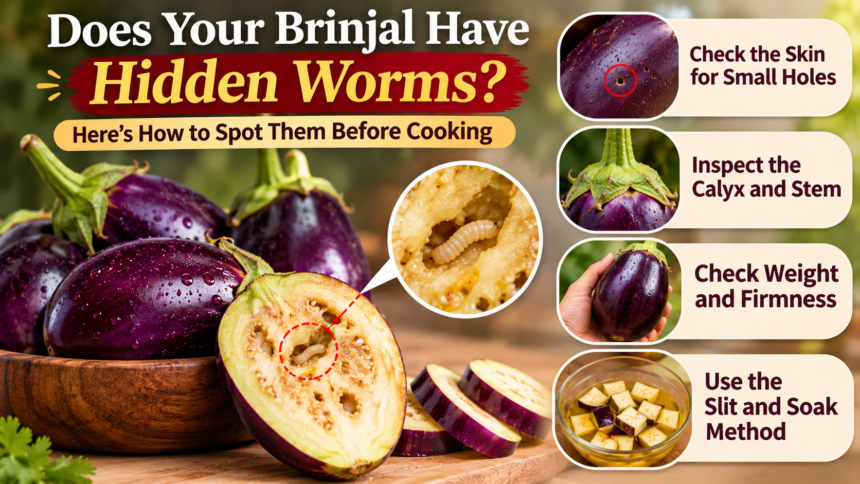
Brinjal, also known as eggplant, is a popular vegetable in Indian kitchens and is used in a variety of dishes, from baingan bharta to stuffed baingan and different curries. However, cutting open a fresh-looking brinjal only to discover tiny worms or larvae inside can be an unpleasant surprise.
This problem is commonly associated with the eggplant fruit and shoot borer, an insect that lays eggs on flower buds and young fruits. After hatching, the caterpillars enter the vegetable and feed on its inner flesh, often leaving little visible evidence on the outside.
Fortunately, a few simple checks can help you identify an infested brinjal before adding it to your meals.
1. Look for Small Holes and Marks on the Skin
One of the first signs of a possible worm infestation is the presence of tiny holes on the brinjal’s outer surface. Carefully examine its smooth purple skin for small brown or black spots that look like needle pricks.
These openings may indicate where the borer larvae have entered or exited the vegetable. You should also check for tiny particles resembling sawdust around the holes. These particles, known as frass, are insect waste produced as larvae feed inside the brinjal.
2. Examine the Green Cap and Stem
The green leafy portion, known as the calyx, is another area that deserves attention when selecting brinjal. Insects can enter the vegetable near the point where the stem joins the fruit.
A fresh brinjal generally has a bright green, tightly attached calyx. If the green cap appears dry, wilted or unusually brown near its base, it could indicate possible insect damage.
You can also gently move the leaves around the cap to inspect the area underneath. Softness or unusual discolouration near the stem may be another reason to avoid selecting that vegetable.
3. Check the Weight and Firmness
The texture and weight of a brinjal can also provide clues about its freshness. Since larvae feed on the inner flesh, their activity can sometimes leave damaged or hollow areas inside the vegetable.
Gently press the surface to check its firmness. A fresh brinjal should feel consistently firm with a slight springiness. Avoid vegetables with localised soft patches, sunken areas or unusual mushiness, as these may indicate internal damage or decay.
Weight is another factor to consider. A good-quality brinjal should feel reasonably heavy for its size. If it feels unusually light, its interior may have become hollow or dried out.
4. Cut Open the Brinjal and Check Before Cooking
When preparing dishes such as baingan bharta or bharwan baingan, inspecting the vegetable before cooking is particularly important.
If you plan to roast whole brinjals, make three to four deep vertical cuts along the vegetable, reaching towards the centre. Slightly open the cuts and examine the inner flesh for brown patches, tunnels or visible caterpillars.
For recipes that require diced brinjal, cut the vegetable into smaller pieces and inspect them individually. You can also soak the pieces in warm water mixed with one teaspoon of salt and half a teaspoon of turmeric for 10–15 minutes.
This soaking method is traditionally used to help dislodge hidden insects and reduce browning of the cut vegetable.
Final Takeaway
Checking brinjal before cooking can help you avoid unpleasant surprises in your food. Pay attention to tiny holes, damaged green caps, unusual softness and discolouration. Most importantly, cut open and inspect the inner flesh before preparing your favourite eggplant dishes. If you find worms or significant internal damage, discard the affected vegetable rather than using it.