
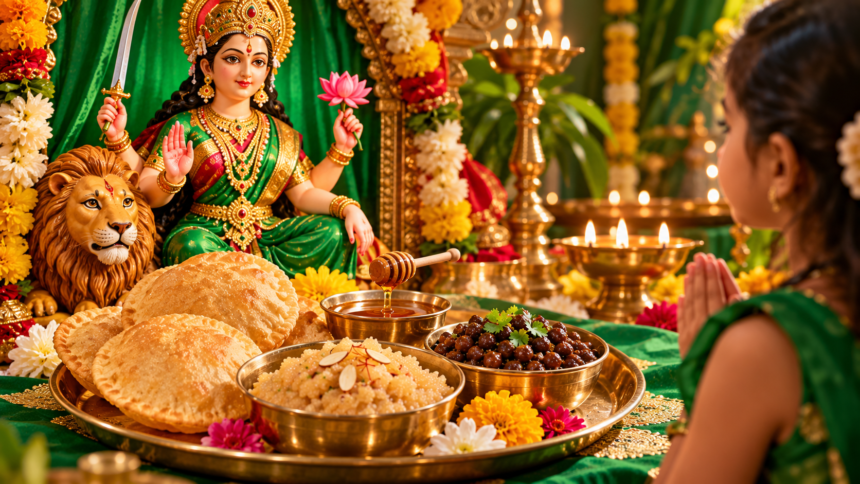
Sharadiya Navratri reaches its sixth day on Friday, October 16, 2026, when devotees worship Maa Katyayani, the sixth form of Goddess Durga. She is revered as a symbol of courage, strength and the victory of good over evil. Devotees perform special prayers, offer flowers and chant sacred mantras to seek her blessings for protection, prosperity and harmony in their lives.
Green is the traditional colour associated with the sixth day, representing growth, renewal and harmony. Honey is offered as bhog during the worship. Maa Katyayani is also worshipped by devotees seeking the removal of obstacles and a harmonious married life. Here is everything to know about Navratri Day 6, including the puja vidhi, mantras, religious significance and the story of the goddess.
Navratri Day 6: Date, Colour and Bhog
- Date: Friday, October 16, 2026
- Goddess: Maa Katyayani
- Colour: Green
- Bhog: Honey
Green is associated with fresh beginnings, balance and growth. Honey is offered to Maa Katyayani as part of the traditional worship rituals. Devotees observe the day with prayers and offerings, seeking the goddess’s blessings for strength, well-being and peace.
Who Is Maa Katyayani and Why Is She Worshipped?
Maa Katyayani is the sixth manifestation of Goddess Durga among the nine forms of Navdurga. She is known for her courage and power to defeat evil forces.
The goddess is commonly depicted with four hands, although some religious texts describe forms with as many as eighteen arms. She is shown with three eyes and a crescent moon on her forehead. Her sword represents the destruction of evil and ignorance, while the lotus symbolises purity. Her Abhaya Mudra represents fearlessness and protection, and her Varada Mudra signifies blessings and the granting of wishes.
Maa Katyayani is associated with the Agnya Chakra, which is traditionally connected with insight and inner awareness. Devotees worship her to develop courage, overcome negative tendencies and face difficulties with confidence.
According to Hindu tradition, unmarried devotees worship Maa Katyayani for a compatible life partner. The Gopis of Braj are also associated with this form of worship. Many devotees pray to the goddess for marital harmony, personal strength and the removal of obstacles.
Maa Katyayani Puja Vidhi for Navratri Day 6
Devotees can follow these traditional steps while worshipping Maa Katyayani on the sixth day of Navratri.
1. Begin with morning prayers: Wake up early, preferably during Brahma Muhurta, take a bath and wear clean clothes. Green, yellow and red are traditionally preferred colours for the occasion.
2. Prepare the puja area: Clean the place of worship and sprinkle Ganga jal if customary in your household. Place an idol or picture of Maa Katyayani on a clean altar.
3. Worship the Kalash: Offer prayers to the Ghatasthapana kalash established on the first day of Navratri.
4. Light a diya: Light a ghee lamp and incense sticks before the goddess as part of the traditional ritual.
5. Make the offerings: Offer roli, kumkum, sandalwood paste, akshat (rice grains) and fresh flowers. Red and yellow flowers, including roses and marigolds, are commonly used.
6. Chant mantras: Recite Maa Katyayani’s mantras and, according to your family tradition, read the Durga Chalisa or Durga Saptashati.
7. Offer bhog and perform aarti: Present honey as bhog and conclude the worship with the traditional aarti. Distribute the prasad among family members.
Maa Katyayani Mantras and Their Meaning
Devotees chant the following mantras to express their devotion and seek the goddess’s blessings.
Main mantra
देवी कात्यायन्यै नमः
Transliteration: Om Devi Katyayanyai Namah.
Meaning: I bow to Goddess Katyayani, the divine form of Durga worshipped for her strength and power to destroy evil.
Maa Katyayani prayer
चन्द्रहासोज्ज्वलकरा शार्दूलवरवाहना।
कात्यायनी शुभं दद्याद्देवी दानवघातिनी॥
Transliteration: Chandrahasojjvalakara Shardulavaravahana, Katyayani Shubham Dadyad Devi Danavaghatini.
Meaning: May Goddess Katyayani, who holds a shining sword and rides a majestic lion, bless devotees with auspiciousness and grace. She is revered as the destroyer of demonic forces.
Devotees may chant these prayers according to their religious customs and personal faith.
Maa Katyayani Katha: The Story Behind Navratri Day 6
According to Hindu mythology, Sage Katyayan performed intense penance with the wish that the Divine Mother would be born as his daughter. At the same time, the demon Mahishasura had grown powerful and was troubling the gods and the world.
To defeat him, Brahma, Vishnu and Shiva joined forces with the other deities. Their combined divine energy manifested as a powerful goddess who appeared at Sage Katyayan’s hermitage. In recognition of the sage’s devotion, she became his daughter and was named Katyayani.
As Mahishasura continued his destructive activities, the gods sought the goddess’s help. Maa Katyayani rode a lion and entered battle carrying divine weapons, including a trident, discus, sword and bow.
After a fierce confrontation, she defeated Mahishasura and brought an end to his tyranny. This victory earned her the name Mahishasura Mardini, meaning the slayer of Mahishasura.
The sixth day of Navratri honours the goddess’s courage and determination. Through prayers, mantras and offerings, devotees seek her blessings to overcome challenges, develop inner strength and maintain peace and harmony in their lives.
Disclaimer: This article is intended for general informational and cultural purposes only. Religious stories, rituals, mantras and interpretations may vary across traditions and communities. Devotees may follow the customs and practices observed within their own families and religious traditions.