
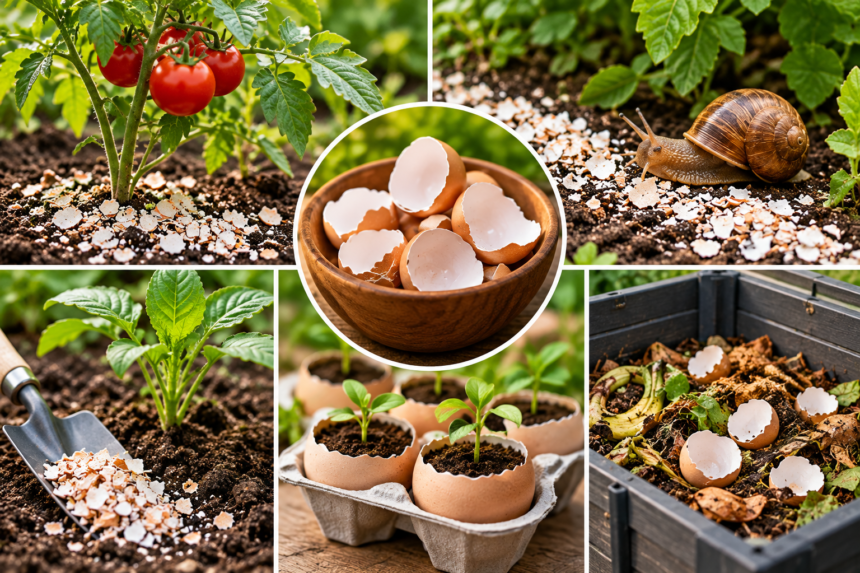
Before throwing away your used eggshells, take a second look at them. What appears to be ordinary kitchen waste can actually become a useful addition to your garden.
Eggshells are naturally rich in calcium carbonate, making them a simple and sustainable material for gardeners. When cleaned and crushed properly, they can contribute to soil health, support plant growth, discourage certain garden pests and add minerals to compost.
From improving soil conditions to giving seedlings an eco-friendly starting point, here are five ways eggshells can benefit your plants and garden.
1. Add Calcium and Support Soil Health
One of the biggest advantages of eggshells is their calcium content. Calcium plays an important role in plant development and contributes to the formation of strong plant cell walls.
Adding finely crushed eggshells to garden soil can provide a gradual source of calcium. This may be particularly useful for plants such as tomatoes, peppers, eggplants and melons, which can develop blossom-end rot when calcium availability is inadequate.
However, it is important to remember that eggshells break down slowly. Grinding them into a fine powder can increase their surface area and help them decompose more readily.
Rather than acting as an instant plant fertiliser, eggshells are better viewed as a slow-release soil amendment that can contribute to long-term soil improvement.
2. Create a Natural Barrier Against Some Garden Pests
Your kitchen leftovers may also help discourage certain unwanted visitors in the garden.
Crushed eggshells can create a rough, abrasive surface around plants. Gardeners commonly use them as a physical barrier against soft-bodied pests such as slugs and snails.
To use them, clean and dry the shells, crush them into small pieces and spread them around the base of susceptible plants.
Eggshells are not a guaranteed pest-control solution, and their effectiveness can vary depending on garden conditions. Still, they provide a chemical-free option that some home gardeners find useful as part of broader pest-management practices.
3. Help Moderate Acidic Soil
Eggshells contain a large amount of calcium carbonate, which is alkaline in nature. When eggshell material gradually breaks down in the soil, it can help moderate soil acidity.
This may benefit plants that prefer neutral or slightly alkaline growing conditions.
However, soil pH should ideally be tested before adding large quantities of any material intended to alter it. Excessive use of eggshells is unnecessary, particularly if your soil already has a suitable pH.
For gardeners dealing with acidic soil, finely ground eggshells can be incorporated as a gradual soil amendment.
4. Turn Eggshell Halves Into Eco-Friendly Seed Starters
Don’t crush every eggshell. The larger halves can also be put to good use.
Clean, dry eggshell halves can serve as small biodegradable containers for starting seeds. Simply add a little growing medium, sow the seed and place the shell in a suitable location where the seedling can grow.
Once the young plant becomes ready for transplanting, the seedling can be moved into the garden along with the shell. Gently cracking or crushing the bottom of the shell before planting can help roots grow outward.
As the shell gradually breaks down, its calcium content can become part of the surrounding soil.
This approach also gives gardeners a way to reuse kitchen waste instead of purchasing additional small seed-starting containers.
5. Add Crushed Eggshells to Your Compost
Eggshells can also become part of your home composting routine.
When crushed and added to compost, they contribute calcium and other mineral content. Over time, the material can become incorporated into the finished compost and eventually return minerals to the soil when the compost is used around plants.
For better results, crush the shells before adding them to your compost pile or bin. Smaller pieces have more surface area and can break down more readily.
Before composting, rinse the eggshells thoroughly and allow them to dry. This helps reduce leftover food residue and the possibility of attracting unwanted pests.
How to Prepare Eggshells for the Garden
Using eggshells in the garden is simple, but a little preparation can make them more practical.
Step 1: Rinse the shells to remove remaining egg residue.
Step 2: Allow them to dry completely.
Step 3: Crush them into small pieces or grind them into a fine powder, depending on how you intend to use them.
Step 4: Add them to the soil, compost or use clean halves as seed starters.
For soil amendment purposes, finely ground eggshells are generally more useful than large pieces because they provide greater surface area for gradual breakdown.
Are Eggshells a Complete Fertiliser?
No. While eggshells can provide calcium and contribute to soil improvement, they should not be considered a complete plant fertiliser.
Plants need several essential nutrients, including nitrogen, phosphorus and potassium, along with various micronutrients. Eggshells alone cannot provide everything a plant needs.
Think of eggshells as a useful recycled soil amendment, rather than a replacement for a balanced fertiliser or healthy compost.
The Bottom Line
Eggshells don’t have to end up in the garbage. With a little cleaning and preparation, they can become a useful resource for your garden.
They can add calcium to soil, help create a barrier against certain pests, moderate soil acidity, provide biodegradable seed-starting containers and contribute minerals to compost.
So, the next time you cook eggs, consider saving the shells. Turning this everyday kitchen waste into a gardening resource is an easy way to reduce waste and make your gardening routine more sustainable.
Gardening tip: Before using eggshells specifically to change soil pH, test your soil first. This will help you avoid adding unnecessary amendments and give your plants the conditions they actually need.