
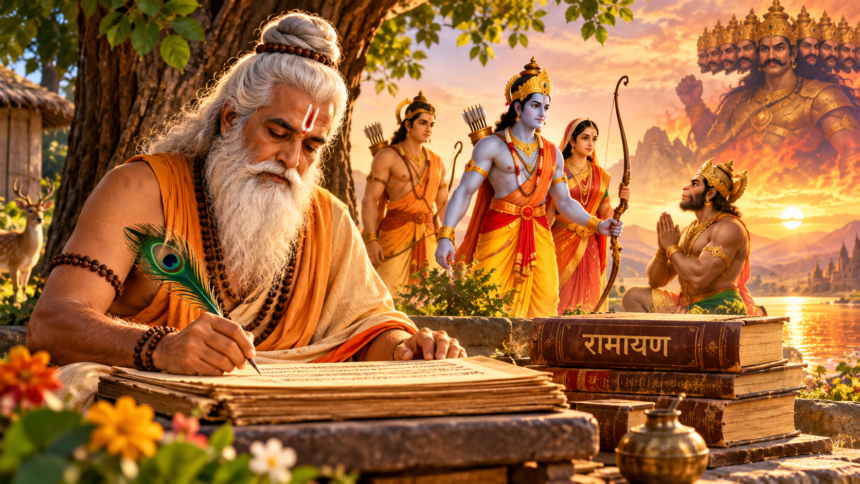
Maharishi Valmiki is widely revered as the author of the Ramayana, one of the most influential epics in Hindu tradition. The timeless story follows the life of Lord Rama and his wife, Sita, and explores the values of truth, duty, courage and righteousness. The epic also forms an important part of the traditions associated with festivals such as Dussehra and Diwali, which symbolise the victory of good over evil.
The Ramayana recounts the conflict between Lord Rama and Ravana, the king of Lanka, following Sita’s abduction. The battle ultimately ends with Ravana’s defeat, reinforcing the message that evil cannot ultimately triumph over righteousness.
Beyond its central narrative, the Ramayana offers lessons that continue to resonate with people across generations. On Valmiki Jayanti 2026, observed on October 26, these teachings provide an opportunity to reflect on the values that can guide everyday decisions, relationships and responsibilities.
5 Important Life Lessons from Maharishi Valmiki’s Ramayana
1. Truth and Honesty Build Trust
Lord Rama’s commitment to truth is one of the central themes of the Ramayana. His actions highlight the importance of remaining honest and standing by one’s principles, even when doing so involves personal sacrifice.
In modern life, honesty remains essential for building trust in personal relationships and professional environments. Staying truthful can help people make responsible decisions and maintain their integrity.
2. Put Responsibility Before Personal Comfort
The Ramayana repeatedly emphasises the importance of fulfilling one’s duties, even when circumstances become difficult. Lord Rama’s acceptance of his responsibilities illustrates the value of commitment and discipline.
For today’s generation, this lesson is relevant when balancing careers, family obligations and personal ambitions. Meeting responsibilities with sincerity can help build stronger relationships and a more purposeful life.
3. Value Relationships and Loyalty
Respect for family and loyalty to loved ones are important themes throughout the epic. Lord Rama’s devotion to his parents and Hanuman’s unwavering dedication to Rama demonstrate the strength of trust, commitment and mutual respect.
These values remain relevant in a world where busy schedules and changing priorities can sometimes weaken personal connections. Making time for family and supporting those who stand by us can help maintain meaningful relationships.
4. Face Difficulties with Courage and Patience
The experiences of Sita during her captivity demonstrate resilience in the face of adversity, while Lord Rama’s perseverance reflects the importance of remaining determined during challenging times.
Life often brings unexpected setbacks, uncertainty and disappointment. The Ramayana reminds readers that courage, patience and hope can help people navigate difficult situations without losing sight of their values.
5. True Leadership Requires Compassion
Lord Rama’s conduct is often associated with fairness, empathy and a strong sense of justice. His example highlights that leadership involves more than authority; it also requires understanding others, making responsible decisions and treating people fairly.
Whether in the workplace, at home or in society, compassionate leadership can help build trust and encourage cooperation. The lesson is that effective leadership combines strength with kindness and responsibility.
Why the Ramayana’s Teachings Remain Relevant Today
The Ramayana is more than an ancient epic; it is also a source of moral and spiritual reflection for many people. Its emphasis on honesty, duty, loyalty, resilience and compassion continues to offer guidance in contemporary life.
As people observe Valmiki Jayanti 2026 on October 26, reflecting on these teachings provides an opportunity to consider how traditional values can be applied to modern challenges. By practising integrity, respecting relationships and approaching difficulties with courage, individuals can work towards more responsible and meaningful lives.
Disclaimer
This article is intended for general informational and cultural purposes. The life lessons discussed are interpretations of themes traditionally associated with the Ramayana and its characters. Religious beliefs, interpretations and traditions may vary across communities and sources. Readers are encouraged to consult recognised literary and religious texts for further study.