
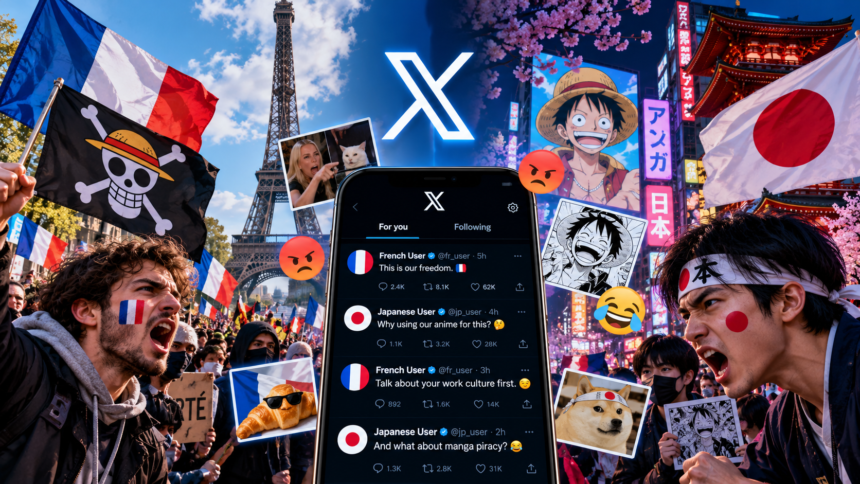
A new online dispute between French-speaking and Japanese-speaking users has gained attention on X, formerly Twitter. What began with reactions to protests in France has developed into a wider exchange of memes, cultural references and criticism involving immigration, workplace culture and manga piracy.
The dispute attracted attention after videos of protests held in France on October 17 circulated widely on social media. Some Japanese accounts criticised the unrest and blamed immigrants for the violence, prompting angry responses from French-speaking users. The discussion soon expanded into broader arguments about national stereotypes and cultural differences, with the iconic pirate flag from the anime One Piece becoming a central part of the debate.
How Did the France-Japan Meme War Begin?
The online confrontation gained momentum following demonstrations in France over issues including the rising cost of living, education and public services. During the protests, some demonstrators carried the Straw Hat Pirates flag from One Piece, the popular Japanese anime and manga series featuring Monkey D. Luffy and his crew.
The flag has been used as a symbol of freedom and resistance at protests in different parts of the world. However, its appearance during the French demonstrations prompted objections from some Japanese anime fans, particularly in the context of the unrest.
At the same time, comments criticising France’s immigration situation intensified the disagreement. French-speaking users pushed back against these remarks, and the exchange developed into a broader online argument involving users from both language communities.
Manga Piracy and Japanese Work Culture Become Targets
As the debate spread, users began exchanging jokes and criticism about each other’s societies. Some French-speaking accounts mocked Japan’s demanding work culture and long working hours.
Japanese-speaking users responded with references to France’s reported crackdown on illegal manga and anime streaming websites in 2025. These exchanges added another dimension to the dispute, moving it beyond the original protests.
Memes about national stereotypes, cultural differences and anime fandom subsequently became a prominent feature of the discussion. Despite the increasingly personal tone of some posts, the online exchanges do not establish that the views expressed represent the wider populations of France or Japan.
How X’s Translation Features Helped the Dispute Spread
Language barriers can limit the reach of online discussions, but automated translation features have made it easier for users from different countries to engage with one another. X introduced automated translations earlier in 2026, helping posts reach audiences who might otherwise struggle to understand them.
According to reports circulating online, a video of a French protest featuring the One Piece pirate flag attracted more than 45 million views in less than 24 hours. As the clip spread, X’s recommendation algorithm reportedly exposed it to Japanese-speaking users as well, with translated text making the content more accessible.
The combination of viral video, automatic translation and algorithmic recommendations helped turn a local protest-related discussion into a cross-cultural social media dispute.
China-Türkiye Meme War Adds to Online Rivalries
The France-Japan exchange has also drawn attention amid another reported online feud involving Chinese and Turkish users.
That dispute reportedly began on October 19, when a meme compared Türkiye’s national flag with Patrick Star, a character from SpongeBob SquarePants. Turkish users responded with jokes referencing China’s Great Wall, and the exchange subsequently spread to other online communities.
Together, these incidents illustrate how memes, cultural references and viral posts can rapidly cross national and linguistic boundaries. However, online arguments involving individual accounts should not be taken as evidence of widespread hostility between entire countries.
Disclaimer
This article summarises reported social media activity and online discussions. Viral posts, view counts, the context of individual comments and claims about platform algorithms may change or require independent verification. Statements made by social media users do not necessarily represent the views of the wider populations of the countries discussed. Readers should consult reliable sources and original posts for further context.