
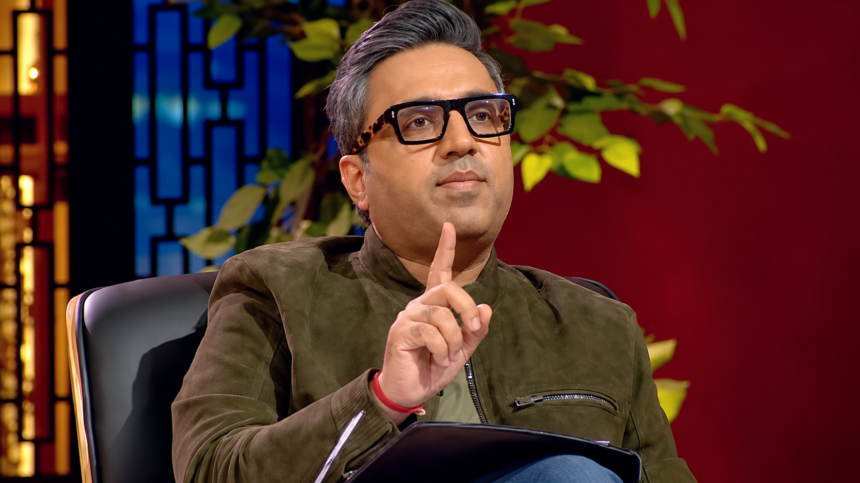
BharatPe co-founder Ashneer Grover has criticised the possibility of introducing charges on Unified Payments Interface (UPI) transactions above Rs 2,000, arguing that such a move could weaken one of India’s biggest digital payment success stories.
Speaking on Tuesday, Grover said charging for UPI would effectively amount to collecting another form of tax and questioned why the government would alter a payment system that has already gained widespread acceptance.
He warned that if merchants are allowed to impose charges on larger UPI payments, customers could shift back to cash. According to Grover, this could eventually increase the cost of handling cash for banks and businesses.
“Free UPI is the only UPI,” Grover said, adding that introducing charges could effectively bring the growth of UPI to an end.
Why the Rs 2,000 UPI limit matters
The comments came after the government notified that banks and payment system providers cannot directly or indirectly charge people making or receiving UPI payments of up to Rs 2,000 or payments through RuPay debit cards.
However, the notification does not specifically state whether charges could be introduced for UPI transactions above Rs 2,000, particularly merchant payments.
UPI transactions currently do not attract a Merchant Discount Rate (MDR), regardless of their value.
Grover questioned the significance of the Rs 2,000 threshold. He said transactions above that amount represent only 4% of UPI transactions by volume but account for 66% of the total transaction value.
According to him, allowing MDR on this segment could effectively create a charge on a substantial portion of UPI’s monetary value.
He also warned that merchants could either pass the additional cost to customers or encourage them to split larger payments into several smaller transactions.
For example, a Rs 12,000 payment could potentially be divided into multiple UPI transactions to avoid a charge. Alternatively, a merchant could ask the customer to pay an MDR of 0.25%, 0.5% or 1%, depending on what the government eventually permits.
Grover warns of a return to cash
Grover said merchants could also choose not to accept UPI payments above Rs 2,000 and instead request cash.
He argued that such a shift could have consequences beyond individual transactions. Greater dependence on cash would require more infrastructure, including offices and ATMs, while also increasing the cost of cash management for banks.
His concern is that any savings from introducing UPI charges could ultimately be offset by higher expenses associated with handling physical cash.
Grover also questioned whether UPI is actually creating a financial burden that requires such a change. He pointed to the Reserve Bank of India’s Rs 2.87 lakh crore surplus transferred to the government, listed bank profits of Rs 4.11 lakh crore and NPCI’s pre-tax surplus of Rs 1,888 crore.
He questioned what specific loss caused by UPI or what government subsidy was creating the need for a new charging mechanism.
What the government said about UPI charges
According to a gazette notification dated September 14, banks and system providers cannot impose direct or indirect charges on a person making or receiving payments through RuPay debit cards or UPI transactions of up to Rs 2,000.
The notification follows an amendment to Section 10A of the Payment and Settlement Systems Act, 2007. The amendment establishes an enabling framework for imposing MDR on UPI and other notified electronic payment methods.
Parliament passed the amendment Bill during the Monsoon Session, which ended on August 13, 2026.
After the Bill was passed, the government said the UPI and Services Steering Committee, headed by the National Payments Corporation of India (NPCI), would determine MDR rates.
The government has argued that UPI’s rapid expansion requires continuous investment in infrastructure, cybersecurity and fraud prevention.
It has also said that a revenue model could help make the digital payment ecosystem more self-sustaining and encourage more companies to participate, potentially increasing competition.
According to the government, depending entirely on subsidies may not be sustainable for the next stage of UPI’s growth. A balanced framework, it said, would help maintain a robust, inclusive and future-ready payment system.
UPI’s growth in India and overseas
UPI is operated by the National Payments Corporation of India (NPCI), an initiative of the Reserve Bank of India and the Indian Banks’ Association.
The real-time payment platform enables users to transfer money directly between bank accounts and make payments to merchants.
Since its launch on August 25, 2016, UPI has fundamentally changed India’s digital payments landscape. Its transaction value increased from Rs 0.07 lakh crore in FY17 to around Rs 314 lakh crore in FY26, representing growth of more than 4,000 times over the decade.
UPI has also expanded beyond India and is now accepted in 11 countries. Uzbekistan is the latest country to join the list. Other countries where UPI is accepted include Singapore, the United Arab Emirates, France, Mauritius, Nepal, Bhutan, Qatar, Sri Lanka, Cambodia and Greece.
The ongoing MDR debate now centres on finding a balance between keeping UPI affordable for consumers and creating a sustainable financial model that can support the infrastructure, cybersecurity and innovation required for its continued growth.