
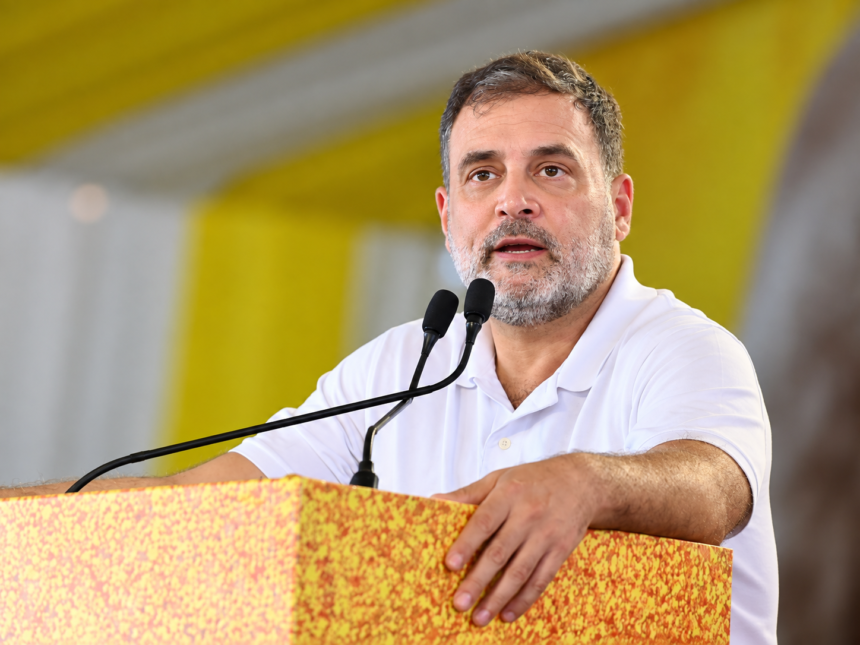
Congress leader Rahul Gandhi on Tuesday criticised the Centre over changes to the rules governing UPI transactions, alleging that the government has quietly created a path for fees to be imposed on payments above Rs 2,000.
The Leader of Opposition in the Lok Sabha also warned that if merchants are eventually charged for such transactions, the additional cost could be passed on to customers through higher prices.
His comments came a day after the Centre notified changes under the Payment and Settlement Systems Act, while clarifying that no charges can be imposed on UPI transactions of up to Rs 2,000.
Rahul Gandhi alleges US pressure over UPI
In a post on X, Gandhi said transactions above Rs 2,000 may represent only around 5% of UPI payments by volume but account for nearly 65% of their total value.
He questioned how customers could remain unaffected if merchants were required to pay a transaction fee.
“The government says no fees will be charged to customers. But where will the fees imposed on shopkeepers ultimately come from?” Gandhi said, alleging that the move could alter India’s zero-MDR policy.
Gandhi also accused the Narendra Modi-led government of responding to pressure from American payment companies, which he claimed have opposed India’s zero-MDR framework.
He linked the issue to broader US-India trade discussions and alleged that the government was once again giving in to American pressure.
Kharge and Pawan Khera also raise concerns
Congress president Mallikarjun Kharge also alleged that the government’s policy change could pave the way for charges on UPI transactions above Rs 2,000.
Kharge questioned reports suggesting that a Rs 5,000 transaction could attract a fee of Rs 25, while a Rs 10,000 payment could face a charge of up to Rs 50. He argued that any additional cost imposed on merchants could ultimately reach consumers through higher prices.
Congress leader Pawan Khera similarly accused the government of responding to pressure from the US over India’s zero-MDR system. He argued that changing the framework could undermine India’s home-grown digital payments ecosystem.
What has the government changed?
The Centre’s Monday notification covers UPI payments of up to Rs 2,000 as well as payments made using RuPay debit cards. Under the notification, banks and payment system providers cannot impose charges, either directly or indirectly, on people making or receiving payments through these modes.
The change follows Parliament’s passage of the Taxation and Other Laws (Amendment) Bill, 2026.
Finance Minister Nirmala Sitharaman had earlier told the Rajya Sabha that the amendment was only an “enabling provision” and did not itself introduce any tax or transaction fee for UPI users.
She also said that street vendors, cab drivers, kirana stores and small merchants would not face such charges. If a fee is introduced for eligible transactions in the future, she said it would be paid by merchants rather than customers.
Will UPI payments above Rs 2,000 be charged?
The amendment itself does not impose a fee on UPI payments above Rs 2,000.
Instead, it removes the earlier legal restriction that prevented banks and payment system providers from charging a Merchant Discount Rate, or MDR, on UPI transactions.
This creates a legal framework under which MDR could potentially be introduced for certain merchant transactions in the future. However, no final decision has yet been taken on whether MDR will be imposed, which transactions could be covered or what the applicable rates would be.
MDR is the fee paid by a merchant to banks or payment companies for processing digital payments. Under the current UPI system, merchants have generally not paid MDR since the zero-MDR policy was introduced in 2020.
The government has instead provided financial incentives to banks and other participants to help meet the costs associated with operating the UPI ecosystem.
Sitharaman said the UPI & Services Steering Committee, headed by the National Payments Corporation of India (NPCI) and comprising major banks and leading UPI applications, would examine whether MDR should be introduced and decide its scope and structure.