
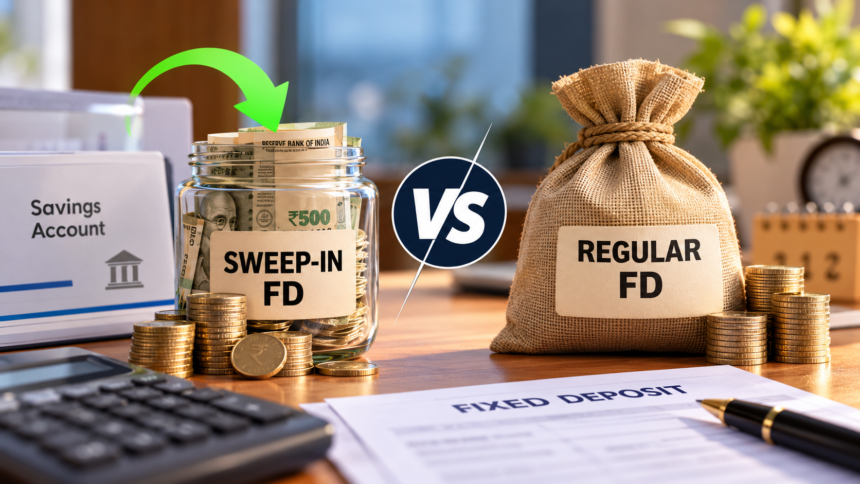
Kolkata: People looking to earn more interest than a regular savings account offers may consider a sweep-in fixed deposit (FD), which combines the potential returns of an FD with easier access to surplus funds. A regular FD, meanwhile, is generally suitable for those who want to invest a lump sum for a specific period.
Both options allow depositors to earn interest, but they differ in how money is deposited, how withdrawals are handled and what happens when funds are needed before maturity. Understanding these differences can help investors choose an option that matches their financial needs.
What Is a Sweep-in FD?
A sweep-in FD automatically transfers the balance exceeding a specified threshold in a savings account into a fixed deposit, subject to the bank’s terms. This allows surplus money to earn interest at the applicable FD rate rather than remaining entirely in the savings account.
If the savings account does not have enough money to cover a payment, the bank can transfer the required amount from the linked FD, according to its withdrawal rules. This arrangement can help customers earn interest while retaining access to funds for regular payments or unexpected expenses.
However, the minimum balance requirement, withdrawal facility and impact on interest earnings depend on the bank’s specific conditions.
What Is a Regular FD?
A regular fixed deposit involves placing a lump sum with a bank for a chosen tenure at the applicable interest rate. The amount earns interest according to the deposit’s terms and the selected period.
Unlike a sweep-in FD, a regular FD does not generally provide automatic access to the deposited amount whenever the savings account balance falls short. Customers who need their money before maturity may have to close the deposit prematurely, depending on the bank’s rules.
Premature closure can lead to a lower interest payout or a penalty. The applicable conditions vary by bank and deposit type.
Sweep-in FD vs Regular FD: Key Differences
| Feature | Sweep-in FD | Regular FD |
|---|---|---|
| Deposit method | Surplus savings above a specified threshold are automatically transferred to an FD. | A lump sum is deposited for a selected tenure. |
| Access to money | Funds can be transferred back to the savings account when required, subject to bank rules. | Premature withdrawal or closure may be necessary to access the money before maturity. |
| Interest earnings | The transferred amount earns the applicable FD interest, but withdrawals can affect returns. | Interest depends on the chosen tenure and applicable rate; premature closure may reduce the payout. |
| Charges and conditions | Minimum balance requirements and service charges may apply. | Premature closure rules and penalties may apply. |
| Suitable for | People who maintain surplus savings but may need access to their money. | People saving towards a goal and able to keep the money deposited for a fixed period. |
The exact interest rates, minimum balance requirements, charges and withdrawal conditions differ between banks. Customers should review the applicable terms before opening either type of deposit.
Which FD Should You Choose?
A sweep-in FD may be suitable for people who regularly maintain extra money in their savings accounts but also need funds for everyday expenses or emergencies. It allows surplus money to earn FD interest while providing a mechanism to access funds when the account balance is insufficient.
A regular FD may be more appropriate for those who have a specific savings goal and do not expect to need the deposited money before maturity. Choosing a suitable tenure can help them plan their savings around a defined financial requirement.
Ultimately, the right option depends on how frequently you need access to your money, the interest offered and the bank’s withdrawal conditions. Comparing these factors before investing can help you make a more informed decision.
Disclaimer: This article is for general informational purposes only and does not constitute financial or investment advice. Interest rates, charges, withdrawal facilities and premature closure rules vary by bank and deposit product. Check the latest terms with your bank before making a deposit decision.