
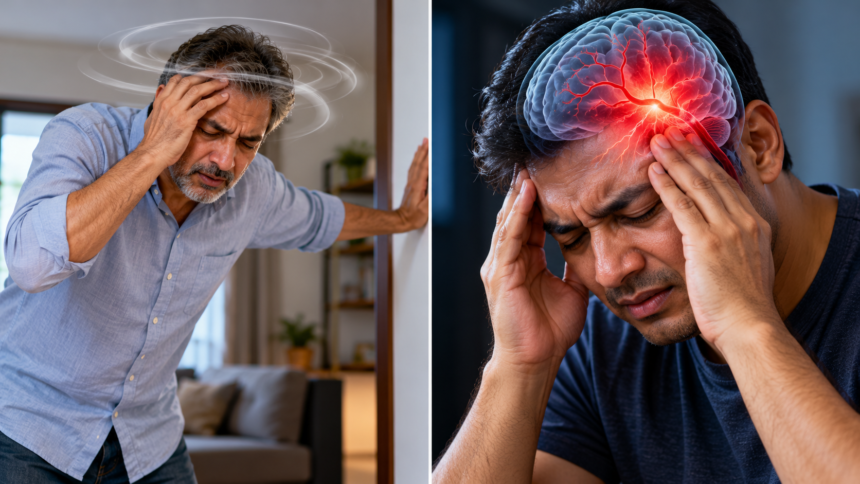
A stroke does not always begin with the familiar signs of facial drooping, weakness in an arm or leg, or difficulty speaking. In some cases, the symptoms may resemble vertigo, migraine or low blood sugar, making the condition harder to recognise.
Identifying these warning signs quickly is crucial. A stroke can damage the brain within a short time, and prompt medical assessment and treatment can help reduce the risk of serious complications.
Sudden Vertigo and Balance Problems May Signal a Stroke
Stroke symptoms depend on the part of the brain affected. The brainstem contains several vital structures, while the cerebellum, located in the hindbrain, plays a major role in balance and coordination.
When a stroke affects the vestibulocerebellum, a region involved in maintaining balance, a person may suddenly experience spinning sensations, difficulty walking steadily and slurred speech that sounds similar to intoxication.
Damage to the lateral medulla oblongata, another part of the brainstem, can cause vertigo along with swallowing difficulties and changes in sensation on the opposite side of the body.
It is important to distinguish this type of vertigo, known as central vertigo, from peripheral vertigo, which usually results from problems in the inner ear’s balance system. Peripheral vertigo may change with head movements and can sometimes occur alongside hearing loss without other neurological symptoms.
Stroke-related vertigo, however, may appear with double vision, slurred speech, difficulty swallowing or numbness affecting the face or one side of the body. Sudden vertigo accompanied by these symptoms requires emergency medical evaluation. Doctors may recommend brain imaging, including an MRI, depending on the clinical assessment.
Headaches and Vision Changes Can Be Stroke Symptoms
A headache may occur before or during a stroke, particularly in cases involving bleeding in the brain or a large area of damaged brain tissue accompanied by swelling. Headaches can also occur in strokes affecting the posterior circulation, known as the vertebrobasilar system.
A stroke involving the occipital lobe, which contains the brain’s visual cortex, may cause a person to lose the same half of the visual field in both eyes. This condition is called homonymous hemianopia and can sometimes be confused with a migraine-related visual disturbance.
Migraine with visual aura typically causes temporary changes in vision, often lasting less than an hour. These episodes may be accompanied by a one-sided headache and sensitivity to light or sound, and they can recur.
Visual symptoms caused by a stroke may persist and can indicate a serious neurological problem. Sudden or unusual changes in vision should never be dismissed as a migraine without medical assessment.
Low Blood Sugar Can Produce Stroke-Like Symptoms
Hypoglycaemia, the medical term for low blood glucose, can also affect brain function and produce symptoms that resemble a stroke.
Common warning signs include sweating, general weakness, confusion and, in severe cases, loss of consciousness. A substantial drop in blood sugar may also cause one-sided weakness, making it difficult to distinguish the condition from a stroke based on symptoms alone.
Additional clues can include trembling and a racing or pounding heartbeat. Symptoms may improve when blood glucose levels are corrected, but this does not mean severe hypoglycaemia is harmless.
If low blood sugar remains untreated for too long, it can cause lasting brain injury, a condition known as hypoglycaemic encephalopathy.
When Should You Seek Emergency Medical Help?
Sudden neurological changes should always be taken seriously. Facial drooping, weakness on one side of the body, speech difficulties, double vision, sudden severe vertigo or an unexpected loss of vision can all require urgent assessment.
Although migraine, inner-ear disorders and low blood sugar can produce similar symptoms, it is unsafe to assume that one of these conditions is responsible without proper evaluation.
Disclaimer: This article is intended for general health education and is not a substitute for professional medical advice, diagnosis or treatment. Stroke and other neurological emergencies require prompt medical attention. If sudden neurological symptoms occur, seek emergency medical care immediately rather than waiting for them to improve.