
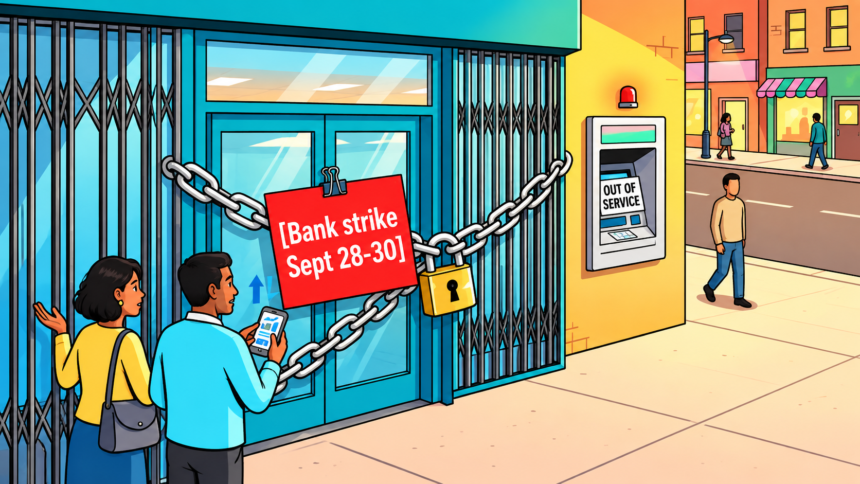
The State Bank of India (SBI) has announced that customers will not have to pay ATM transaction charges from September 28 to 30, 2026, as a three-day nationwide bank strike is scheduled during the period.
The move is aimed at ensuring customers can continue accessing essential banking services without additional charges and minimising inconvenience during the proposed strike.
SBI to Keep Banking Services Available During Strike
SBI said its banking services will remain accessible during the strike period. In a post on X, the bank announced that ATM charges would be waived for transactions carried out at any bank’s ATM between September 28 and 30.
The bank has also decided to keep all its branches open on Sunday to help customers manage their banking requirements. Digital payment services, including UPI, IMPS, RTGS and NEFT, will continue to function as usual.
Government Orders Public Sector Banks to Open on Sunday
To reduce the impact of the proposed strike, the government has directed public sector banks to remain operational on Sunday, September 27.
The Reserve Bank of India has approved the continued operation of bank branches, offices, ATM-linked branches and Currency Chests on the day. The Finance Ministry said that all public sector banks and Regional Rural Banks will operate normally on Sunday.
The decision comes ahead of the three-day nationwide strike called by the United Forum of Bank Unions (UFBU) from September 28 to 30.
Five-Day Disruption to Be Minimized
The proposed strike follows the weekend holidays on September 26 and 27. Without the additional arrangements, banking operations could have faced disruption across five consecutive days.
In a statement, the Finance Ministry said the government had taken proactive measures to protect the banking needs of citizens and limit the impact on economic activity.
The ministry said the welfare and convenience of bank customers remain a key priority. It added that the government and bank managements have appealed to the unions to postpone the proposed strike while taking steps to ensure that essential banking services continue without interruption.