
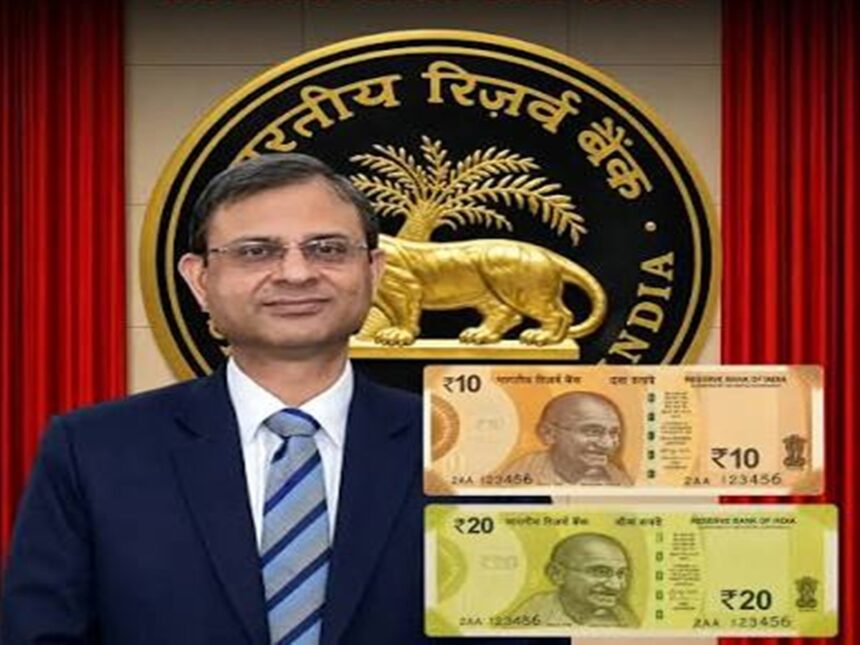
The Reserve Bank of India (RBI) is set to begin field trials of polymer banknotes in the ₹10 and ₹20 denominations after receiving approval from the Central Government. The move marks an important step toward evaluating whether polymer-based currency can improve the durability and security of India’s banknotes.
However, the government has made it clear that there are no plans to replace existing paper currency. Even if the trials prove successful, polymer notes are expected to coexist with traditional paper banknotes rather than replace them.
RBI Gets Green Signal for Polymer Note Field Trials
The government’s approval was revealed by Minister of State for Finance Pankaj Chaudhary in a written response in the Lok Sabha on Monday.
As part of the pilot project, the RBI plans to issue one billion polymer notes each in the ₹10 and ₹20 denominations. The large-scale trial will help assess how these notes perform under India’s diverse climatic conditions and heavy circulation before any decision on wider adoption is taken.
No Plan to Replace Paper Currency
The Finance Ministry clarified that the initiative should not be interpreted as the beginning of a nationwide shift from paper to polymer currency.
Instead, polymer notes are being tested as an additional option to improve the currency ecosystem. The government reiterated that paper-based banknotes will continue to remain in circulation, and there is currently no proposal to phase them out.
Why Is RBI Testing Polymer Banknotes?
According to the RBI, polymer notes offer several advantages over conventional paper currency.
One of the biggest benefits is greater durability. Polymer banknotes typically last much longer than paper notes, making them especially useful in a country like India, where cash continues to be widely used for daily transactions.
Lower-value denominations such as ₹10 and ₹20 experience the highest circulation and wear out much faster than larger-value notes. Their frequent replacement increases printing, transportation and disposal costs.
By lasting significantly longer, polymer notes could reduce replacement expenses and minimize the environmental impact associated with disposing of worn-out paper currency.
Improved Security Against Counterfeit Notes
Another key advantage of polymer banknotes is their enhanced security.
The plastic-based material allows the inclusion of sophisticated security features, including transparent windows and advanced security threads, making the notes much harder to counterfeit compared to traditional paper currency.
The RBI believes these features could strengthen the fight against fake currency while improving public confidence in cash transactions.
Will Polymer Notes Affect Digital Payments?
The government also addressed concerns over whether polymer notes could influence India’s rapidly expanding digital payments ecosystem.
According to the RBI, it is too early to determine any impact, as meaningful conclusions can only be drawn after the new notes enter circulation and sufficient data becomes available.
The central bank also emphasized that cash and digital payments complement each other rather than compete. Both payment methods are expected to continue playing an important role in India’s financial system.
What Happens Next?
The upcoming field trial will allow the RBI to study the performance, durability and public acceptance of polymer banknotes under real-world conditions.
Only after analyzing the results will the central bank decide whether polymer notes should be introduced on a larger scale. Until then, India’s existing paper currency will continue to remain the primary form of physical cash.
With this pilot project, India joins several countries that have explored polymer currency as a way to improve note longevity, reduce replacement costs and strengthen protection against counterfeiting—while maintaining confidence in the country’s cash-based economy.