
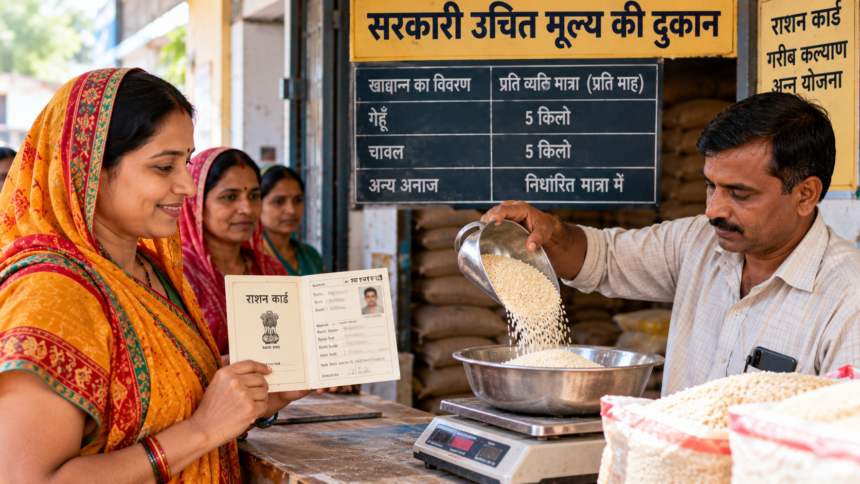
Eligible ration card holders receive food grains every month under the government’s public distribution system. However, the quantity provided depends on the category of ration card and the number of eligible family members registered under it.
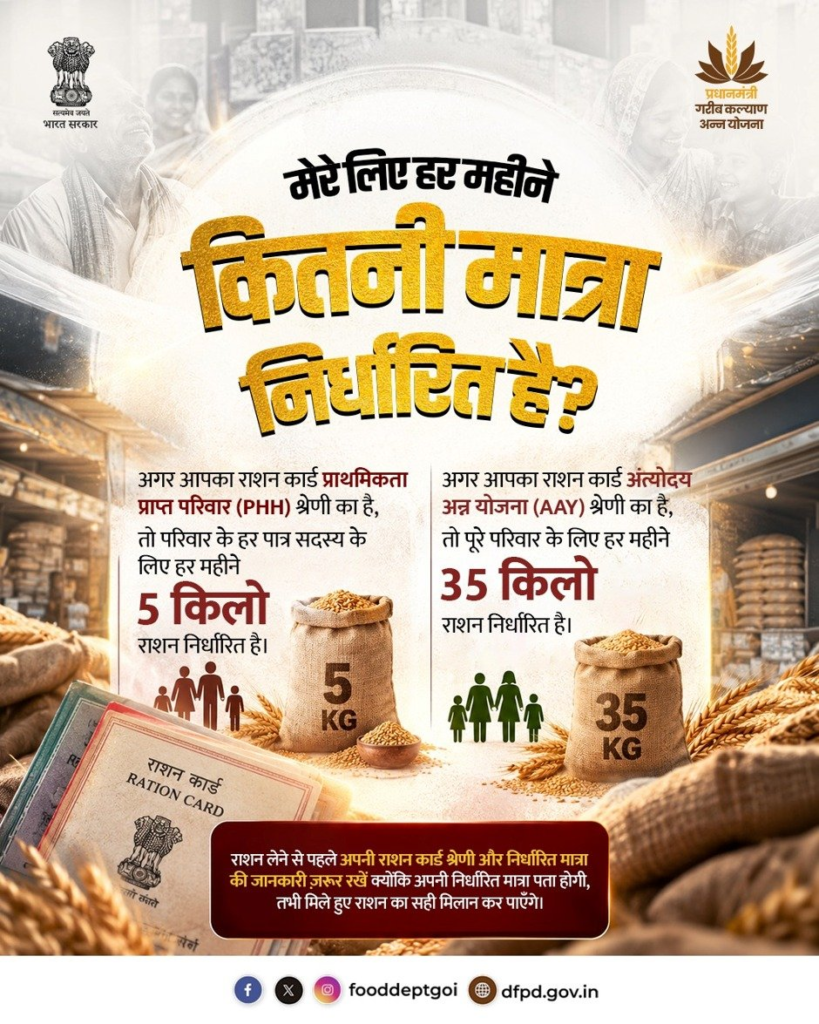
According to the Department of Food and Public Distribution, Government of India, ration cards are classified into two main categories: Priority Household (PHH) and Antyodaya Anna Yojana (AAY). Each category has a different monthly food grain allocation, making it important for beneficiaries to understand their entitlements.
PHH Ration Card: Monthly Food Grain Allocation
Under the Priority Household (PHH) category, eligible beneficiaries are entitled to 5 kg of food grains per person every month. The total quantity a household receives depends on the number of eligible members listed on its ration card.
For example, the monthly allocation is as follows:
| Eligible family members | Monthly food grains |
|---|---|
| 2 members | 10 kg |
| 4 members | 20 kg |
| 5 members | 25 kg |
| 6 members | 30 kg |
Ration card holders should check the number of eligible members registered on their cards to understand how much food grain their household should receive each month.
AAY Ration Card: How Much Ration Does a Family Get?
The Antyodaya Anna Yojana (AAY) category is intended to support the poorest and most vulnerable households by helping them meet their basic food requirements.
Under this category, an eligible family receives a total of 35 kg of food grains every month. Unlike the PHH category, the AAY allocation is fixed per household rather than calculated separately for each family member.
For instance, an eligible AAY household with four or five members receives the same total allocation of 35 kg per month.
Important Things to Check When Collecting Ration
Beneficiaries should verify the quantity of food grains they receive from their ration shop. After the distribution process, they should collect and keep the receipt generated by the electronic Point of Sale (ePOS) machine.
The quantity mentioned on the receipt should match the food grains provided. Ration card holders should also confirm whether their card falls under the PHH or AAY category, as the allocation rules differ.
If the quantity received is less than the applicable entitlement or does not match the receipt, beneficiaries can raise a complaint with the relevant Food and Civil Supplies Department official.
Disclaimer
This article is intended for general informational purposes only and is based on the ration allocation details provided. Actual entitlements may depend on applicable government rules, beneficiary eligibility and the details recorded on the ration card. Readers should consult the Department of Food and Public Distribution or their state Food and Civil Supplies Department for the latest official guidelines and assistance with discrepancies.