
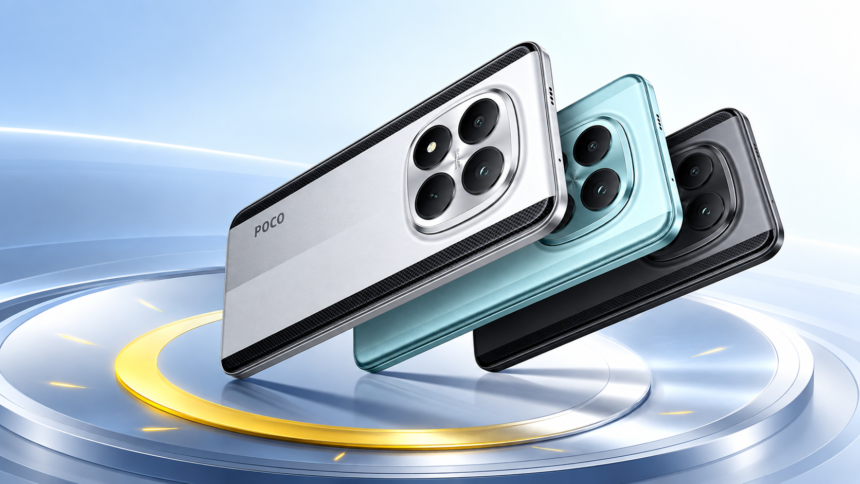
The Poco M8 Power stands out in the mid-range smartphone segment with its massive 8,000mAh battery and large 6.99-inch 120Hz AMOLED display. Launched in India in August 2026, the phone focuses heavily on battery endurance and media consumption while also promising long-term software support.
The 6GB RAM and 128GB storage variant is priced at Rs 24,999, while the 8GB RAM and 128GB model costs Rs 27,999. After using the device for around two weeks, here is a closer look at its design, performance, cameras, battery life and overall experience.
Design and Display
The Blaze Orange colour immediately grabs attention, while the large camera module gives the rear a more distinctive appearance. Despite housing an 8,000mAh battery, the phone measures 8.45mm in thickness.
At 225 grams, the handset has noticeable weight, although it remains reasonably balanced in the hand. Its flat plastic frame provides a firm grip, while the matte rear panel helps keep fingerprints away.
The phone also comes with IP65 splash protection, Gorilla Glass 7i and an IR blaster, adding to its list of practical features.
The 6.99-inch FHD+ AMOLED panel is one of the phone’s strongest aspects. With a 120Hz refresh rate and brightness reaching up to 1,800 nits outdoors, the display works well for watching videos, streaming OTT content and everyday use.
Performance and Gaming
The Poco M8 Power is powered by Qualcomm’s Snapdragon 4 Gen 4 4nm processor. The chipset is designed more around efficiency and battery life than high-end performance.
Running HyperOS 3 based on Android 16, the phone handles regular tasks such as browsing, messaging and scrolling smoothly, particularly with the 120Hz display. However, switching between several demanding applications can result in occasional app reloads and some slowdown in the interface.
Poco has committed to four major OS updates and six years of security updates, which gives the device a longer software support cycle.
For gaming, the M8 Power is better suited to casual and moderate use rather than demanding titles. Games such as NFS and BGMI can result in heating and some lag when running at higher graphical demands. Mid-level games perform more comfortably for moderate sessions.
The graphite cooling system does help manage temperatures and allows the device to cool down relatively quickly after heavier use.
Cameras and Multimedia Experience
The smartphone features a dual rear-camera setup led by a 50MP Light Fusion 400 sensor, while an 8MP camera is placed on the front.
In daylight, the main camera can capture images with good colours and reasonable detail. However, dynamic range can be inconsistent. Low-light photography is less impressive, with images tending to appear smudged and colours showing some bleeding.
Video recording is limited to 1080p at 30fps, and there is no optical image stabilisation. This may be a limitation for users who prioritise photography and video recording.
The front camera delivers natural-looking and usable selfies, making it suitable for social media and everyday video calls.
Call quality remained fine during testing, while both 4G and 5G connectivity worked as expected.
The main weakness in the multimedia setup is the speaker. The phone uses a single bottom-firing speaker, which produces a relatively flat sound with limited bass. For movies, action content and video calls, a good pair of earbuds may provide a better experience.
8,000mAh Battery and Charging
Battery life is the biggest highlight of the Poco M8 Power. Its 8,000mAh silicon-carbon battery can deliver around 8–9 hours of screen-on time.
With moderate usage and limited gaming or heavy social media use, the phone can last around two to two-and-a-half days on a single charge. This makes its large battery particularly useful for users who spend long periods away from a charger, including during travel.
The phone supports 45W charging, with a full charge taking around two hours. It also supports 22.5W reverse wired charging, allowing the handset to charge other compatible gadgets when required.
At Rs 24,999, the Poco M8 Power offers a combination of a large AMOLED display, extended battery life and long-term software support. Its 8,000mAh battery can comfortably stretch beyond two days with moderate usage, while the 120Hz display makes it well suited to video streaming and everyday entertainment.
However, the average gaming performance, low-light camera results, lack of OIS and basic single-speaker setup are areas to consider. Overall, the phone’s strongest focus remains battery endurance and display quality, particularly for users looking for a device capable of handling long days and extended travel without frequent charging.