
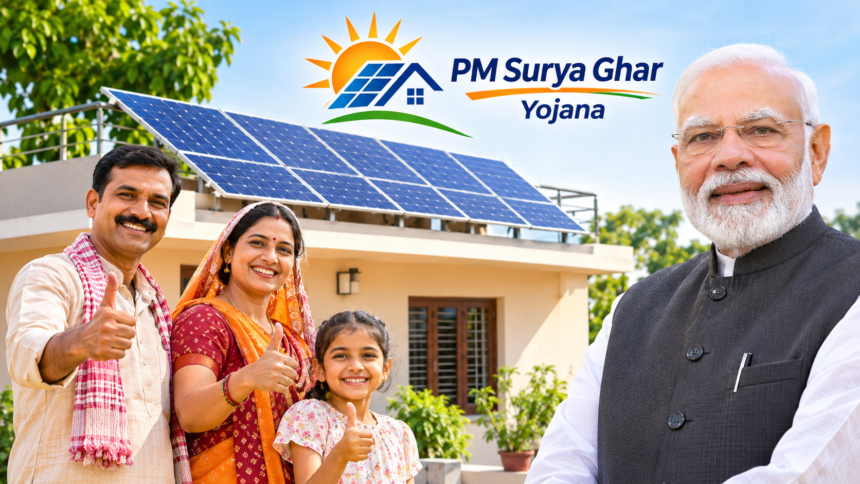
The PM Surya Ghar Muft Bijli Yojana is making significant progress in expanding rooftop solar energy across India. Union Minister for New and Renewable Energy Prahlad Joshi has revealed that around 66 lakh households have already installed rooftop solar systems under the scheme.
The minister shared these figures while addressing the 31st CII Partnership Summit 2026 in Visakhapatnam. He highlighted the scheme’s achievements, the growing adoption of solar power and the government’s efforts to make clean energy more accessible to households.
The initiative aims to cover 1 crore families by providing financial support for rooftop solar installations and reducing their dependence on conventional electricity.
PM Surya Ghar Yojana: Solar Installation Speed Increases Significantly
Speaking at the summit, Prahlad Joshi highlighted the rapid improvement in the installation of rooftop solar systems across the country.
According to the minister, installing the first 1 lakh solar plants previously took around 118 days. The same number of installations can now be completed in an average of just six days. The ministry is working to bring this timeframe down further to five days through better planning and improved implementation.
The government had initially set a target of providing rooftop solar facilities to 1 crore households, and the programme is now moving closer to that goal.
Andhra Pradesh has also recorded considerable progress, with 7.86 lakh households already adopting rooftop solar power systems.
Zero Electricity Bills and Additional Income From Solar Power
One of the major benefits of the PM Surya Ghar scheme is the opportunity for households to reduce their electricity expenses. Depending on their consumption and solar generation, many beneficiaries can substantially lower their monthly electricity bills.
Some households are also generating more electricity than they use. Under applicable arrangements, surplus electricity can be supplied back to the power grid, allowing eligible consumers to earn additional income.
India’s overall solar power capacity has increased significantly over the past decade. According to the figures shared by the minister, solar capacity has grown from 2.8 GW in 2014 to approximately 175 GW.
Furthermore, around 55% of India’s total installed electricity generation capacity now comes from non-fossil fuel sources. The country is working towards achieving its target of 500 GW of non-fossil fuel energy capacity by 2030.
PM-KUSUM 2 Scheme and ₹43,871 Crore Investment Plans
During the summit, the minister also discussed the proposed PM-KUSUM 2 scheme, which aims to expand the use of solar energy in agriculture.
The initiative is expected to encourage solar-powered agricultural equipment and irrigation pumps, helping farmers access renewable energy for their farming requirements.
The minister also highlighted growing investment interest in Andhra Pradesh’s renewable energy sector. A total of 17 Memorandums of Understanding (MoUs) and three government orders have proposed investments worth ₹43,871 crore.
These proposed investments are expected to create approximately 4,700 employment opportunities in the state.
India’s Energy Capacity and Power Security Improve
Prahlad Joshi also discussed India’s progress in strengthening its electricity infrastructure and meeting increasing power requirements.
The country’s peak electricity demand has increased from 123 GW in 2012 to around 270 GW recently. Despite this significant rise, improvements in the power sector have helped strengthen the country’s ability to meet growing electricity demand.
The minister also recalled the major power grid failure in 2012, when northern India experienced a blackout lasting around 72 hours and faced widespread disruption.
He highlighted how the country’s electricity infrastructure has developed since then, with a stronger grid and improved capacity to support rising energy consumption.
India’s expanding renewable energy sector, increasing solar installations and investments in clean power are contributing to its broader efforts to strengthen energy security.
Disclaimer
This article is intended for general informational purposes only. The figures, investment proposals, scheme targets and government announcements mentioned are based on the information provided in the report. Actual project implementation, financial benefits and eligibility conditions may vary according to official guidelines. Readers should refer to the Ministry of New and Renewable Energy and the relevant government portals for the latest verified information.