
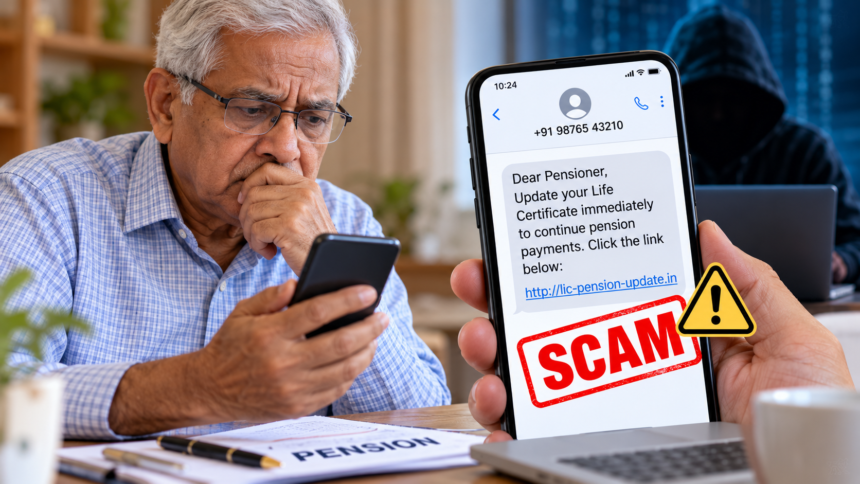
Cybercriminals are increasingly using fake messages about pension services and life certificate updates to target retirees. Fraudsters often send links that appear to come from banks or government departments, urging pensioners to complete an urgent verification process. Clicking these links and entering sensitive information can put their bank accounts at risk.
In one reported case in Bhubaneswar, a retired bank employee allegedly lost ₹8.5 lakh after clicking a fraudulent link that appeared to be associated with his bank. According to The New Indian Express, police subsequently arrested three members of an interstate cyber fraud syndicate.
The incident highlights the importance of verifying pension-related messages before responding, particularly when they ask for personal or financial information.
How Does the Life Certificate Scam Work?
Fraudsters commonly contact pensioners through SMS messages or WhatsApp, posing as bank representatives or government officials. They may claim that the recipient must update or verify a life certificate to prevent pension payments from being delayed or stopped.
The message typically includes a link to a fraudulent website designed to resemble an official service. Victims who follow the link may be asked to enter personal information, banking credentials or card details.
Scammers can misuse the information they obtain to attempt unauthorised transactions. They may seek debit or credit card numbers, PINs, card verification values (CVVs) and one-time passwords (OTPs) to gain access to victims’ money.
The use of urgent language is often intended to make pensioners act quickly without checking whether the message is genuine.
5 Ways to Protect Yourself from Pension Fraud
1. Avoid unknown links claiming to be from banks
Be cautious of messages asking you to update your life certificate through an unfamiliar link. Do not assume that a message is genuine simply because it uses a bank’s name or logo.
Use official banking and government websites or authorised service channels to check whether any action is actually required. Never enter sensitive information on a website reached through a suspicious message.
2. Never disclose OTPs, PINs or CVVs
Keep your banking credentials confidential. Never share your OTP, debit or credit card PIN, CVV or online banking password with someone who contacts you unexpectedly.
A request to provide these details through a link claiming to update your life certificate should be treated as a serious warning sign. If you are unsure whether a request is legitimate, contact your bank through its official customer service channels.
3. Verify pension messages before responding
If you receive a message stating that your pension details need immediate attention, contact your bank using the customer care number published on its official website or visit a branch.
Do not use contact numbers supplied in suspicious messages. Verify the request independently before clicking a link, downloading an attachment or sharing personal information.
4. Do not give in to threats or urgent demands
Scammers often use fear to pressure pensioners into acting without thinking. A message may warn that pension payments will stop immediately unless a link is opened or personal details are submitted.
Instead of reacting immediately, pause and verify the claim through an official source. An urgent tone does not prove that a message is genuine.
5. Report suspected fraud immediately
If you have clicked a suspicious link or shared confidential banking information, contact your bank immediately through its official channels. Ask the bank to secure your account and block the affected card if necessary.
For suspected cyber financial fraud in India, call the national cybercrime helpline at 1930 as soon as possible. You can also report the incident through the official National Cyber Crime Reporting Portal.
Quick reporting may help authorities and the bank respond before further losses occur. Keep any suspicious messages, transaction details and other relevant evidence for reporting purposes.
Stay Alert to Protect Your Pension Savings
Cybercriminals continue to change their tactics, but many scams still depend on impersonation, misleading links and pressure to act quickly. Pensioners should be particularly careful with messages involving life certificates, account verification and the possibility of pension suspension.
Taking a few minutes to verify a request can help prevent unauthorised access to financial accounts. Family members can also help older relatives recognise suspicious messages and use official channels for pension-related services.
Disclaimer: This article is intended for general awareness and informational purposes only. Scam methods may vary, and the steps described are general precautions rather than a guarantee against fraud. For suspected financial cybercrime, contact your bank and the appropriate official reporting authorities promptly. Never share confidential banking credentials with unknown individuals or through unverified links.