
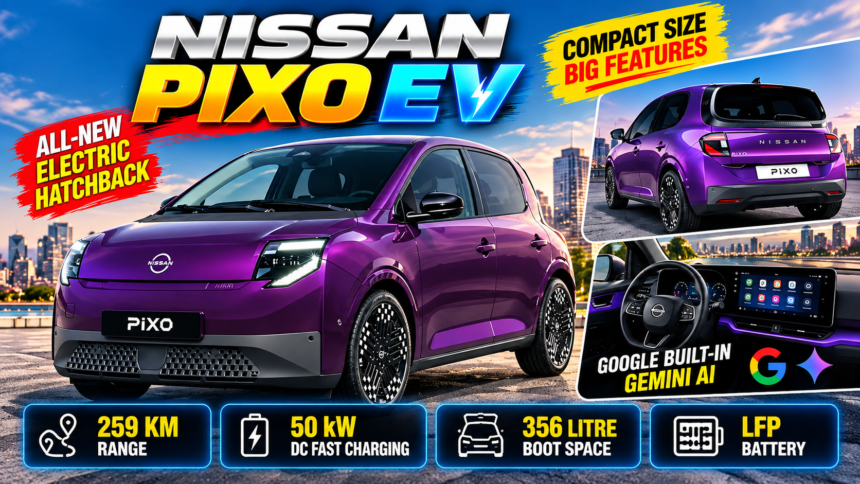
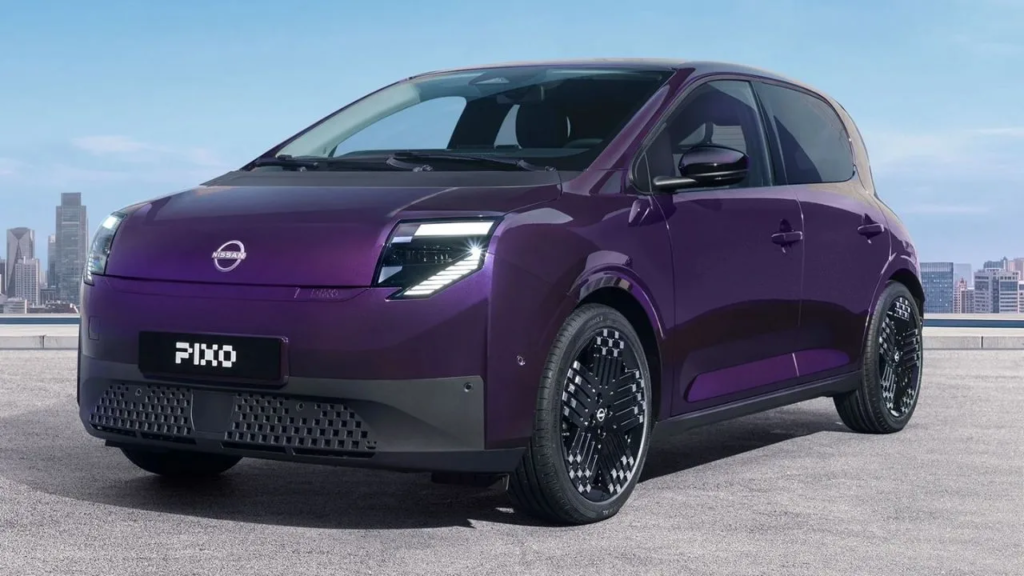
Nissan has unveiled the new Pixo EV for the European market, introducing a compact electric car designed primarily for urban driving. The new model combines a claimed range of 259 km with a 60 kW electric motor, 50 kW DC fast charging and a practical 356-litre boot.
The Nissan Pixo EV also brings several technology-focused features, including Google built-in, Gemini voice assistance, connected-car functions and a range of driver-assistance systems. Customer deliveries are scheduled to begin in early 2027.
Nissan Pixo EV Battery, Range and Charging
The Pixo EV is powered by a 60 kW electric motor and has a claimed driving range of 259 km. Nissan has equipped the car with a Lithium Iron Phosphate (LFP) battery, marking the first use of LFP battery technology in the company’s European lineup.
For AC charging, the electric car supports an 11 kW charger. It also comes with standard 50 kW DC fast charging, allowing the battery to charge from 15% to 80% in around 28 minutes.
The car has flexible rear seats that can slide to provide additional practicality. With the seats configured accordingly, the Pixo EV offers 356 litres of boot space, making it suitable for everyday city use.
Google Built-in and Gemini Voice Assistance
Technology is a major part of the Nissan Pixo EV’s cabin. The dashboard features a 7-inch driver display and a 10-inch central touchscreen with Google built-in.
Gemini voice assistance will also be available, with support for 16 languages and dialects at launch. Drivers can use natural voice commands for functions such as navigation, entertainment and communication.
The Pixo EV also features Face ID technology, which can recognise individual drivers and automatically load their personal settings. Charging and selected vehicle functions can be accessed remotely through the MyNissan app.
Nissan has made one-pedal driving standard on the Pixo EV as well. The system allows the driver to accelerate, slow down and bring the car to a complete stop using the accelerator pedal, which can be particularly useful in slow-moving urban traffic.
Design and Driver Assistance Features
Despite its compact dimensions, the Nissan Pixo EV comes with several driver-assistance technologies as standard. These include adaptive cruise control with stop-and-go functionality, lane departure warning and hands-free parking.
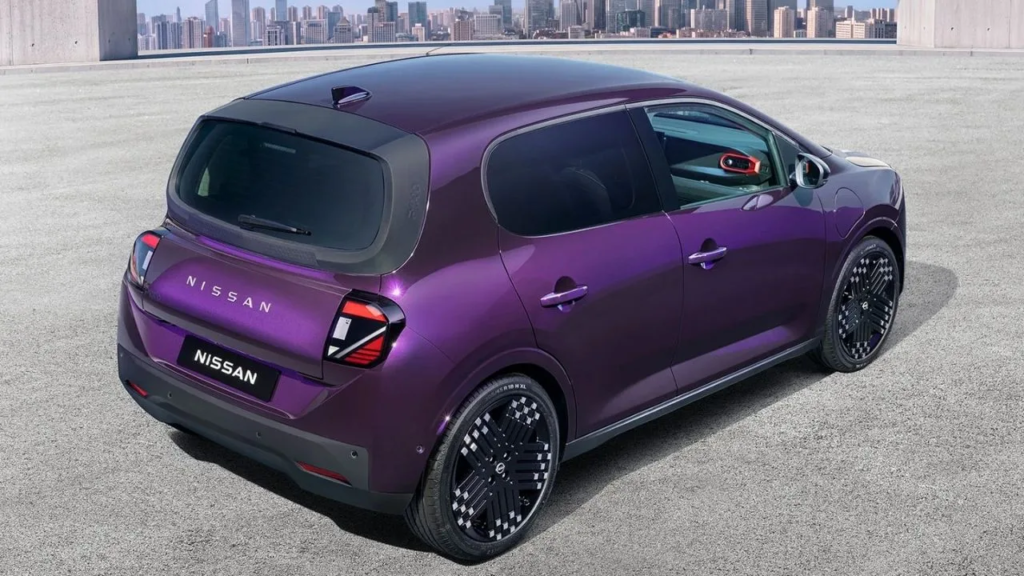
The exterior design takes a distinctive approach, with cube-inspired proportions and pixel-style lighting. Nissan has also used a playful robot-face theme for the front bumper, giving the small EV a character of its own.
Another interesting design element is the inclusion of 23 hidden visual “Easter eggs” across the interior and exterior. Nissan says these details reference Japanese wordplay around “Ni-San”, incorporating the numbers two and three.
The Nissan Pixo EV has so far been introduced for the European market, with deliveries planned to start in early 2027. Nissan is expected to announce pricing, detailed specifications and pre-order information from December.
Disclaimer
The information in this article is based on details announced by Nissan for the European-market Pixo EV. Pricing, specifications, availability and launch-related details may be updated by the company before customer deliveries begin.