
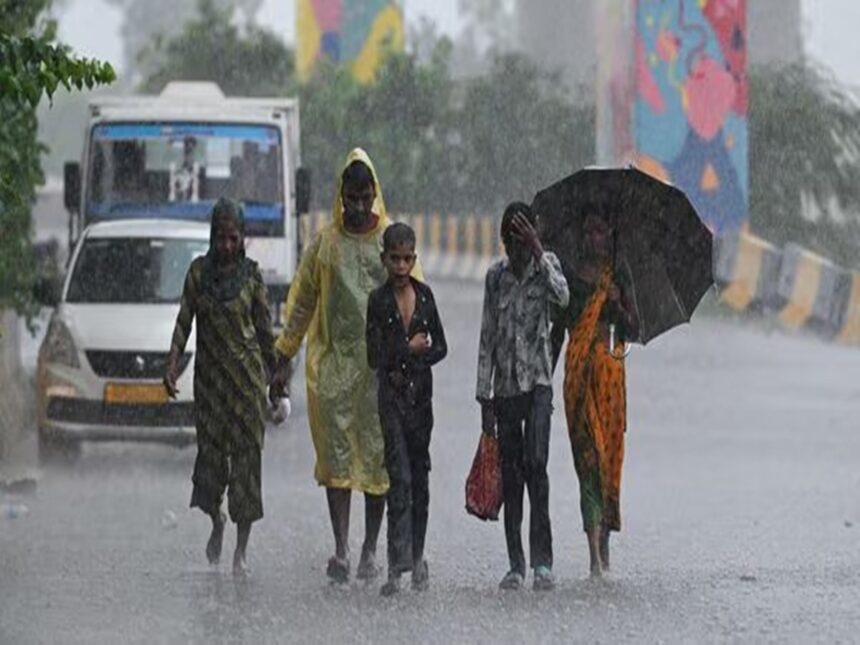
India Monsoon Forecast 2026: Large parts of India are expected to receive widespread rainfall over the next two weeks as atmospheric and oceanic conditions become increasingly supportive of an active southwest monsoon. Although the Indian Ocean Dipole (IOD) has not yet entered its positive phase, weather experts believe evolving climate patterns are creating ideal conditions for enhanced rainfall across the country.
Meteorologists are closely tracking developments over the Indian Ocean and the Bay of Bengal, where several weather systems are expected to strengthen monsoon activity during the coming fortnight.
Indian Ocean Dipole Remains Neutral
According to the latest climate assessments, the Indian Ocean Dipole (IOD) is currently in a neutral state, meaning sea surface temperatures across the western and eastern Indian Ocean have not yet shifted enough to significantly influence the Indian monsoon.
A positive IOD generally boosts rainfall over India and can help counter some of the negative effects of El Niño. However, scientists say the climate pattern has not fully developed at this stage.
Weather Systems Over the Indian Ocean Are Becoming More Active
Despite the neutral IOD, atmospheric activity over the eastern tropical Indian Ocean remains strong.
Meteorologists explain that wind patterns in the region are currently being influenced by several factors, including:
- Tropical westerly winds
- Typhoon activity over the western Pacific Ocean
- The gradual strengthening of El Niño
Meanwhile, the southeasterly trade winds that typically signal the arrival of a positive IOD have yet to become established.
Even so, persistent thunderstorm activity over the eastern Indian Ocean suggests that the atmosphere remains highly energetic and capable of supporting widespread rainfall.
Positive IOD Could Still Develop
Scientists note that the Indian Ocean responds relatively quickly to changing weather patterns because of its smaller size compared to the Pacific Ocean.
If El Niño intensifies further in the coming weeks, it may encourage the formation of a positive Indian Ocean Dipole. Such a development could help reduce some of El Niño’s adverse influence on India’s monsoon rainfall during the latter part of the season.
Cooling Waters Near Indonesia Signal Seasonal Changes
Another important development is the gradual cooling of sea surface temperatures around Indonesia and Java.
This cooling is linked to seasonal upwelling, a natural ocean process in which colder, nutrient-rich water rises from deeper layers to the surface.
Scientists say changes in ocean temperatures around Indonesia often influence rainfall patterns across the broader Indo-Pacific region, making this an important indicator for future weather trends.
Madden-Julian Oscillation to Support Rainfall
Weather experts also point to favourable atmospheric conditions developing over India.
Short-lived rain-bearing systems are becoming increasingly active across northern and eastern India, while the Madden-Julian Oscillation (MJO) is moving into a phase that encourages cloud formation and rainfall over the southern Bay of Bengal.
The combined influence of these systems is expected to strengthen monsoon activity across many regions over the next two weeks.
What This Means for India’s Monsoon
Although the Indian Ocean Dipole has not yet shifted into its positive phase, current atmospheric and oceanic conditions are expected to keep the southwest monsoon active across much of the country.
Meteorologists will continue monitoring the interaction between El Niño, the Indian Ocean Dipole, and the Madden-Julian Oscillation, as these large-scale climate patterns will play a key role in shaping rainfall during the remainder of the 2026 monsoon season.
India is likely to experience an active spell of the southwest monsoon over the next fortnight, supported by favourable weather systems over the Indian Ocean and Bay of Bengal. While the Indian Ocean Dipole remains neutral, increasing atmospheric activity, cooling waters near Indonesia, and the advancing Madden-Julian Oscillation are expected to bring widespread rainfall across several parts of the country.