
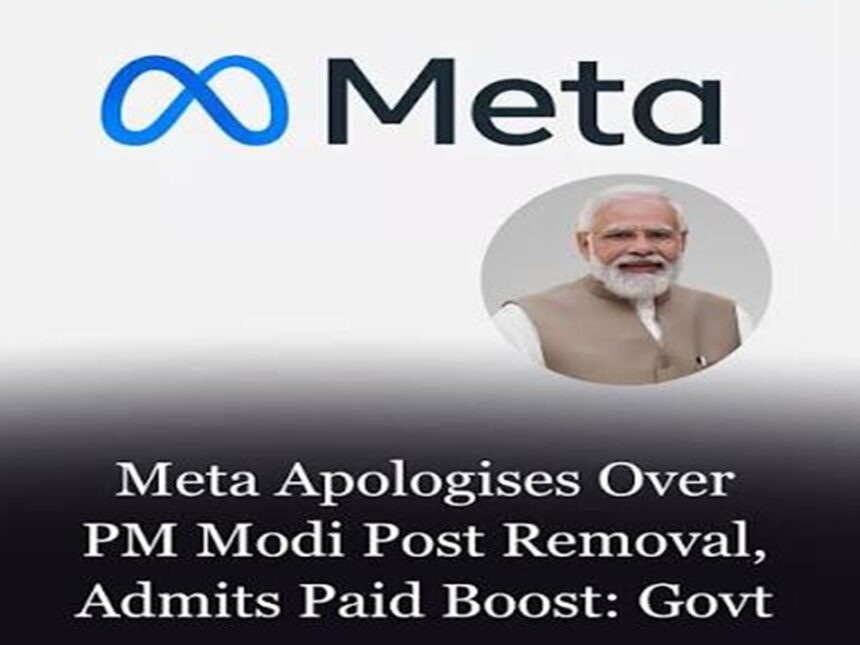
Meta News: Meta has apologised to the Indian government after PM Narendra Modi’s Facebook post was briefly restricted last month. The company described the incident as an operational error and assured the Centre that it is taking steps to prevent similar issues in the future.
The apology came during a high-level meeting between Meta’s Chief Global Affairs Officer Joel Kaplan and Union Information Technology Minister Ashwini Vaishnaw, as the government intensified its scrutiny of the social media giant over content moderation practices, AI-generated deepfakes, child safety concerns, and legal accountability.
Joel Kaplan Apologises for Restricting PM Modi’s Facebook Post
Speaking after the meeting, Joel Kaplan acknowledged the mistake and apologised on behalf of Meta.
According to Kaplan, the temporary restriction placed on Prime Minister Narendra Modi’s Facebook post was the result of an operational lapse rather than a deliberate moderation decision.
The company reiterated that the issue was unintended and expressed regret over the incident.
Why Did the Government Summon Meta?
The Centre had called Meta’s senior global executives to explain why Prime Minister Modi’s Facebook post, shared on July 23, was temporarily removed or restricted.
The post featured the Prime Minister addressing students during nationwide protests over alleged examination paper leaks.
Government officials sought detailed clarification on:
- How Meta’s content moderation systems flagged the Prime Minister’s post.
- The safeguards the platform plans to implement to avoid similar incidents involving high-profile accounts.
- Whether existing moderation processes require improvements.
Discussions Expanded Beyond PM Modi’s Post
While the initial focus was on the Facebook post, the meeting reportedly covered a much wider range of issues related to Meta’s operations in India.
According to government sources, officials also raised concerns about:
- Child Sexual Abuse Material (CSAM) on Meta platforms
- AI-generated deepfakes
- Platform content moderation practices
- Protection of verified accounts
- Compliance with Indian digital laws
- Transparency of recommendation algorithms
Sources also indicated that Meta acknowledged certain operational shortcomings during the discussions.
Mark Zuckerberg Also Reportedly Expressed Regret
According to officials, Meta CEO Mark Zuckerberg also conveyed an apology regarding the presence of child sexual abuse material, deepfakes, and other operational deficiencies across the company’s platforms.
Although details of the discussions have not been made public, the conversations reportedly focused on strengthening platform safety and improving moderation systems.
Government Questions Meta’s Algorithmic Practices
Officials are also examining how Meta’s recommendation algorithms influence content visibility.
During the meeting, the company reportedly admitted that paid promotions had amplified certain categories of content on its platforms, prompting further questions about transparency and accountability.
The government has been seeking greater clarity on how large technology companies recommend, promote and moderate content for Indian users.
Parliamentary Panel Seeks Unconditional Apology
The controversy has also reached Parliament.
The Parliamentary Standing Committee on Communications and Information Technology has reportedly demanded an unconditional apology from Meta CEO Mark Zuckerberg over the temporary restriction of the Prime Minister’s Facebook post.
According to sources, committee chairman Nishikant Dubey warned that failure to take action against those responsible could have legal consequences, including a review of Meta’s safe harbour protections under the Information Technology Act.
He reportedly argued that the removal of content from the Prime Minister’s account could not simply be treated as the action of a neutral intermediary.
Centre Reviews Safe Harbour Protections
The government is also evaluating whether digital platforms that actively recommend, rank and curate content should continue enjoying the same intermediary protections provided to passive platforms under Indian law.
Officials indicated that the discussions with Meta are part of a broader effort to increase accountability among major technology companies operating in the country.
Meta has apologised to the Indian government after Prime Minister Narendra Modi’s Facebook post was mistakenly restricted, attributing the incident to an operational error. However, the meeting with government officials evolved into a wider discussion on platform accountability, covering deepfakes, child safety, algorithmic transparency, content moderation and the future of intermediary protections for large social media companies in India.