
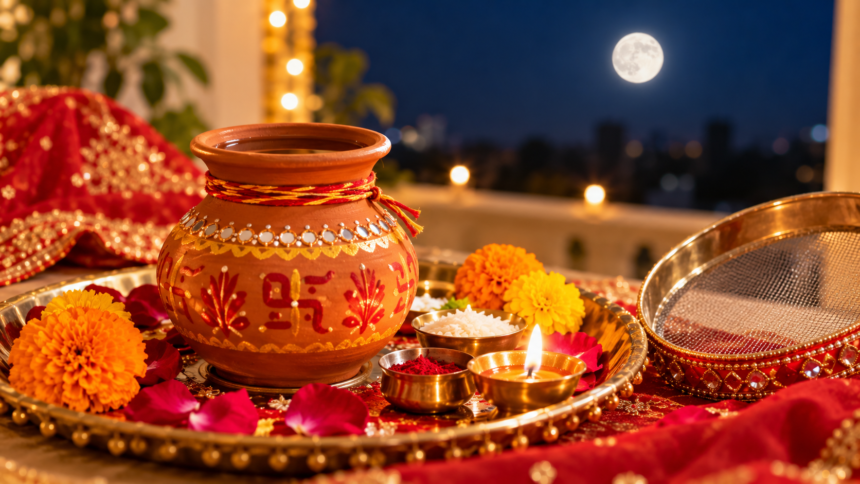
The earthen karwa, a small pot traditionally made from clay, holds an important place in Karwa Chauth celebrations. It is commonly used during puja rituals and water offerings, which are associated with prayers for a husband’s long life, good health and prosperity.
The vessel also reflects the role of water in traditional Hindu worship, where offering water is considered an expression of respect, faith and devotion. Although its design and use may differ between families, the karwa remains a meaningful part of the festival for many devotees.
What Is a Karwa and What Does It Represent?
A karwa is a small traditional pot, usually made of clay, that is prepared for Karwa Chauth puja. It may be filled with water and placed on the puja thali for use during the rituals, including the offering of Arghya to Chandra Dev, or the Moon deity, after moonrise.
Families often decorate the pot with roli, rice grains, flowers and other traditional designs or symbols. The decoration and the specific way the vessel is used depend on regional customs and household practices.
Beyond its practical purpose, the earthen karwa carries symbolic significance. Its use connects everyday materials with religious worship, representing purity, auspiciousness and devotion.
Religious Significance of the Earthen Karwa
Water has an important place in Hindu religious ceremonies and is frequently offered to deities as a gesture of reverence and gratitude. During Karwa Chauth, offering water to the Moon is an important ritual for many families.
The clay pot also represents simplicity and a connection with nature. Made from earth, it becomes part of a sacred ceremony through its role in worship. For many households, continuing to use an earthen karwa is also a way to preserve customs passed down through generations.
Some traditions associate the vessel with prosperity, family well-being and the wish for a harmonious married life. The meaning attached to the karwa can vary depending on the community and family tradition.
How Is the Karwa Used During Karwa Chauth Puja?
The karwa is usually prepared before the evening worship begins. The rituals may differ between households, but a typical observance can include the following steps:
- Preparing the puja thali: The karwa is arranged with water, a diya, roli, rice grains, flowers, sweets and other items required for worship.
- Performing the evening puja: Families offer prayers according to their traditions, often worshipping Goddess Parvati, Lord Shiva and Lord Ganesha.
- Reciting the Vrat Katha: The traditional Karwa Chauth story is narrated during the puja in many households.
- Offering Arghya to the Moon: After moonrise, devotees offer water to Chandra Dev using the karwa or another vessel, depending on local customs.
- Breaking the fast: The fast is traditionally concluded after the Moon-related rituals have been completed.
The order of these rituals and the type of vessel used may vary according to regional practices and family customs.
Is an Earthen Karwa Necessary for Karwa Chauth?
Clay pots have traditionally been used in Indian households for storing water and conducting religious ceremonies. Their continued use during Karwa Chauth reflects the importance of traditional materials in festival rituals.
An earthen karwa is a common choice because it is simple and can be decorated for worship. However, some families use metal vessels or follow other practices established within their households. There is no single design or style followed by every community.
For many devotees, the significance of the karwa lies in its role in prayer and worship rather than its appearance alone. Understanding its traditional meaning offers insight into why this small clay pot continues to feature in Karwa Chauth celebrations.
Disclaimer: This article explains traditional beliefs and customs associated with Karwa Chauth for general informational purposes. Rituals and interpretations may differ across regions, communities and families. Readers should follow the customs and guidance relevant to their own traditions.