
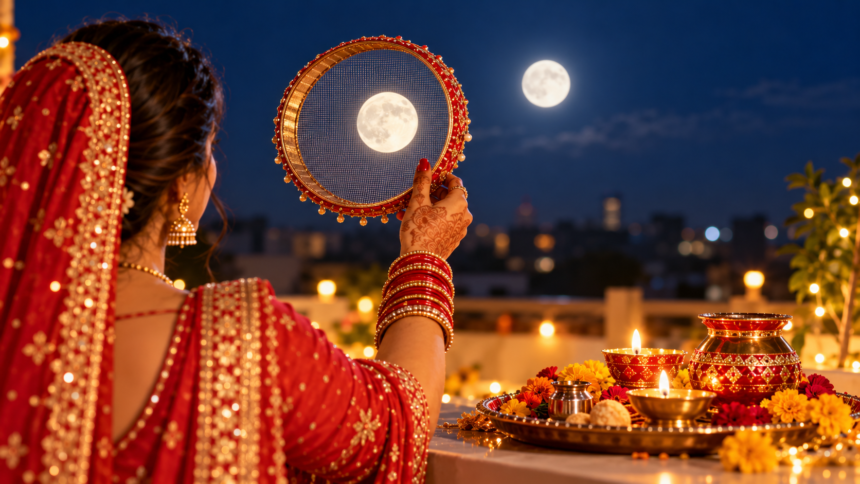
Karwa Chauth is a traditional Hindu festival observed by many married women, particularly in North India, who pray for their husbands’ long life, good health and happiness. In 2026, the festival falls on Thursday, October 29.
The observance includes a day-long fast, morning Sargi, prayers to Goddess Parvati and the recitation of the Karwa Chauth Vrat Katha. The fast is traditionally broken after the Moon appears in the evening. Along with its religious significance, the festival brings families together through rituals and customs passed down through generations.
Religious Significance of Karwa Chauth
Goddess Parvati is central to Karwa Chauth worship and is associated with marital harmony, devotion and strength. Lord Shiva and Lord Ganesha are also worshipped during the Puja, while Chandra Dev, the deity of the Moon, has an important role in the evening ritual.
After completing the Puja, women traditionally offer Arghya to the Moon and follow their household’s customary Moon-sighting ceremony before breaking their fast.
The name Karwa Chauth comes from two words: Karwa, referring to the earthen pot traditionally used during the rituals, and Chauth, meaning the fourth lunar day. The festival falls on Krishna Paksha Chaturthi, the fourth day of the waning lunar phase in the Hindu calendar.
Karwa Chauth Vrat Katha: Stories Behind the Festival
Several traditional tales are connected with Karwa Chauth. Their details may differ across regions and communities, but they commonly highlight faith, patience and devotion.
One widely known story is about Veeravati, a woman whose seven brothers become concerned when they see her struggling with the fast. They create the illusion that the Moon has risen, leading her to end her fast early. She subsequently learns that her husband has died. According to the traditional story, she renews her prayers and devotion, and her husband is eventually brought back to life.
Another popular tale concerns Karwa, a devoted wife who seeks divine help when a crocodile threatens her husband. Her determination and devotion lead to his rescue in the traditional narrative.
These stories form an important part of the festival’s religious tradition and are remembered during the Karwa Chauth Vrat Katha, although their versions may vary between communities.
Why Do Women Look at the Moon Through a Sieve?
The evening Moon-sighting ceremony is one of the most recognisable parts of Karwa Chauth. After the Puja, women wait for the Moon to appear and offer Arghya as part of the traditional observance.
In many households, women look at the Moon through a sieve before looking at their husbands. Their husbands may then offer them water and a small amount of food to help them break the fast.
This ritual marks the conclusion of the day’s fasting and is often an important moment for couples celebrating together. However, the exact sequence and practices can differ according to family traditions and regional customs.
How Karwa Chauth Is Celebrated Today
Although the traditional observance focuses on a wife’s prayers for her husband’s well-being, contemporary celebrations may include different expressions of love and mutual support.
Some husbands choose to fast alongside their wives, while some unmarried women also observe the vrat according to their personal beliefs and family traditions. Couples may exchange gifts, spend time together and use the occasion to express their affection.
At the same time, many families continue to follow the religious rituals and customs they have inherited from previous generations. These variations reflect how people celebrate the festival in ways that remain meaningful to them.
Karwa Chauth is not universally observed by all married Hindu women. Participation depends on personal beliefs, family practices and individual circumstances.
The traditional fast may involve abstaining from both food and water for an extended period. Pregnant women, people with medical conditions and those taking medicines that require food or water should prioritise their health and seek medical advice before undertaking such a fast.
For those who observe it, Karwa Chauth remains a meaningful occasion centred on prayer, family traditions and care for a partner.
Disclaimer: This article is intended for general informational and cultural purposes only. Religious stories, rituals and fasting practices may vary across regions, communities and families. The information provided should not replace medical advice. Anyone considering a prolonged or waterless fast should consult a qualified healthcare professional if they have health concerns or take medication.