
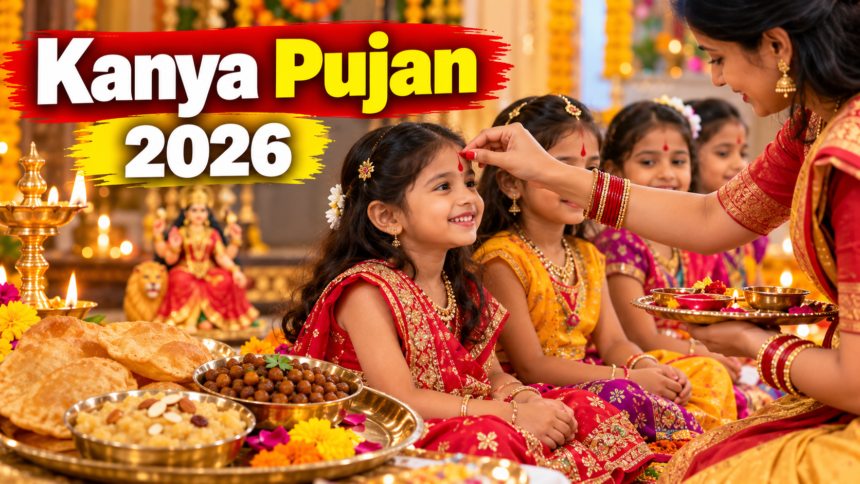
New Delhi: Kanya Pujan is one of the most important rituals performed during Navratri. On this occasion, devotees worship young girls as manifestations of Maa Durga and welcome them into their homes with traditional prayers, tilak and offerings. Halwa, puri and kala chana are commonly prepared as prasad, while families arrange flowers, a puja thali and other essential items.
Also known as Kanjak Puja or Kumari Puja, the ritual is generally observed on Maha Ashtami or Maha Navami, depending on family customs and regional traditions. In 2026, both observances fall on October 19 according to the widely followed North Indian Panchang. Devotees should check their local Panchang for the appropriate puja timings.
Kanya Pujan 2026 Date: Ashtami or Navami?
Kanya Pujan is traditionally performed on either the eighth day, Maha Ashtami, or the ninth day, Maha Navami, of Navratri. The choice usually depends on the family’s established religious practices.
According to the calendar information provided, Ashtami tithi ends at approximately 10:51 AM on October 19, 2026, followed by the beginning of Navami. As both observances fall on the same date, devotees may need to consider the tithi and their local puja muhurat before deciding when to perform the ritual.
Families that traditionally conduct Kanya Pujan on Ashtami can follow the appropriate morning timing, while those observing Navami should check the relevant local schedule. Consulting a trusted priest or local Panchang can help resolve any confusion about the timing of the puja and the completion of the Navratri fast.
Kanya Pujan Samagri: What Items Are Needed?
Preparing the essential puja items in advance can help families conduct the ceremony comfortably. The arrangements do not need to be elaborate; the focus remains on devotion and respectful hospitality.
Commonly used items include a clean asan, puja thali, roli, rice grains, flowers, water, a diya, halwa, puri, kala chana, fruits, dakshina and small gifts. Additional items may be included according to regional customs and family traditions.
Halwa, puri and kala chana are among the most familiar offerings served to the girls as prasad. Families may also offer fruits, sweets and other vegetarian dishes, keeping the children’s dietary needs in mind.
Kanya Pujan Vidhi: Step-by-Step Rituals at Home
1. Begin with Maa Durga’s worship
Clean the puja area and perform the customary Navratri prayers. Offer flowers, light a diya according to your tradition and seek the blessings of Maa Durga. Some families conduct Kanya Pujan after completing their regular puja or Havan.
2. Welcome nine young girls
Many households invite nine young girls who symbolise the nine forms of Maa Durga, collectively known as Navadurga. They are welcomed respectfully and seated in a clean, comfortable space.
The number and age of the girls may differ according to family customs. Some households also invite a boy associated with Bhairav, although this practice is not followed everywhere.
3. Apply tilak and perform the worship
In many traditions, devotees gently wash the girls’ feet as a gesture of respect. Tilak and flowers are then offered, and prayers are performed in honour of the Goddess.
The ritual should be conducted gently, ensuring that the children feel comfortable and that their preferences are respected.
4. Serve halwa, puri and kala chana
After the worship, the girls are served the traditional bhog. In many North Indian households, halwa, puri and kala chana form the main prasad for Kanya Pujan.
Families may also serve fruits, sweets and other customary vegetarian preparations. Food should be prepared hygienically and served according to the children’s needs.
5. Offer dakshina and conclude the ceremony
Once the meal has been served, families traditionally give dakshina or small gifts. These may include stationery, fruits, sweets or other useful items. Some devotees also seek the girls’ blessings before they leave.
The ceremony concludes with prayers to Maa Durga, seeking courage, wisdom, prosperity and well-being for the family.
Why Are Nine Girls Worshipped During Kanya Pujan?
The nine girls represent the nine manifestations of Maa Durga, each associated with a different expression of divine feminine power. Worshipping them reflects the Hindu belief that the Goddess’s presence can be honoured through living forms as well as through temple idols.
Beyond its religious significance, Kanya Pujan also highlights the importance of treating girls with dignity, kindness and respect. The values associated with the ritual can be practised throughout the year, not only during Navratri.
Can Kanya Pujan Be Performed on Both Ashtami and Navami?
Some families perform religious observances on both days, but conducting Kanya Pujan twice is not a universal requirement. Most households follow their established tradition and choose either Ashtami or Navami for the ceremony.
Those observing a Navratri fast should check their family’s customary rules for completing the vrat and determine whether Havan is part of the concluding rituals. When the calendar creates uncertainty, guidance from a trusted priest can be helpful.
Ultimately, Kanya Pujan is an expression of devotion through worship, food, hospitality and respect. Whether performed on Maha Ashtami or Maha Navami, the ritual centres on honouring the divine feminine and welcoming the young girls with sincerity.
Disclaimer: This article is intended for general informational and cultural purposes. Kanya Pujan dates, muhurat timings, rituals and customs may vary according to regional calendars and family traditions. Readers should consult a local Panchang or a knowledgeable priest for guidance specific to their observance.