
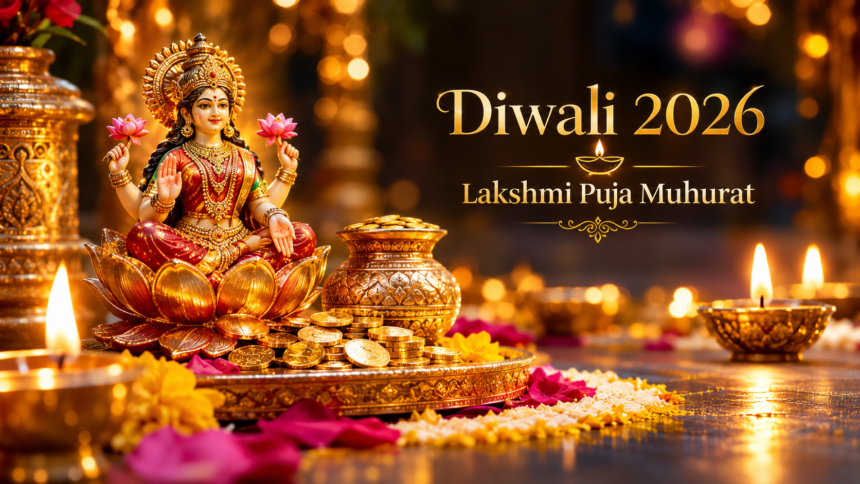
Diwali 2026 will be observed on Sunday, November 8. On this occasion, devotees will worship Goddess Lakshmi during the auspicious evening hours, seeking blessings for wealth, happiness and prosperity. However, the exact Lakshmi Puja muhurat varies across cities depending on local sunset timings and astrological calculations.
According to the city-wise Diwali calendar, Lakshmi Puja in New Delhi will take place between 5:54 PM and 7:50 PM. In Mumbai, the auspicious window is from 6:27 PM to 8:27 PM, while devotees in Kolkata can perform the puja between 5:20 PM and 7:18 PM.
Diwali is celebrated with great enthusiasm across the country. Homes are decorated with colourful rangoli, diyas and lights, while families come together for prayers and festive celebrations. Checking the correct Lakshmi Puja timing in advance can help devotees organise their preparations and complete the rituals during the recommended muhurat.
Diwali 2026 Lakshmi Puja Muhurat: City-Wise Timings
The Lakshmi Puja timings for November 8, 2026, differ depending on the location. Here are the auspicious time windows for major Indian cities, as provided in the Diwali calendar.
| City | Lakshmi Puja Muhurat |
|---|---|
| Delhi | 5:54 PM to 7:50 PM |
| Mumbai | 6:27 PM to 8:27 PM |
| Kolkata | 5:20 PM to 7:18 PM |
| Bengaluru | 6:17 PM to 8:20 PM |
| Chennai | 6:06 PM to 8:09 PM |
| Hyderabad | 6:07 PM to 8:08 PM |
| Ahmedabad | 6:22 PM to 8:20 PM |
| Pune | 6:24 PM to 8:24 PM |
| Jaipur | 6:03 PM to 7:59 PM |
| Noida | 5:54 PM to 7:49 PM |
| Gurugram | 5:55 PM to 7:51 PM |
| Chandigarh | 5:52 PM to 7:46 PM |
All timings are in Indian Standard Time (IST) and are specific to the respective cities. Minor differences of one or two minutes may appear in different Panchang calculations. Devotees are advised to check their local Panchang and follow their family traditions while deciding the final puja timing.
Diwali 2026 Amavasya Tithi: Start and End Time
Lakshmi Puja on Diwali is traditionally performed on Kartik Amavasya, the new Moon day associated with the festival.
According to the New Delhi calendar, Amavasya Tithi will begin at 11:27 AM on November 8, 2026, and continue until 12:31 PM on November 9.
Since a lunar tithi is calculated according to the Moon’s position rather than the midnight-to-midnight calendar system, it can extend across two different dates. This is why Amavasya may begin on one day and end on the next.
For Lakshmi Puja, the evening period holds particular importance. The auspicious timing is determined by considering Pradosh Kaal, which begins around sunset, along with Vrishabha Lagna, a fixed-sign ascendant traditionally regarded as favourable for worship.
Why Is Lakshmi Puja Performed During Pradosh Kaal?
Pradosh Kaal refers to the period around and after sunset. It is considered especially significant for Diwali Lakshmi Puja, as devotees traditionally worship Goddess Lakshmi during this evening period after completing their household preparations.
The recommended muhurat generally considers the alignment of Pradosh Kaal with Vrishabha Lagna. Since sunset and planetary calculations differ from one location to another, the auspicious puja timings are not identical across Indian cities.
Following the location-specific muhurat allows devotees to perform the rituals during the traditionally preferred period rather than selecting an arbitrary time after sunset.
Lakshmi Puja Preparation, Rituals and Significance
Preparing for Lakshmi Puja in advance can make the Diwali evening more organised. Devotees generally clean their homes and arrange a dedicated prayer space before the auspicious time begins.
The puja arrangements commonly include idols or pictures of Goddess Lakshmi and Lord Ganesha, along with a diya, cotton wicks, ghee or oil, flowers, roli or kumkum, rice grains, incense sticks, sweets, fruits and a vessel filled with water. Some families also include coins and account books as part of their traditional worship.
Many households decorate their entrances with rangoli and create small footprints representing the arrival of Goddess Lakshmi. Diyas are placed around the house to create a festive atmosphere and symbolise light, positivity and prosperity.
Once the muhurat begins, devotees perform the puja according to their family customs, offer flowers and prayers, and conclude the ceremony with aarti.
Why Do Devotees Worship Goddess Lakshmi on Diwali?
Goddess Lakshmi is worshipped as the deity of wealth, prosperity, abundance and well-being. On Diwali, devotees seek her blessings for financial stability, happiness and harmony within their families.
Lord Ganesha is also worshipped alongside Goddess Lakshmi in many households. He is associated with wisdom, auspicious beginnings and the removal of obstacles. Their combined worship represents the hope for a prosperous life supported by wisdom and good decisions.
Beyond the religious rituals, Diwali is also an occasion for families to come together, express gratitude and welcome new opportunities. Lighting diyas, exchanging wishes and sharing festive moments make the celebration meaningful for millions of households.
What If You Miss the Exact Lakshmi Puja Muhurat?
Sometimes, work responsibilities, family commitments or other circumstances may prevent devotees from performing Lakshmi Puja during the exact recommended window.
In such situations, devotees can follow their family traditions or seek guidance from a trusted religious authority about the appropriate alternative. There is no need to let timing-related concerns create unnecessary stress during the festival.
The muhurat provides a traditionally auspicious period for worship, while devotion, gratitude and sincerity remain central to the celebration.
As Diwali approaches on November 8, 2026, families across India will prepare to welcome the festival with prayers, lights and celebrations. May the blessings of Goddess Lakshmi bring prosperity, happiness, peace and positive beginnings to every home.
Disclaimer: The Lakshmi Puja timings mentioned in this article are based on the city-wise Diwali calendar referenced above. Actual timings may vary slightly depending on the Panchang, geographical location and calculation methods. Readers should verify the timings with their local Panchang or a knowledgeable priest before performing religious rituals.