
With fuel prices putting pressure on household budgets, improving car mileage has become important for many vehicle owners. While older cars are often blamed for delivering lower fuel efficiency, everyday driving habits and poor vehicle maintenance can also lead to unnecessary fuel consumption.
Simple changes, such as maintaining correct tyre pressure, avoiding unnecessary idling and removing extra weight from the car, can help improve fuel economy. Here are some common mistakes drivers should avoid.
1. Ignoring Tyre Pressure
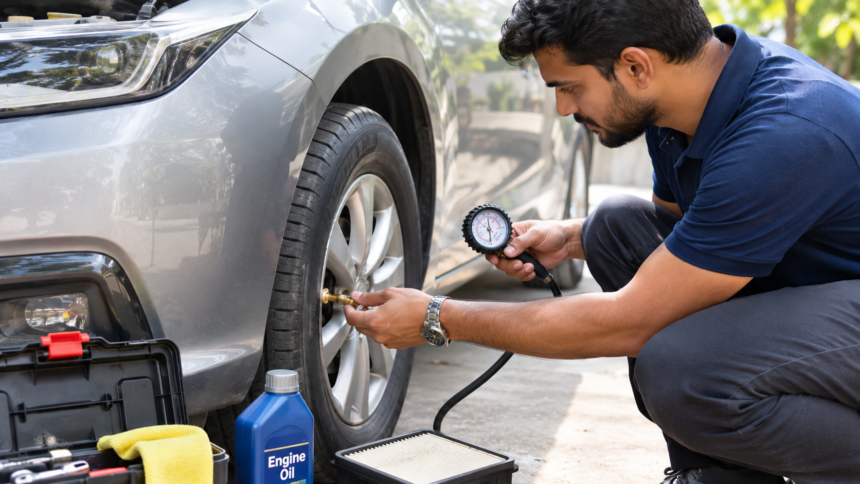
Driving with underinflated tyres increases resistance between the tyres and the road. As a result, the engine has to work harder to keep the vehicle moving, which can increase fuel consumption.
Check tyre pressure at least once a week and maintain the PSI level recommended by the vehicle manufacturer. Properly inflated tyres can help improve overall mileage.
2. Skipping Regular Car Servicing
Neglecting routine maintenance can affect engine performance and fuel efficiency. Old engine oil and clogged air filters may prevent the engine from operating smoothly.
Timely servicing, regular engine oil replacement and cleaning or changing air filters when required can help the engine run efficiently and reduce unnecessary fuel wastage.
3. Keeping Your Foot on the Clutch Pedal
Continuously pressing or resting your foot on the clutch pedal while driving can cause unnecessary wear to clutch components and affect fuel efficiency.
Drivers should use the clutch only when required and select gears according to the vehicle’s speed. This helps avoid additional strain on the engine and transmission.
4. Leaving the Engine Running at Traffic Signals
Keeping the car engine switched on while waiting at long traffic signals can waste fuel, even when the vehicle is not moving.
If you expect to remain stationary for more than 30 seconds, switching off the engine can help reduce unnecessary fuel consumption.
5. Carrying Unnecessary Weight in the Car
Many car owners use their vehicle’s boot to store tools, luggage and other items that are rarely needed.
Carrying unnecessary weight makes the engine work harder to move the vehicle, which can affect mileage. Removing unwanted items from the boot helps keep the car lighter and may improve fuel efficiency.
6. Follow Better Driving and Maintenance Habits
Improving car mileage does not always require expensive modifications. Paying attention to tyre pressure, servicing schedules, clutch usage, engine idling and unnecessary vehicle weight can make a difference to fuel consumption.
Small changes in everyday driving habits can help vehicle owners manage fuel expenses and maintain their cars more efficiently.
Disclaimer: This article is intended for general informational purposes only. Actual fuel efficiency depends on vehicle condition, driving style, road conditions and manufacturer specifications. Always follow your vehicle manufacturer’s maintenance recommendations and consult an authorised service professional when required.