
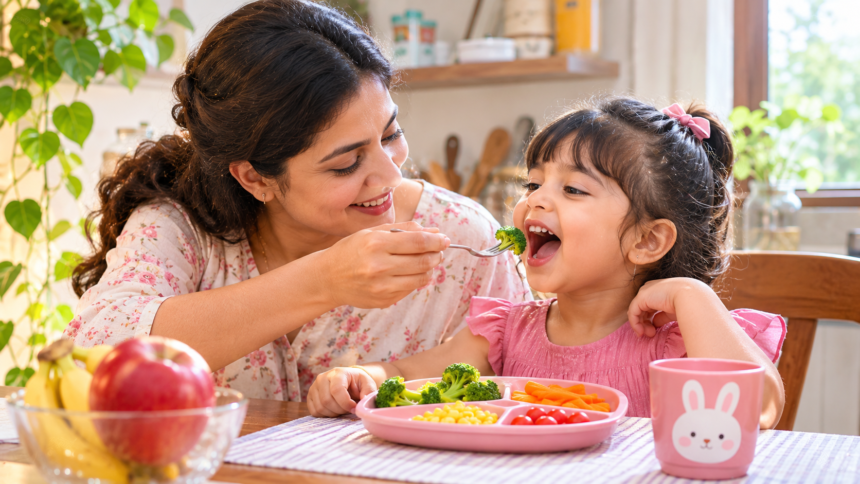
Getting toddlers to eat a variety of foods can be challenging for parents. Some children refuse vegetables, reject unfamiliar flavours or push their plates away during mealtimes. While picky eating is common during the toddler years, repeated arguments, pressure and punishments can make the situation more difficult.
Experts recommend a patient and relaxed approach that allows children to explore different foods at their own pace. Toddlers may need to taste a particular food 10 or more times before accepting it, so parents should not give up after one refusal.
From eating together as a family to involving little ones in meal preparation, a few simple changes can help children become more comfortable with different tastes and textures.
10 Effective Ways to Handle Picky Eating in Toddlers
1. Make Family Meals a Regular Habit
Eating together gives toddlers an opportunity to observe and learn from their parents. Try to have meals without television, mobile phones or other distractions so children can focus on eating.
Prepare the same meal for everyone instead of making a separate dish whenever your toddler refuses something. However, include at least one familiar food your child enjoys and maintain a balanced meal, regardless of how much they eat.
2. Let Hunger Decide How Much They Eat
Avoid forcing your toddler to finish everything on the plate. Children should gradually learn to recognise their own hunger and fullness signals.
For example, a child who has eaten a large breakfast or lunch may naturally feel less hungry at the next meal. Parents should decide what food is offered, while children should be allowed to decide whether and how much they want to eat.
Pressure and punishment can create negative feelings around mealtimes and make food refusal more frequent.
3. Don’t Use Sweets as a Reward
Promising chocolates, desserts or other treats in exchange for eating vegetables can create unhealthy associations with food.
When sweets become the reward, children may start viewing nutritious foods as something unpleasant that they must finish to receive a treat. This approach can also turn everyday dinners into arguments.
4. Keep Offering Foods Even After Rejection
A toddler refusing a particular food once does not mean they will never eat it. Children may need 10 or more opportunities to taste something before accepting its flavour.
Continue offering previously rejected foods alongside familiar favourites. Maintaining regular meal times and limiting unnecessary snacks can also help children feel hungry when new foods are served.
5. Introduce Different Foods and Flavours
Give toddlers opportunities to try a variety of fruits, vegetables and other nutritious foods. Include protein-rich options such as meat and deboned fish at least twice a week.
Parents can also experiment with different herbs and spices to introduce new flavours and textures. Start with small portions of unfamiliar foods to avoid unnecessary waste. If a child refuses something, wait a week or two before offering it again.
6. Make Food Attractive and Enjoyable
The appearance of food can influence a toddler’s interest in eating. Try arranging fruits and vegetables in colourful shapes or familiar patterns.
Many young children also enjoy finger foods and dips. Cut solid foods into small, manageable pieces that children can pick up and eat independently. Always ensure that the size and texture are appropriate for the child’s age to reduce choking risks.
7. Allow Children to Participate in Meal Planning
Toddlers often enjoy making small choices as they develop a sense of independence. Parents can use this interest to encourage healthier eating.
Let your child choose a fruit or vegetable for dinner while shopping at a grocery store or farmers’ market. Reading children’s cookbooks together and allowing them to select a new recipe can also make them more interested in trying different foods.
8. Encourage Little Ones to Help in the Kitchen
Simple kitchen activities can make children more familiar with ingredients and food preparation.
With close adult supervision, toddlers can help with tasks such as stirring, sifting and counting ingredients. They can also pick fresh herbs from a garden or windowsill and use a pastry brush to spread cooking oil.
These small activities can make cooking an enjoyable learning experience.
9. Introduce New Foods Through Food Bridges
Food bridging is a technique used to gradually expand a child’s food choices by introducing items with similar colours, flavours or textures to foods they already enjoy.
For example, if a toddler likes pumpkin pie, parents can introduce mashed sweet potatoes and later offer mashed carrots. Starting with familiar characteristics may make unfamiliar foods easier to accept.
10. Combine New Foods With Familiar Favourites
Some flavours, particularly sour and bitter ones, may initially be difficult for toddlers to accept. Pairing these foods with familiar flavours can make them more appealing.
For instance, broccoli has a naturally bitter taste, while grated cheese adds a salty flavour. Serving them together can help introduce children to vegetables in a more familiar combination.
Patience Is Important When Dealing With Picky Eaters
Picky eating is a common phase of toddler development, and children may gradually become more willing to try different foods as they grow.
Parents can support this process by maintaining regular meal routines, offering a variety of nutritious options and avoiding pressure or punishment. Repeated exposure, family meals and involving children in food preparation can also help build healthier eating habits over time.
Disclaimer: This article is intended for general informational purposes only and should not be considered a substitute for professional medical or nutritional advice. Every child’s dietary needs are different. Parents should consult a paediatrician or qualified healthcare professional if they have concerns about their child’s eating habits, nutrition or growth.