
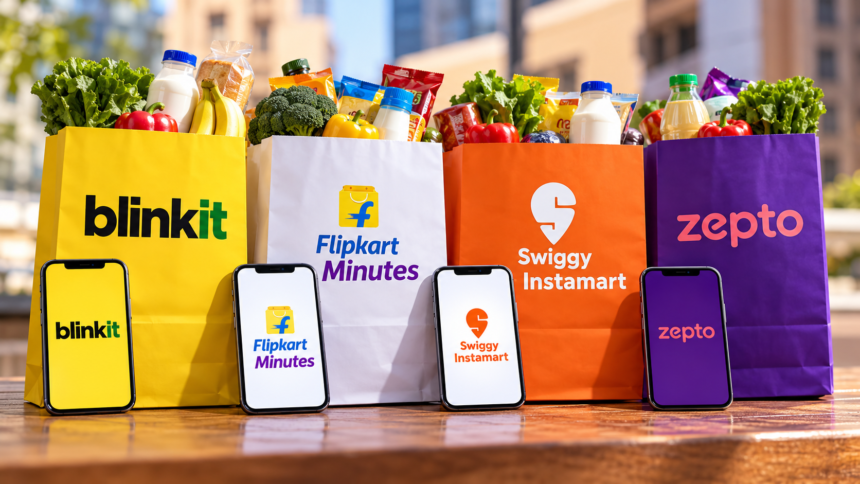
Blinkit, owned by Eternal, has recorded the highest product availability among India’s major quick-commerce platforms, with an average in-stock rate of 94.4%, according to a study by brokerage firm Bernstein. Flipkart Minutes secured the second position at 88.7%, followed by Swiggy Instamart at 83.8% and Zepto at 82.5%.
The study compared product availability across four platforms by tracking 150 stock-keeping units (SKUs) across grocery, fresh produce and non-grocery categories. The analysis covered 10 days, with products checked across seven time slots each day.
Blinkit maintained an in-stock rate of approximately 94–95% throughout the observation period. Flipkart Minutes recorded a rate 5.7 percentage points below Blinkit, while Zepto trailed the market leader by 11.9 percentage points.
Quick-Commerce Product Availability: Platform-Wise Comparison
The average in-stock rates recorded in Bernstein’s study were:
| Quick-commerce platform | Average in-stock rate |
|---|---|
| Blinkit | 94.4% |
| Flipkart Minutes | 88.7% |
| Swiggy Instamart | 83.8% |
| Zepto | 82.5% |
The findings place Blinkit ahead of its competitors in keeping products available during the period examined. Swiggy Instamart and Zepto experienced greater fluctuations, with their availability rates falling below 80% at certain points during the study.
Blinkit’s relatively consistent performance indicates stronger inventory management and replenishment across the locations covered by the research.
Why Product Availability Matters in Quick Commerce
Quick-commerce platforms compete on delivery speed, but fast delivery offers limited value if the product a customer wants is unavailable. Maintaining adequate stock has therefore become an important factor as these businesses expand beyond groceries into electronics, beauty products, personal care and festive gifts.
Consistent availability requires platforms to manage inventory, anticipate demand and replenish products efficiently. The fluctuations recorded by some competitors highlight the operational challenges involved in keeping a broad selection of products in stock.
As quick-commerce companies widen their catalogues and compete for customers, inventory management has become an important part of the overall shopping experience.
Flipkart Minutes Strengthens Its Quick-Commerce Push
Flipkart Minutes’ second-place finish reflects its growing presence in India’s quick-commerce segment. The Walmart-backed company has been expanding its dark-store network and broadening the range of products available through the service.
The platform has also overtaken Swiggy Instamart in dark-store count and PIN-code coverage across India’s top 10 cities, according to the information cited in the report.
Dark stores serve as local fulfilment centres for online orders, helping platforms store products closer to customers. Expanding these networks and improving inventory availability are important parts of the competition among quick-commerce businesses.
What the Bernstein Study Does Not Cover
The results reflect the products, locations and time slots included in Bernstein’s research and should not be interpreted as a nationwide assessment of product availability.
The study covered at least three PIN codes each in Mumbai, Gurugram and Bengaluru. Availability may therefore differ across other cities, neighbourhoods and individual delivery locations.
Even with these limitations, the findings highlight Blinkit’s performance in the markets examined. The comparison comes as competing platforms continue investing in dark stores, delivery operations and wider product selections ahead of the festive season.
Disclaimer: This article summarises findings attributed to Bernstein’s study and is intended for informational purposes only. The reported figures apply to the specific products, locations and observation period covered by the research and may not represent availability across all markets or at other times. Platform performance can change as operating conditions and inventory levels evolve.