
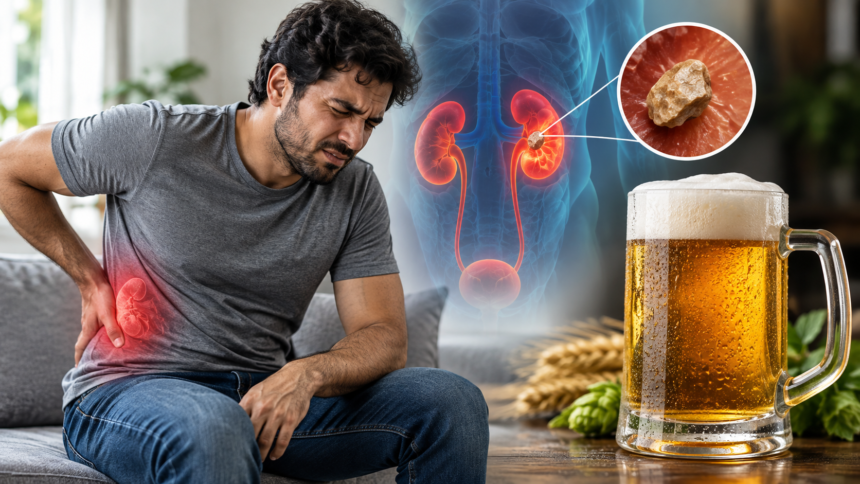
Kidney stones are becoming an increasingly common health concern, including among younger adults. These hard deposits develop when certain minerals and salts in urine become concentrated and form crystals. When the crystals remain in the urinary system instead of being flushed out, they can gradually grow into kidney stones.
Depending on their size and location, kidney stones can cause severe pain, a burning sensation while urinating, frequent urination, or difficulty passing urine. Very small stones may pass naturally through urine, while larger stones are less likely to leave the body without medical treatment.
One popular claim, particularly on social media, is that drinking beer can help flush kidney stones out of the body. But is there any truth behind this belief? Doctors say people should not rely on beer as a treatment for kidney stones.
Does Beer Help Remove Kidney Stones?
The belief that beer can dissolve or flush out kidney stones largely comes from the fact that beer can increase urine production. Since beer has a diuretic effect, people may urinate more after drinking it and assume that the increased urine flow will push a stone out.
However, increased urination does not mean that a kidney stone will necessarily pass.
Medical experts do not recommend drinking beer to treat kidney stones. There is no reliable scientific evidence that beer can remove or dissolve a kidney stone.
In fact, trying to force urine production can be risky in certain situations. If a stone is blocking part of the urinary tract, producing a large amount of urine can increase pressure within the urinary system. This may worsen pain and potentially contribute to complications such as swelling of the kidney.
Therefore, beer should not be considered a home remedy for kidney stones.
Why Drinking Beer for Kidney Stones Can Be Risky
Beer contains alcohol, and using it as a supposed treatment for kidney stones can create additional health concerns. Regular or excessive alcohol consumption can negatively affect several organs and may also increase the risk of alcohol dependence.
Long-term excessive alcohol intake can affect the liver, brain, and overall health. It therefore makes little sense to use an alcoholic beverage as a treatment when safer approaches are available.
The important goal when dealing with kidney stones is appropriate hydration and medical evaluation—not simply increasing urine output with alcohol.
Water Is a Better Choice for Kidney Stone Prevention
Adequate water intake plays an important role in maintaining urinary health. Drinking enough fluids helps dilute urine, which can reduce the concentration of substances that contribute to stone formation.
People who are prone to kidney stones are generally advised to maintain good hydration throughout the day. During hot weather, fluid requirements may increase because the body loses more water through sweating.
However, the ideal amount of fluid can vary depending on an individual’s health, kidney function, activity level, climate, and doctor’s advice. People with certain medical conditions should not suddenly increase their water intake without consulting a healthcare professional.
What Foods Should You Limit If You Have Kidney Stones?
Dietary recommendations for kidney stones depend on the type of stone a person has. There is no single diet that works for everyone.
Doctors may recommend reducing excessive salt intake and avoiding unnecessary consumption of large amounts of animal protein, particularly in people whose stone type or urine chemistry makes these dietary factors relevant.
Calcium also needs to be approached carefully. Calcium is an essential nutrient, and completely eliminating dietary calcium is generally not appropriate. Instead, a doctor or dietitian may recommend the right amount based on the individual’s stone composition and medical history.
If someone has previously developed kidney stones, testing the stone or evaluating urine and blood parameters can help identify factors contributing to stone formation.
When Should You See a Urologist?
Kidney stones should not be ignored, especially when symptoms are persistent or severe.
Seek medical advice if you experience:
- Severe or recurring pain in the side, back, or abdomen
- Burning or pain while urinating
- Difficulty passing urine
- Blood in the urine
- Repeated urinary symptoms
- Fever or chills along with suspected kidney stones
- Nausea or vomiting
- A history of recurrent kidney stones
People with abnormal uric acid levels or recurrent stones may also require further evaluation to identify the underlying cause.
A stone that remains untreated can grow larger or obstruct the urinary tract. Depending on its size, location, and the patient’s condition, treatment may involve medication, procedures to break or remove the stone, or other medical interventions.
Don’t Believe the Beer Myth
The idea that beer can flush kidney stones away may sound convincing because it increases urination, but more urine does not automatically mean a kidney stone will pass.
Instead of relying on alcohol-based remedies, people with kidney stones should focus on appropriate hydration, follow an individualized diet plan, and seek medical advice when symptoms occur.
If you suspect you have a kidney stone, a urologist can determine its size and location and recommend the safest treatment. Getting the right diagnosis early is far safer than experimenting with unproven home remedies.