
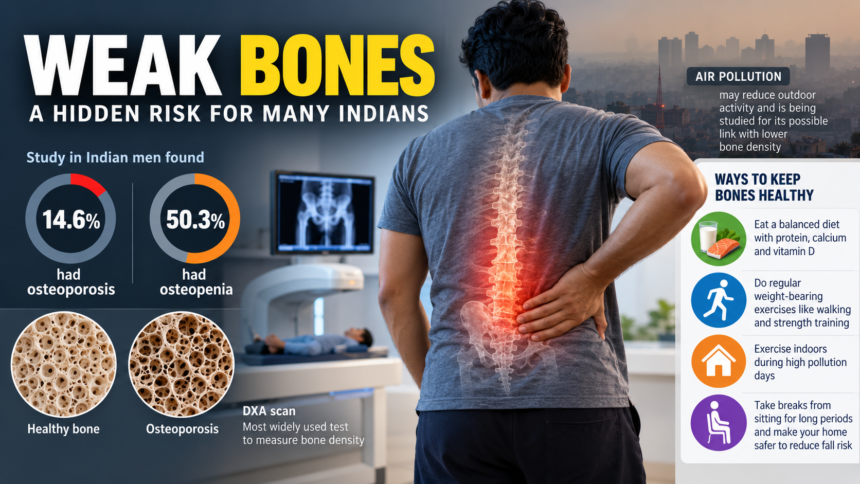
Weak bones can remain unnoticed for years, with many people discovering the problem only after suffering a fracture. Research published in the Indian Journal of Medical Research has highlighted the issue among Indian men, raising concerns about bone health and the importance of early detection.
One study found that 14.6% of healthy adult men included in the research had osteoporosis, while 50.3% had osteopenia, a condition in which bone density is lower than normal. These figures apply to the people covered by the study and should not be taken as estimates for all Indian men.
The findings highlight why maintaining bone strength is important, even for people who feel healthy and have no obvious symptoms.
What Are the Warning Signs of Weak Bones?
Osteoporosis is often described as a silent condition because it may develop without noticeable symptoms. In many cases, people discover they have it only after a fall or a fracture.
However, certain changes can sometimes indicate an underlying bone problem. These include persistent back pain, a gradual reduction in height and a stooped posture. Anyone experiencing these symptoms should seek medical advice rather than ignore them.
Ageing can weaken bones, but several other factors may also contribute to bone loss. Poor nutrition, insufficient physical activity, hormonal changes and certain medications can affect bone strength.
Women face a higher risk of osteoporosis after menopause, particularly when menopause occurs before the age of 45. Individual risk also depends on factors such as age and medical history.
Doctors may recommend a bone density assessment for people with relevant risk factors. Dual-energy X-ray absorptiometry (DXA) is the most widely used method for measuring bone mineral density and helping assess bone health.
Can Air Pollution Affect Bone Health?
For people living in Delhi-NCR, winter air pollution can make outdoor exercise more difficult. When pollution levels are high, people may spend less time walking or exercising outside, potentially reducing the regular physical activity that helps maintain strong bones.
Researchers are also investigating whether long-term exposure to fine particulate matter, including PM2.5, is associated with lower bone density. However, an association between pollution exposure and bone health does not establish that air pollution directly causes osteoporosis.
Maintaining regular physical activity remains important. On days when outdoor air quality is poor, exercising indoors may be a more practical option.
How to Keep Bones Strong and Healthy
A balanced diet and consistent exercise can help support bone health. Protein contributes to maintaining bones and muscles, while calcium and vitamin D play important roles in keeping bones strong.
Weight-bearing activities, such as walking, along with strength-training exercises, can help maintain bone strength. Regular movement can also support balance, which is important for reducing the risk of falls.
People who spend long periods sitting should take short breaks and move around regularly. Making the home safer can further reduce the chances of falls and related fractures.
For those concerned about osteoporosis, particularly people with risk factors or possible symptoms, consulting a healthcare professional can help determine whether a bone density test or other assessment is appropriate.
Disclaimer: This article is intended for general health information and educational purposes only. It does not replace professional medical advice, diagnosis or treatment. Anyone concerned about bone health or experiencing persistent symptoms should consult a qualified healthcare professional.