
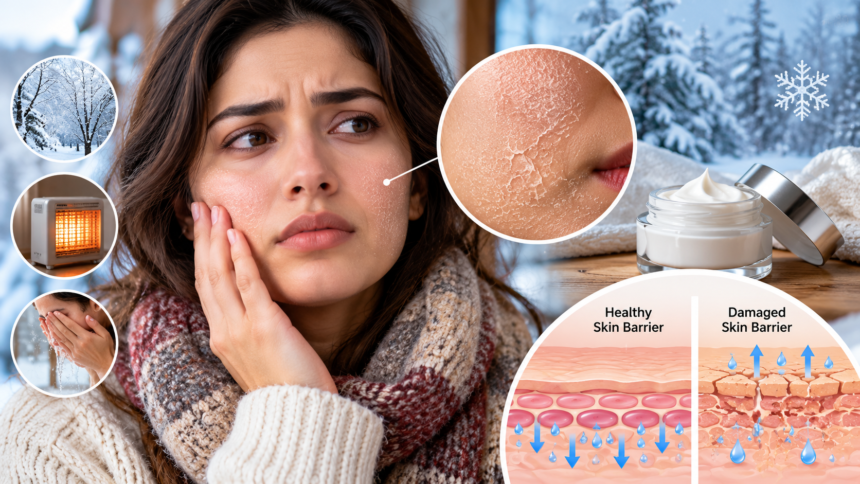
Winter can leave skin feeling tight, looking dull and becoming flaky, even when moisturiser is applied every day. While many people assume these symptoms are caused by a lack of hydration, the problem may be more complex. According to Dr. Hina Kukreja, Medical Director at Zurie Skin Clinic, persistent dryness despite regular moisturising could indicate that the skin’s protective barrier is not functioning properly.
Rather than simply adding more hydrating products, understanding the cause of the dryness is essential to restoring healthy skin during the colder months.
What Causes Skin Dehydration in Winter?
Skin dehydration occurs when moisture escapes faster than the skin can retain it. During winter, cold and dry air, low humidity, indoor heating and frequent exposure to hot water can all contribute to moisture loss.
Common signs include dullness, tightness after cleansing, a wrinkled appearance and more noticeable fine lines. These symptoms can often improve with a hydrating moisturiser containing humectants such as glycerine or hyaluronic acid, which help attract water to the skin.
However, when dryness continues despite regular use of moisturiser, dehydration may not be the only issue. Damage to the skin barrier could also be contributing to the problem.
Why Your Moisturiser May Not Be Enough
The skin barrier is the outer protective layer that helps retain moisture while shielding the skin from irritants, allergens and environmental stressors. When this barrier becomes weakened, the skin may struggle to hold on to moisture.
Unlike ordinary dryness, a compromised skin barrier can also cause redness, itching, stinging and increased sensitivity. Even products that previously worked well may begin to irritate the skin.
Certain skincare habits can contribute to barrier damage. Over-exfoliation, frequent use of potent active ingredients, harsh cleansers and introducing several new products at once may weaken the skin’s protective function.
In these situations, simply adding hydrating serums or switching to a richer cream may not deliver the expected results. The priority should be to address the underlying barrier damage rather than relying on additional layers of moisture.
How to Protect and Repair Your Skin Barrier
A simpler skincare routine can help support the skin as it recovers. Start by using a gentle cleanser and a moisturiser formulated with barrier-supporting ingredients, such as ceramides.
It is also important to avoid unnecessary exfoliation while the skin is recovering. Applying moisturiser when the skin is slightly damp can help reduce moisture loss and improve hydration.
Sunscreen remains an essential part of winter skincare, particularly for people using ingredients that can increase the skin’s sensitivity. Maintaining a consistent, gentle routine can help prevent further irritation while supporting the skin’s protective function.
Conclusion
Healthy winter skin does not necessarily require more skincare products. When dryness, flaking or irritation persists despite regular moisturising, the skin barrier may need attention.
Instead of continually adding new products, focus on gentle cleansing, barrier-supporting moisturisers and avoiding habits that may worsen irritation. Restoring the skin’s protective barrier can be more important than simply increasing hydration.