
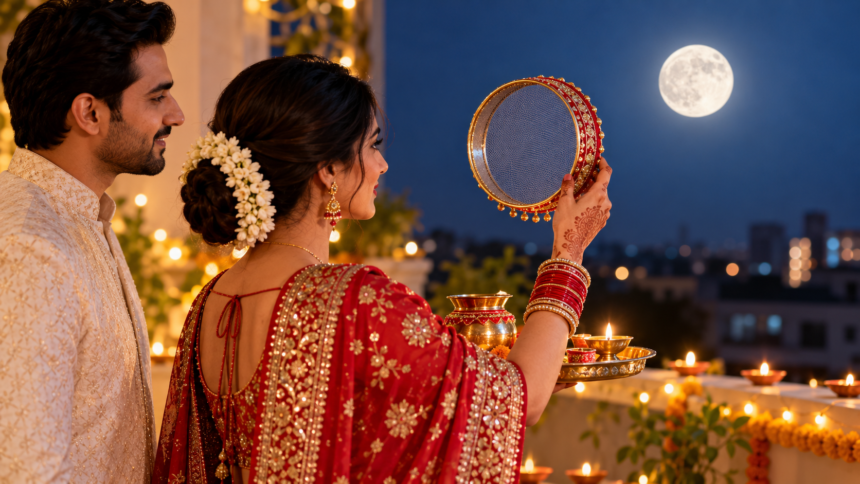
Karwa Chauth will be celebrated on Thursday, October 29, 2026. The traditional Hindu festival is observed with fasting, evening prayers and the sighting of the Moon. Married women traditionally observe the vrat for their husbands’ long life, good health and well-being, following customs that have been passed down through generations.
Preparations often begin before sunrise with Sargi, followed by fasting throughout the day and the recitation of the Karwa Chauth Vrat Katha in the evening. The fast is traditionally concluded after the Moon appears and the prescribed rituals are completed.
Here is a complete guide to Karwa Chauth 2026, including the date, Chaturthi Tithi, Puja timings, Moonrise time and the stories associated with the festival.
Karwa Chauth 2026: Date, Chaturthi Tithi and Puja Muhurat
Karwa Chauth falls on Krishna Paksha Chaturthi, the fourth day of the waning lunar fortnight. The festival is observed during Kartik according to the Purnimanta calendar commonly followed in North India. In regions following the Amanta calendar, it may be associated with Ashwin.
The following timings are for New Delhi.
- Date: Thursday, October 29, 2026
- Chaturthi Tithi begins: 1:06 AM on October 29
- Chaturthi Tithi ends: 10:09 PM on October 29
- Puja Muhurat: 5:38 PM to 6:56 PM
- Fasting duration: 6:31 AM to 8:17 PM
- Expected Moonrise: 8:17 PM
These timings are location-specific. Puja Muhurat and Moonrise can vary across cities, so devotees should check their local Panchang before planning the rituals.
In 2026, Karwa Chauth also coincides with Sankashti Chaturthi, which is associated with the worship of Lord Ganesha.
Why Is Karwa Chauth Celebrated?
Karwa Chauth holds religious and emotional significance in many North Indian families. Married women traditionally fast and pray for their husbands’ longevity, health and prosperity.
Goddess Parvati, Lord Shiva, Lord Ganesha and Chandra Dev are associated with the festival. The Moon plays a central role in the observance because its sighting traditionally marks the completion of the fast.
The word Karwa refers to the earthen pot used to hold water for the Moon offering, while Chauth means the fourth lunar day.
Although the festival has traditionally been observed by married women, some unmarried women also participate according to their personal beliefs and family customs. In some households, husbands and wives observe the fast together as a gesture of mutual commitment.
Karwa Chauth Puja Vidhi: How to Observe the Fast
The rituals may differ between families and regions, but the observance generally follows a series of traditional practices.
1. Begin the day with Sargi
Sargi is a pre-dawn meal traditionally prepared or sent by the mother-in-law to her daughter-in-law. It may include fruits, dry fruits, sweets and other foods. Women eat Sargi before beginning their fast, according to family customs.
2. Observe the daytime fast
The traditional fast begins before sunrise and continues until the Moon is sighted. Many women observe a nirjala vrat, abstaining from both food and water. However, fasting practices vary, and people who are pregnant, unwell or managing medical conditions should seek medical advice before undertaking a waterless fast.
3. Prepare the Puja Thali
As evening approaches, devotees prepare a Puja thali containing items such as a diya, roli or kumkum, rice grains, flowers, sweets, a sieve and a Karwa filled with water. Wearing festive clothes and applying mehendi are also common traditions.
4. Perform the evening Puja
During the prescribed Puja Muhurat, devotees worship Goddess Parvati, Lord Shiva and Lord Ganesha according to their family traditions. The Karwa Chauth Vrat Katha is also recited or heard during the ceremony.
5. Complete the Moon ritual
After the Moon becomes visible, women traditionally offer water, known as Arghya, to Chandra Dev and pray for their husbands’ well-being. A common custom involves viewing the Moon through a sieve and then looking at the husband through it.
In many households, the husband offers his wife water or food to help her conclude the fast.
Karwa Chauth Vrat Katha: The Story of Veeravati
One of the best-known stories associated with Karwa Chauth is the traditional tale of Veeravati, the only sister of seven brothers.
According to the story, Veeravati observed her first Karwa Chauth fast at her parental home after marriage. As the day progressed, she struggled with hunger and thirst. Worried about their sister, her brothers created the illusion of a rising Moon by placing a light behind a tree.
Believing that the Moon had appeared, Veeravati performed the rituals and broke her fast. Soon afterwards, she received the heartbreaking news that her husband had died.
Overcome with grief, she sought divine blessings and continued observing the Chauth fast with devotion. According to the popular account, her prayers were eventually answered, and her husband’s life was restored.
The story is traditionally remembered for its themes of faith, patience and devotion, although details differ across regional versions.
Another popular tale concerns a devoted woman named Karwa. According to this account, her husband was attacked by a crocodile while bathing in a river. Karwa restrained the crocodile with a thread and appealed to Yama, the god associated with death, to save her husband.
Her devotion and determination ultimately led to divine intervention, and her husband was saved. This story is also associated with the protective significance of devotion within marriage.
Karwa Chauth 2026: Frequently Asked Questions
What time will the Moon rise on Karwa Chauth 2026?
The expected Moonrise in New Delhi is 8:17 PM on October 29, 2026. The timing varies by location, and weather conditions can affect visibility.
What should devotees do if the Moon is not visible?
Check the local Moonrise time and follow your family’s customary practices. You may also consult a trusted priest for guidance on completing the ritual. Traditions differ between communities.
Can unmarried women observe Karwa Chauth?
Yes. Some unmarried women observe the fast according to their personal beliefs and family traditions, sometimes praying for a suitable life partner. However, this is not a universal practice.
Can husbands also keep the Karwa Chauth fast?
Yes. Some couples observe the fast together as an expression of mutual love and commitment. However, a husband’s participation is not a universal requirement.
What items are needed for Karwa Chauth Puja?
Common Puja Samagri includes a Karwa or water pot, Puja thali, diya, roli or kumkum, rice grains, flowers, sweets, water for the Moon offering and a sieve. The exact list may vary by family and region.
Disclaimer
This article is intended for general informational purposes only and describes traditional customs and religious practices associated with Karwa Chauth. Puja Muhurat, Chaturthi Tithi and Moonrise timings may vary by location and Panchang calculations. Readers should confirm local timings with a reliable Panchang or trusted religious authority. Rituals and fasting practices vary between families and communities, and individuals should prioritise their health and seek medical advice when necessary.