
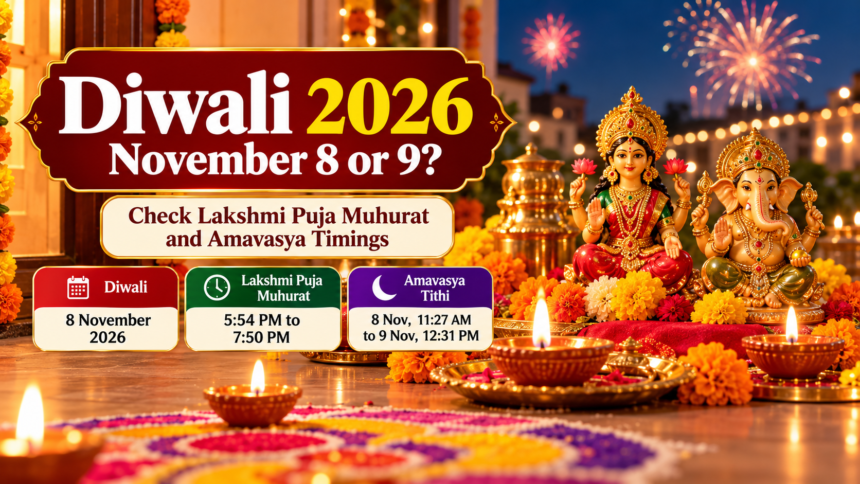
New Delhi: Diwali is among India’s most widely celebrated festivals, bringing families together for prayers, festive meals, home decorations and the lighting of diyas. However, confusion over the festival’s date has led many people to ask whether Diwali 2026 will be celebrated on November 8 or November 9.
According to the Panchang details provided, Diwali and the main Lakshmi Puja will be observed on Sunday, November 8, 2026. The confusion arises because the Amavasya Tithi continues into November 9. Understanding the difference between the lunar date and the festival’s traditional observance can help families plan their celebrations.
Diwali 2026 Date: Why Is There Confusion?
Diwali 2026 falls on Sunday, November 8. On this evening, families will celebrate the festival of lights and perform the traditional worship of Goddess Lakshmi and Lord Ganesha.
The Amavasya Tithi begins at 11:27 AM on November 8 and ends at 12:31 PM on November 9, according to the New Delhi Panchang. As the lunar period extends across two calendar dates, some online calendars may display both days in connection with Diwali.
However, Hindu festival dates are determined by traditional observance rules and the timing of the relevant Tithi, rather than simply by whether it continues into the next calendar day. For Diwali 2026, the main celebration and evening Lakshmi Puja are scheduled for November 8.
Diwali 2026 Lakshmi Puja Muhurat and Important Timings
The following timings apply specifically to New Delhi. Puja timings may differ in other cities.
| Event | Date and time |
|---|---|
| Diwali | Sunday, November 8, 2026 |
| Amavasya Tithi begins | November 8, 11:27 AM |
| Amavasya Tithi ends | November 9, 12:31 PM |
| Lakshmi Puja Muhurat | 5:54 PM to 7:50 PM |
| Pradosh Kaal | 5:31 PM to 8:09 PM |
Devotees planning their Diwali rituals should check the local Panchang to confirm the appropriate Lakshmi Puja Muhurat for their location.
Why Is Diwali Celebrated on Amavasya?
Diwali is associated with several religious traditions and cultural stories. In many North Indian traditions, the festival commemorates Lord Rama’s return to Ayodhya after 14 years of exile and his victory over Ravana. People are believed to have welcomed his return by lighting rows of diyas, a tradition that represents the victory of light over darkness and good over evil.
The festival is also dedicated to Goddess Lakshmi, who is worshipped for wealth and prosperity, and Lord Ganesha, who is associated with wisdom and the removal of obstacles.
During the celebrations, families clean and decorate their homes, prepare sweets, create rangoli designs and light lamps. Evening Lakshmi-Ganesha Puja is an important part of the observance, as devotees pray for happiness, prosperity and peace in the coming year.
Diwali 2026: Frequently Asked Questions
Is Diwali on November 8 or November 9 in 2026?
Diwali and the main Lakshmi Puja are scheduled for Sunday, November 8. Amavasya Tithi continues until November 9.
What is the Lakshmi Puja Muhurat for Diwali 2026?
For New Delhi, the stated Muhurat is from 5:54 PM to 7:50 PM on November 8. Local timings may vary.
When does Amavasya Tithi begin and end?
According to the New Delhi Panchang, Amavasya begins at 11:27 AM on November 8 and ends at 12:31 PM on November 9, 2026.
Why does the Diwali date change every year?
Diwali follows the Hindu lunisolar calendar and is associated with Kartik Amavasya. Because lunar dates do not align exactly with the Gregorian calendar, the festival can fall in October or November.
When should Lakshmi Puja be performed?
For New Delhi, the stated Lakshmi Puja Muhurat is on the evening of November 8, from 5:54 PM to 7:50 PM. Devotees should consult their local Panchang for city-specific timings.
Disclaimer: This article is intended for general informational purposes. Festival dates and auspicious timings are based on the Panchang details provided and may vary by location and tradition. Please verify the relevant timings with a trusted local Panchang or priest before performing religious rituals.