
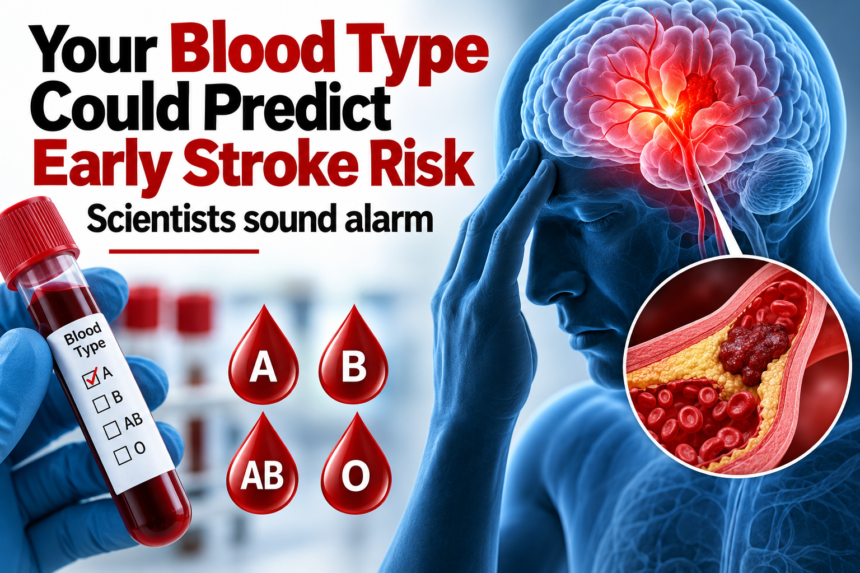
Your blood group may reveal more about your health than just whether you can donate blood to someone in an emergency. Scientists have found evidence that certain blood types could be linked to the risk of having a stroke at a younger age.
A large genetic study published in the journal Neurology found that people carrying a particular subgroup of blood type A may have a greater likelihood of experiencing a stroke before the age of 60. Researchers say the findings could provide further insight into the role of genetics and blood-clotting processes in cardiovascular health.
Study Finds Higher Risk Among A1 Blood Group Carriers
Researchers examined genetic information from 48 studies involving nearly 17,000 people who had suffered a stroke and approximately 600,000 individuals without a history of stroke. The participants were between 18 and 59 years old.
The analysis found that people carrying the A1 blood subgroup had a 16% higher risk of experiencing an early-onset stroke compared with people who had other blood types.
In contrast, individuals with the O1 blood subgroup appeared to have a 12% lower risk.
The researchers also observed a modest increase in stroke risk among people with blood type B, regardless of age.
Dr. Steven Kittner of the University of Maryland said early-onset strokes are becoming increasingly common around the world, particularly among younger adults.
What Is an Early-Onset Stroke?
A stroke happens when the blood supply to part of the brain is interrupted by a blockage or when a blood vessel in the brain ruptures. Without adequate oxygen, brain tissue can become damaged.
Strokes occurring before the age of 60 can have serious long-term consequences. Survivors may experience disability, problems with speech, paralysis or cognitive difficulties for many years.
Warning signs can include sudden weakness or numbness, facial drooping, difficulty speaking, a severe headache, blurred vision, dizziness and problems with balance.
Why Might Blood Type A Influence Stroke Risk?
Researchers believe the connection could be related to the body’s blood-clotting system. Blood type A may affect platelet activity, the function of the blood vessel lining, clotting proteins and patterns of blood circulation.
These biological differences could influence how easily clots develop inside blood vessels, potentially increasing stroke risk in some people.
However, researchers stressed that the additional risk associated with blood type A is relatively small. People with blood type A do not currently need extra screening or medical monitoring simply because of their blood group.
Younger Stroke May Have Different Causes
The study also found that the relationship between blood type and stroke became considerably weaker among people who suffered strokes after the age of 60.
This could indicate that strokes in younger adults involve biological mechanisms that differ from those commonly seen in older people. In older adults, stroke is more frequently associated with atherosclerosis, a condition in which fatty plaques build up inside arteries.
Among younger adults, researchers say stroke can be more closely associated with blood-clotting disorders, genetic factors, hormonal influences and lifestyle-related risks such as smoking and stress.
Blood Type Is Only One Piece of the Risk Puzzle
Doctors emphasize that blood type is not among the most important factors determining an individual’s stroke risk. Established risk factors such as high blood pressure, diabetes, smoking, obesity, high cholesterol, physical inactivity and excessive alcohol consumption remain much more significant.
The researchers believe their findings could contribute to future research into stroke prevention, blood-clotting disorders and personalized medicine.
The study also had limitations. Most participants came from North America, Europe, Japan, Pakistan and Australia, meaning the research included relatively limited ethnic diversity.
More research involving populations from around the world will be needed before blood type can be incorporated more widely into models designed to predict stroke risk.
For now, the findings suggest that genetics may play a role in determining who is more vulnerable to early stroke, while managing established risk factors, following preventive measures and seeking prompt medical attention remain important for protecting long-term brain and cardiovascular health.