
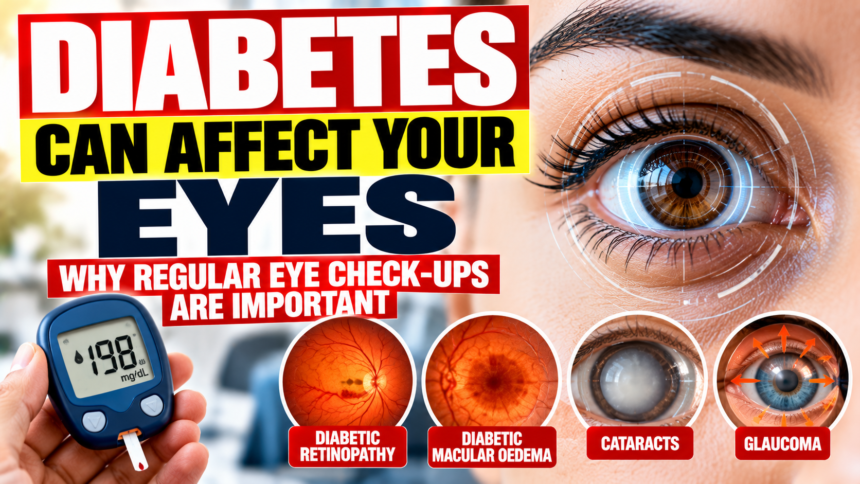
New Delhi: Diabetes can affect far more than blood sugar levels. When glucose remains high over a long period, it can damage blood vessels and nerves and affect several organs, including the eyes. One of the major concerns is that diabetes-related eye damage can develop without causing noticeable changes in vision in the early stages.
A person may continue reading, working and carrying out normal daily activities while changes are already taking place inside the eye. This is why regular eye examinations are an important part of diabetes care, even when there are no obvious vision problems.
Diabetic Retinopathy Can Develop Without Early Symptoms
Diabetic retinopathy is one of the major eye complications associated with diabetes. It affects the retina, the light-sensitive layer at the back of the eye.
Persistently high blood sugar can weaken the tiny blood vessels that supply the retina. In the early stages, these changes may not produce any noticeable symptoms. As the condition progresses, damaged blood vessels can leak fluid or blood into the retina.
In advanced cases, abnormal blood vessels may develop and lead to additional complications. Without appropriate detection and management, diabetic retinopathy can cause severe and, in some cases, permanent loss of vision.
Diabetes Can Also Affect Central Vision
Diabetes is also associated with an increased risk of diabetic macular oedema. The macula is the central area of the retina responsible for the sharp vision needed for activities such as reading, recognising faces and performing detailed work.
When fluid builds up in the macula, central vision can be affected. People with diabetes may also face a higher risk of cataracts and glaucoma.
For this reason, an eye examination for someone with diabetes is not limited to checking for diabetic retinopathy. A comprehensive examination can help identify different eye conditions that may affect vision.
Blood Sugar Control and Regular Eye Exams Are Important
Keeping blood sugar levels under control is an important part of reducing the risk of diabetes-related eye complications. Managing blood pressure and cholesterol, taking prescribed medicines and maintaining regular medical follow-ups can also support overall health.
Lifestyle choices can play a role as well. Eating a balanced diet, staying physically active and avoiding smoking can contribute to better overall health.
People with diabetes should not wait until they develop blurred vision before seeking an eye examination. By the time noticeable changes occur, an eye condition may already have progressed.
The recommended frequency of eye examinations can vary depending on factors such as the type and duration of diabetes and a person’s existing eye health. Patients should discuss an appropriate screening schedule with their treating doctor or eye specialist.
Having diabetes does not automatically mean that a person will lose their vision. Early detection, appropriate treatment and good management of diabetes can help reduce the risk of serious eye complications.
For people living with diabetes, routine eye examinations should be viewed as an important part of regular healthcare rather than something required only when vision becomes blurry. Detecting changes early can provide a better opportunity to manage them before they become more difficult to control.