
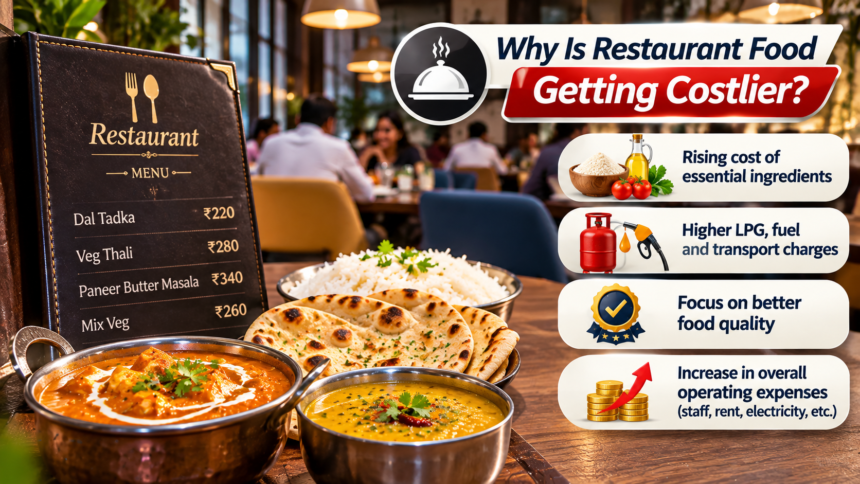
Restaurant Food Prices: Eating out has become more expensive, with restaurants and hotels charging higher prices for everything from basic dal-rice meals and thalis to paneer dishes and other popular foods. The increase is not necessarily linked to higher profit margins alone. Rising ingredient prices, transportation expenses and other operating costs are also putting pressure on the restaurant industry.
Restaurants depend on a regular supply of essential ingredients such as cooking oil, rice, wheat flour, pulses, vegetables and spices. When the prices of these everyday products increase, preparing meals becomes more expensive. Here are four major factors contributing to the rising cost of restaurant food.
1. Rising Prices of Everyday Food Ingredients
Food ingredients account for a significant portion of a restaurant’s daily expenses. Cooking oil, rice, flour, pulses, vegetables and spices are essential for preparing different dishes.
When wholesale prices of these products increase, restaurants have to spend more to maintain their regular food supply. Even preparing a simple meal can become costlier when several ingredients become expensive at the same time.
To manage these additional expenses, restaurant owners may have to revise their menu prices, making dining out more expensive for customers.
2. Higher LPG, Fuel and Transportation Costs
Fuel and transportation expenses are another important reason behind rising restaurant prices.
Restaurants generally depend on commercial LPG cylinders for cooking. They also need transportation services to bring vegetables, groceries and other supplies from wholesale markets and distributors.
Any increase in commercial gas prices, fuel costs or transportation charges adds to the overall operating expenses. These additional costs can eventually be reflected in the prices customers pay for their meals.
3. Maintaining Food Quality Adds to Expenses
Food quality is an important consideration for restaurants that want to maintain customer satisfaction. Many establishments prefer using good-quality cooking oil, fresh vegetables, rice, spices and other ingredients to maintain the taste and standard of their dishes.
However, premium-quality ingredients can be more expensive than ordinary alternatives. Restaurant owners therefore face a choice between adjusting ingredient quality and increasing menu prices to maintain their existing standards.
Many restaurants choose to revise their prices to manage higher ingredient expenses without compromising food quality.
4. Staff Salaries, Rent and Other Operating Expenses
Running a restaurant involves several expenses beyond purchasing food ingredients.
Owners have to manage employee salaries, electricity bills, water charges, property rent, cleaning expenses and regular maintenance costs. These expenses are necessary for keeping the restaurant operational and providing services to customers.
When these costs increase, the overall expense of running the business also rises. As a result, restaurants may increase food prices to manage their operating budgets.
Disclaimer
This article is intended for general informational purposes only. Restaurant prices and operating expenses may vary depending on location, business size, ingredient quality and market conditions. The reasons discussed above are general factors that can influence food prices and may not apply equally to every restaurant.