
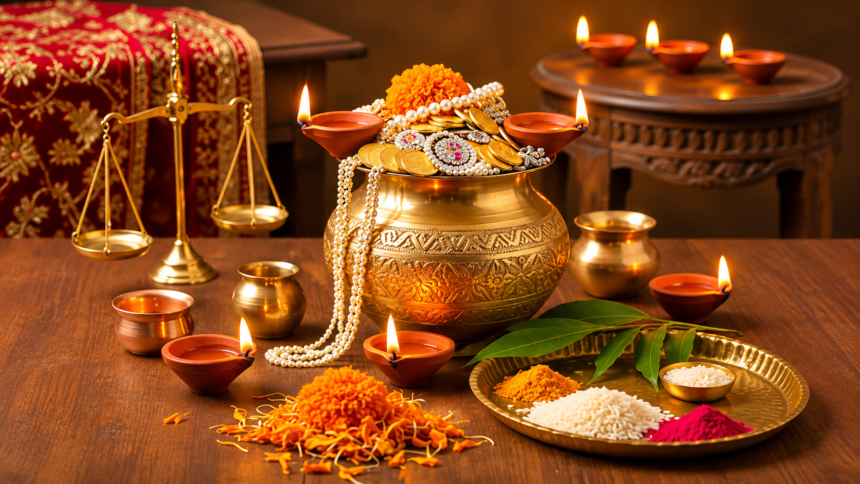
Dhanteras marks the beginning of the five-day Diwali celebrations in India. As the festival approaches, households prepare by cleaning and decorating their homes, while markets witness increased activity as people shop for gold, silver, utensils and other auspicious items. Considered an occasion to welcome prosperity, good health and good fortune, Dhanteras holds special significance for Hindu families.
With Dhanteras 2026 approaching, here is a detailed look at the festival’s date, puja timings, traditional rituals and the stories associated with its celebration.
Dhanteras 2026: Date And Tithi Timings
Dhanteras will be celebrated on Friday, 6 November 2026. It falls on the Trayodashi tithi of Krishna Paksha in the Hindu month of Kartik. The festival marks the first day of Diwali, followed by Narak Chaturdashi, Diwali, Govardhan Puja and Bhai Dooj.
According to Drik Panchang, the Trayodashi tithi and puja timings for New Delhi are as follows:
- Trayodashi Tithi Begins: 10:30 AM on Friday, 6 November 2026
- Trayodashi Tithi Ends: 10:47 AM on Saturday, 7 November 2026
- Dhanteras Puja Muhurat: 06:02 PM to 07:57 PM
- Duration: 1 Hour 55 Minutes
- Pradosh Kaal: 05:33 PM to 08:09 PM
- Vrishabha Kaal (Fixed Lagna): 06:02 PM to 07:57 PM
Dhanteras 2026 Puja Timings In Major Cities
The evening puja muhurat varies across cities due to geographical differences. Here are the timings for some major Indian cities, according to Drik Panchang:
| City | Evening Puja Muhurat (IST) |
|---|---|
| Noida / New Delhi | 06:02 PM to 07:57 PM |
| Mumbai | 06:35 PM to 08:35 PM |
| Bengaluru | 06:25 PM to 08:20 PM |
| Kolkata | 05:28 PM to 07:26 PM |
| Ahmedabad | 06:30 PM to 08:28 PM |
| Chandigarh | 06:00 PM to 07:54 PM |
| Gurugram | 06:03 PM to 07:59 PM |
For devotees in New Delhi, the recommended puja window is from 6:02 PM to 7:57 PM. This period coincides with both Pradosh Kaal and Vrishabha Kaal, which are traditionally considered auspicious for worship.
Significance Of Dhanteras And Traditional Beliefs
The name Dhanteras is derived from two Sanskrit words: ‘Dhan’, meaning wealth, and ‘Teras’, referring to the thirteenth day. The festival falls on the thirteenth day of the Krishna Paksha in Kartik and is associated with prayers for financial prosperity, good health and family wellbeing.
Three important deities are worshipped on this occasion. Goddess Lakshmi is revered as the deity of wealth and prosperity, Lord Kubera is worshipped as the guardian of treasures, and Lord Dhanvantari is honoured as the divine physician associated with health and Ayurveda.
The worship of Lord Dhanvantari also gives the festival its other name, Dhanvantari Jayanti. This association highlights that Dhanteras is not limited to material wealth but also represents the importance of good health.
Purchasing precious metals is among the most popular traditions of the festival. Gold, silver, brass and copper items are commonly bought, along with utensils, coins and household essentials. According to traditional beliefs, purchasing these items on Dhanteras invites prosperity and good fortune throughout the year.
Buying a broom is another customary practice. It is associated with Goddess Lakshmi and symbolises removing negativity and maintaining cleanliness in the home.
Dhanteras 2026: Puja Vidhi And Important Rituals
Dhanteras celebrations involve several traditional practices followed by families to welcome prosperity and seek divine blessings.
Home Decoration: Families begin by cleaning and decorating their houses. Rangoli designs are created near the entrance, while torans made from marigold flowers or mango leaves are used to decorate doorways. Some households also make small footprints using rice flour or kumkum, symbolising the arrival of Goddess Lakshmi.
Preparing The Puja Area: A clean wooden chowki is covered with a red or yellow cloth. Idols or pictures of Goddess Lakshmi, Lord Ganesha and Lord Kubera are placed on it. Lord Dhanvantari is also worshipped as part of the celebrations.
Performing The Puja: During the auspicious muhurat, devotees light diyas and incense sticks and offer flowers, roli, akshat, fruits and sweets to the deities. Mantras and aartis are recited as part of the worship. Newly purchased items, including coins and utensils, are also placed before the deities.
Lighting Yama Deepam: One of the significant Dhanteras rituals is lighting Yama Deepam in the evening. A diya with a four-faced wick is placed outside the main entrance or in the courtyard, facing south. It is dedicated to Yamraj, the god of death, and is traditionally believed to protect family members from untimely death. Mustard oil is generally used for lighting the lamp.
Buying Auspicious Items: Purchasing something new is considered an important part of Dhanteras. While gold and silver are popular choices, people with smaller budgets may opt for a brass diya, a silver coin or a steel utensil. The tradition focuses on welcoming good fortune rather than the value of the purchase.
Apart from these rituals, many families avoid lending money on Dhanteras and keep their homes illuminated throughout the evening as a symbol of prosperity and positivity.
Stories And Legends Associated With Dhanteras
Two popular mythological stories explain the traditions and religious significance of Dhanteras.
The first is the legend of King Hima’s son. According to the story, the prince was destined to die from a snakebite on the fourth day after his marriage. To prevent the prediction from coming true, his wife decided to keep him awake throughout the night.
She placed gold coins and jewellery near the entrance of their room and illuminated the surroundings with lamps. She then spent the night singing songs and telling stories to her husband.
When Yamraj arrived in the form of a snake, the brightness of the lamps and the reflection of the gold jewellery prevented him from entering the room. He remained outside, listening to the wife’s songs until sunrise, before leaving without taking the prince’s life.
The story is traditionally associated with the practice of lighting Yama Deepam on Dhanteras, which symbolises protection against untimely death.
The second legend is connected to Samudra Manthan, the mythological churning of the ocean by the gods and demons in search of amrit, the nectar of immortality.
According to the legend, Lord Dhanvantari emerged from the ocean on the thirteenth day of Krishna Paksha in Kartik, carrying a pot of amrit. In certain versions of the story, Goddess Lakshmi also appeared during the churning.
This legend explains the connection between Dhanteras, health and prosperity. It is also associated with the tradition of purchasing new vessels, which symbolise abundance and good fortune.
Both stories reflect the central beliefs associated with Dhanteras: seeking good health, inviting prosperity and protecting the family. As the first day of Diwali, the festival brings households together through prayers, traditional purchases and the lighting of lamps in preparation for the celebrations ahead.