
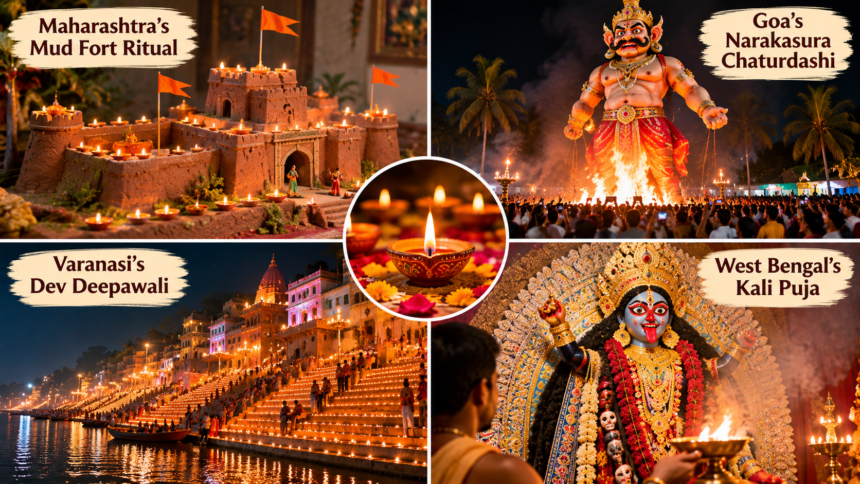
Diwali is widely associated with lighting diyas, performing Lakshmi Puja and celebrating with fireworks. However, the festival takes on different forms across India, with several regions following distinctive customs and traditions that go beyond the usual celebrations.
From building miniature mud forts in Maharashtra to burning giant demon effigies in Goa, these regional practices reflect India’s diverse cultural and religious heritage. Here are four unique Diwali celebrations that highlight the different ways people observe the festival across the country.
1. Maharashtra’s Traditional Diwali Killa (Mud Forts)
One of the distinctive Diwali traditions in Maharashtra involves creating miniature forts using mud. Known as ‘Diwali Killa’, these small structures are built during the festive season as a tribute to the Maratha warrior king, Chhatrapati Shivaji Maharaj, and the historic forts associated with his legacy.
Children and families participate in constructing these miniature fortresses, carefully recreating their walls and structures using clay and mud. Diyas are also placed along the fort walls and ramparts, adding to the festive atmosphere and symbolising the victory of good over evil.
2. Goa’s Narakasura Chaturdashi Celebrations
Diwali celebrations in Goa are particularly known for the tradition of burning large effigies of Narakasura, the demon king. The ritual takes place in the early hours of Diwali, with communities gathering to watch the symbolic destruction of the demon.
These towering effigies, some reaching around 50 feet in height, are set on fire at approximately 3 AM. The celebrations feature drums, music, DJs and fireworks, creating a lively festive atmosphere.
The occasion is associated with Naraka Chaturdashi, also known as Kali Chaudas. The word ‘Kali’ refers to darkness, while ‘Chaudas’ means the fourteenth day. The tradition represents the victory of good over evil and remains an important part of Goa’s cultural celebrations.
3. Varanasi’s Dev Deepawali: A Festival Of A Million Diyas
Varanasi celebrates another spectacular festival known as Dev Deepawali, which takes place 15 days after Diwali. On this occasion, the ghats along the River Ganga are illuminated with more than a million earthen lamps in honour of the sacred river.
The celebrations extend from Ravidas Ghat in the south to Rajghat, transforming the riverfront into a beautifully illuminated spectacle.
The tradition began in 1991 at Dashashwamedh Ghat under the initiative of Pandit Kishori Raman Dubey. Over time, Dev Deepawali has become an important cultural and religious celebration in Varanasi, attracting attention for its grand display of lights along the Ganga.
4. West Bengal’s Kali Puja Celebrations
In West Bengal, Diwali coincides with Kali Puja, an important religious occasion dedicated to Goddess Kali. Unlike many other parts of India, where Goddess Lakshmi is worshipped during Diwali, devotees in West Bengal dedicate the night to prayers and rituals honouring Goddess Kali.
Temples and pandals organise special worship ceremonies, making the festival an important part of the state’s religious and cultural traditions.
While Diwali is commonly associated with the return of Lord Rama to Ayodhya, these regional celebrations demonstrate how different communities across India have developed their own distinctive ways of observing the festival. From Maharashtra’s mud forts and Goa’s Narakasura effigies to Varanasi’s illuminated ghats and West Bengal’s Kali Puja, each tradition adds a unique dimension to India’s Diwali celebrations.