
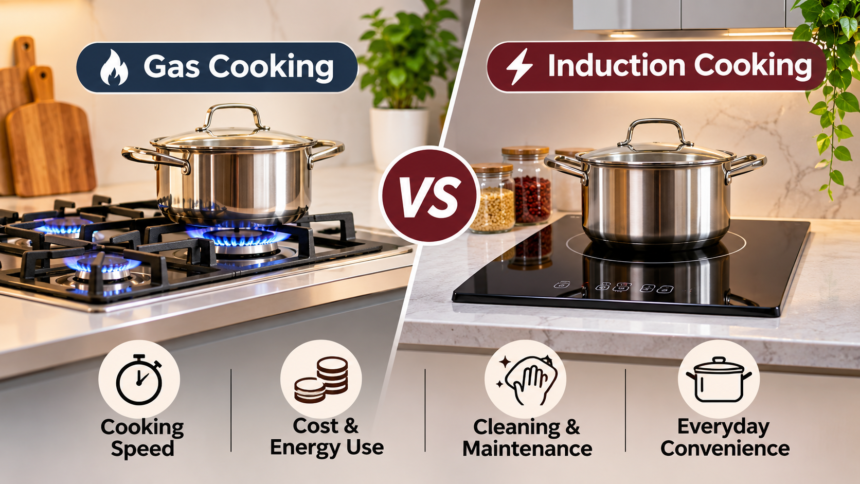
Choosing the right cooktop is an important part of setting up or renovating a kitchen. While gas stoves have remained a popular choice for years, induction cooktops are gaining attention for their modern design, faster cooking and energy efficiency. However, deciding between the two requires more than considering appearance or cooking preferences.
Factors such as cooking speed, installation costs, energy consumption and everyday cleaning requirements play an important role in determining which option offers better value. Here is a closer look at how gas and induction cooktops compare.
1. Cooking Speed And Energy Efficiency
One of the biggest differences between gas and induction cooking is how efficiently each system transfers heat to cookware.
Induction cooktops use electromagnetic technology to generate heat directly in compatible cookware instead of heating the surrounding surface or air. This allows them to achieve thermal efficiency levels of approximately 85% to 90%. They can also boil water in less than half the time taken by a conventional gas burner.
Gas cooktops, on the other hand, generally operate at an efficiency of around 40% to 50%. A considerable amount of heat escapes around the cooking vessel rather than being transferred directly to it. This can increase cooking time and make the kitchen warmer, particularly during extended cooking sessions.
In terms of speed and energy utilisation, induction cooktops offer a clear advantage.
2. Initial Investment And Long-Term Expenses
The purchase price is another important consideration when choosing between gas and induction cooking systems.
Gas stoves typically have a lower upfront cost and offer greater flexibility when it comes to cookware. They can accommodate different materials, shapes and sizes without requiring special utensils.
Induction cooktops may involve a higher initial investment because they require compatible cookware. Stainless steel and cast-iron utensils that are magnetic can generally be used, provided they have suitable flat bottoms.
However, the higher initial expense can be balanced by lower energy consumption over time. Since induction transfers heat more efficiently and cooks food faster, it can reduce overall energy requirements. Depending on usage and local electricity and gas prices, its running costs may be competitive with or lower than monthly gas cylinder or utility expenses.
Gas Vs Induction Cooktops: Key Differences
| Feature | Gas Cooktop | Induction Cooktop |
|---|---|---|
| Thermal Efficiency | Approximately 40%–50% | Approximately 85%–90% |
| Heating Speed | Moderate | Very fast |
| Cookware Compatibility | Compatible with all cookware types | Requires compatible magnetic, flat-bottomed cookware |
| Daily Cleaning Time | 5–10 minutes | Less than 1 minute |
| Kitchen Heat Output | High ambient heat | Low, localised heat |
3. Cleaning, Maintenance And Everyday Convenience
The amount of effort required to maintain a cooktop can also influence the overall cooking experience.
Cleaning a traditional gas stove often involves removing heavy cast-iron grates, wiping the burner area and scrubbing away accumulated grease and food stains. Spills can also settle around the burners, making regular maintenance more time-consuming.
Induction cooktops have a smooth, flat glass surface that is considerably easier to clean. Since the cooking surface does not become as hot as a conventional gas burner, spilled food and liquids are less likely to burn onto it. In most cases, cleaning requires nothing more than wiping the surface with a damp cloth after cooking.
This makes induction a convenient option for households looking to reduce the time spent on everyday kitchen maintenance.
Gas Vs Induction: Which One Should You Choose?
The choice ultimately depends on household requirements, cooking preferences and the availability of electricity.
For people who prioritise faster cooking, better energy efficiency, a cooler kitchen and easier cleaning, induction cooktops offer several long-term advantages. Their efficient heating system and simple maintenance make them a practical choice for modern kitchens.
Gas cooktops, however, remain useful for households that prefer direct-flame cooking techniques or live in areas where electricity supply is unreliable.
While both options have their own benefits, induction stands out for its combination of cooking speed, energy efficiency and everyday convenience. Gas continues to be a suitable alternative for those who value traditional cooking methods and greater flexibility with cookware.