
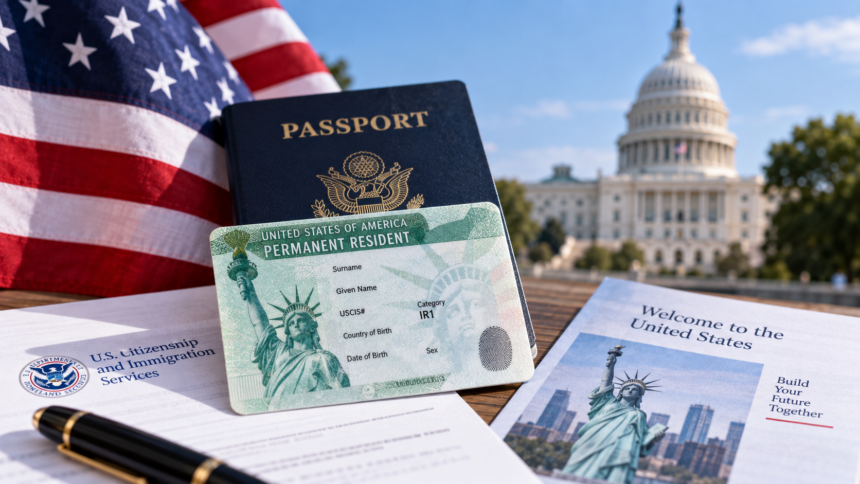
A new set of US public charge regulations has taken effect on September 18, 2026, bringing changes to how certain immigration applications are assessed. The US Department of Homeland Security (DHS) has rescinded the 2022 public charge regulations and restored broader discretion for immigration officers to consider relevant facts when deciding whether an applicant is likely to become a public charge.
The revised rules apply to applications for admission made on or after September 18, as well as adjustment-of-status applications postmarked or submitted electronically from that date. Benefits received before September 18 continue to be considered under the previous 2022 rules.
What Has Changed Under the New Public Charge Rule?
Under the new framework, officers must consider five statutory factors: age, health, family status, assets, resources and financial status, and education and skills. Officers may also consider other relevant information when assessing whether a person is likely to become a public charge.
The change is broader than the 2022 framework, which defined a public charge primarily through receipt of specified cash assistance for income maintenance or long-term institutionalisation at government expense. The new rule removes that narrower regulatory definition and gives officers greater discretion to assess the overall circumstances of an applicant.
The revised USCIS guidance also says that means-tested public benefits can be relevant to the assessment. However, the determination is not based on a single factor or benefit alone; officers are directed to consider the applicant’s circumstances as a whole.
Who May Be Subject to the Assessment?
The public charge ground can apply to certain people seeking admission to the United States or adjustment of status to lawful permanent residence. This includes applicants in family-based and employment-based immigrant categories, among other categories covered by the immigration law.
The assessment can also be relevant to certain returning lawful permanent residents seeking admission after extended periods outside the United States. The exact application of the rule depends on the person’s immigration category and circumstances.
Some immigration categories are specifically exempt from the public charge ground under federal law. These include refugees and asylees and certain humanitarian categories, including people applying for or holding T or U visas and certain VAWA-based applicants.
Five Factors USCIS Will Consider
The revised assessment continues to centre on five factors established by the Immigration and Nationality Act:
- Age
- Health
- Family status
- Assets, resources and financial status
- Education and skills
USCIS says officers can also consider other evidence relevant to whether an applicant is likely to become a public charge. An Affidavit of Support on Form I-864 may also be considered where applicable.
The assessment is therefore based on the overall circumstances rather than one isolated factor. For example, the receipt of a particular benefit does not by itself determine the outcome of a public charge assessment.
What Green Card Applicants Should Know
The new rules do not mean that every person who receives government assistance will automatically be considered a public charge. Instead, USCIS officers will evaluate the relevant facts and circumstances under the revised framework.
The new regulations took effect on September 18, 2026. Applicants whose cases fall under the public charge ground should review the rules applicable to their specific immigration category and the date their application was filed or submitted.