
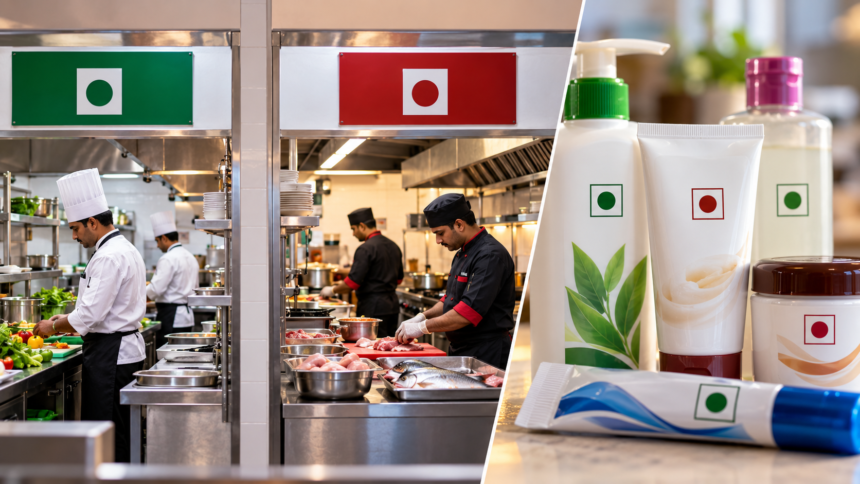
Uttar Pradesh is preparing to tighten food safety checks at hotels, restaurants, fast-food outlets and other eateries, with greater emphasis on keeping vegetarian and non-vegetarian food preparation separate.
Under the proposed arrangement, establishments will need separate facilities and equipment for preparing vegetarian and non-vegetarian dishes. This includes items such as cutting boards, knives and utensils. The stricter compliance is expected to begin in November, with food safety teams checking kitchens, storage areas and food preparation practices.
FSDA to Focus on Kitchen Hygiene and Food Storage
The Food Safety and Drug Administration (FSDA) has outlined inspection points covering food licences and registration, kitchens, storage facilities, dining areas, drainage and food preparation procedures.
During inspections, officials will check whether kitchens, floors, walls and ceilings are maintained in a condition that reduces the possibility of physical, chemical or microbial contamination. Drainage systems will also come under scrutiny.
Restaurants and other establishments serving non-vegetarian food will also need arrangements to reduce the risk of cross-contamination. Separate areas are to be maintained for raw meat, poultry and seafood, along with appropriate separate equipment for handling these products.
The inspections will also examine whether vegetarian and non-vegetarian food is being prepared, handled and cooked separately. Establishments found violating the applicable requirements may face action under food safety rules.
New Veg-Non-Veg Symbols for Soaps, Shampoos and Cosmetics
Separately, the Centre has amended the Legal Metrology (Packaged Commodities) Rules, 2011, regarding vegetarian and non-vegetarian labelling on soaps, shampoos, toothpastes, cosmetics and toiletries.
Under the notification issued on September 21, 2026, a green dot is prescribed for products of vegetarian origin, while a red or brown dot is prescribed for products of non-vegetarian origin. The symbol is required at the top of the principal display panel. The amendment came into force upon publication in the Official Gazette.
The requirement itself is not entirely new. A similar provision had been included in the Legal Metrology rules through a 2014 amendment. The latest change shifts the requirement to another provision under Rule 6 and removes the earlier sub-rule.
Delhi High Court Had Flagged Regulatory Differences
The labelling issue has also been examined by the Delhi High Court in a case involving Reckitt Benckiser (India) Limited.
In its February 7, 2026 order, the court noted a difference between the mandatory labelling requirement under the Legal Metrology rules and the position taken by the Drug Technical Advisory Board (DTAB). The court recorded that DTAB had raised concerns about the absence of a clear system for certifying whether cosmetic ingredients are vegetarian or non-vegetarian and had supported making such labelling voluntary.
The court directed the concerned authorities, including Legal Metrology and the Drug Controller General of India, to hold consultations with stakeholders and arrive at a comprehensive approach on implementation.
For consumers, the latest amendment means the prescribed symbol is now part of the packaging requirement under the amended Legal Metrology rules. At the same time, the court proceedings highlight the separate regulatory question surrounding how such claims are to be verified.
Disclaimer: This article is intended for general informational purposes. Regulatory requirements, inspection procedures and labelling rules may be subject to further official clarification, amendments or court proceedings. Readers and businesses should refer to the latest notifications and directions issued by the relevant authorities before relying on the information.